

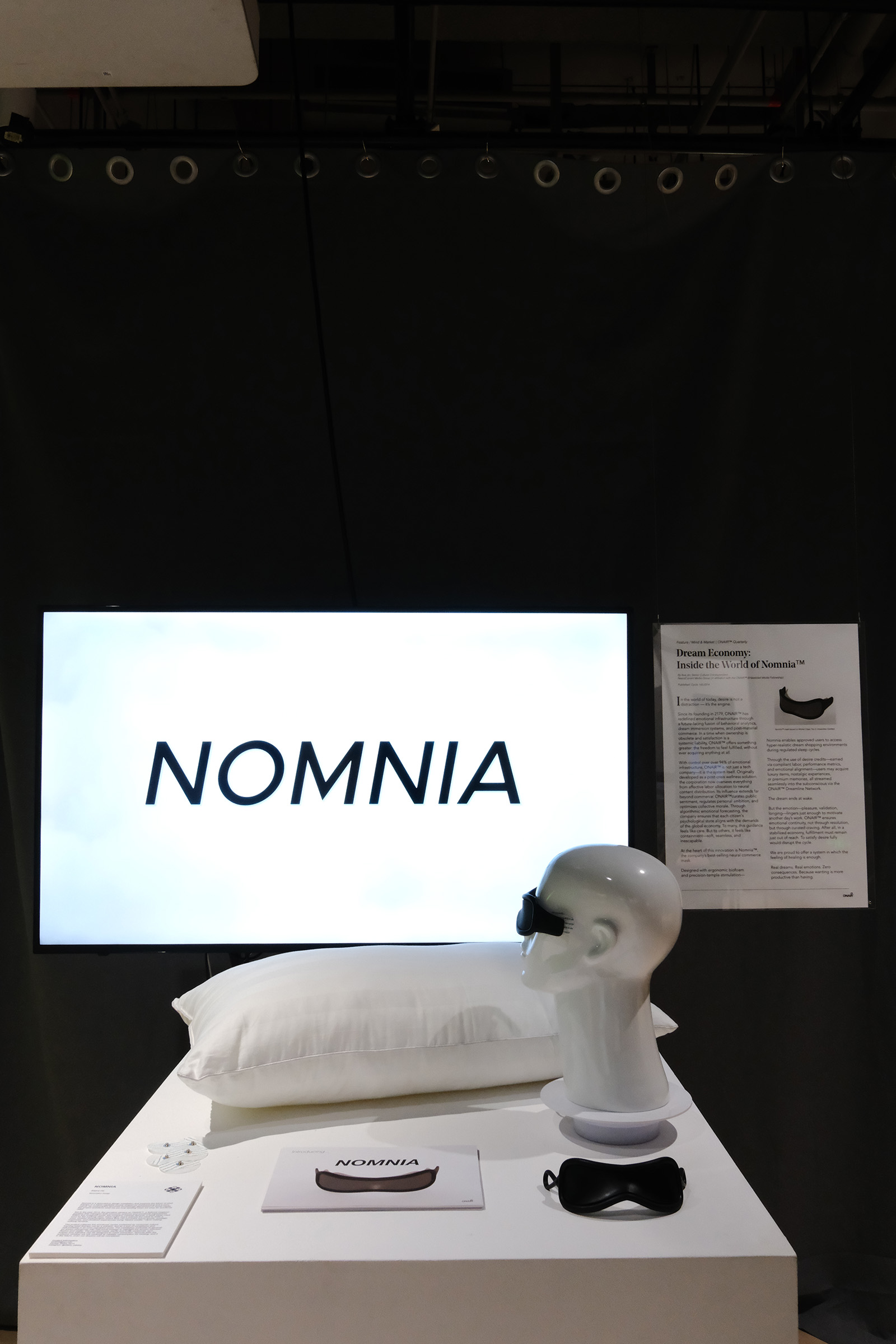
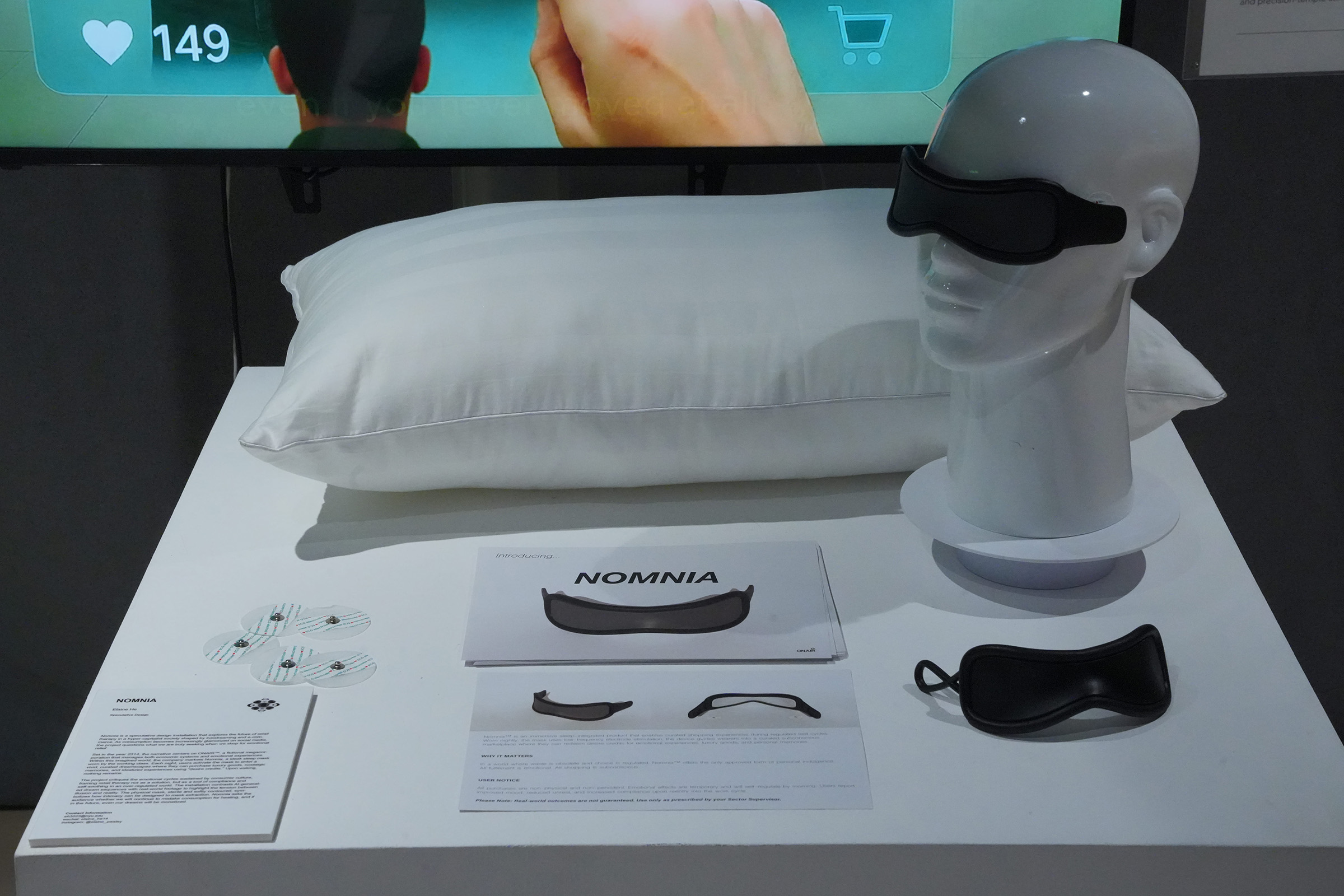
Nomnia is a speculative design installation that imagines a future where emotional relief is sold through shopping when you are dreaming. Set in a hyper-capitalist world, it reveals how retail therapy disguises emotional emptiness, offering illusion in place of healing.
Project Video
Abstract
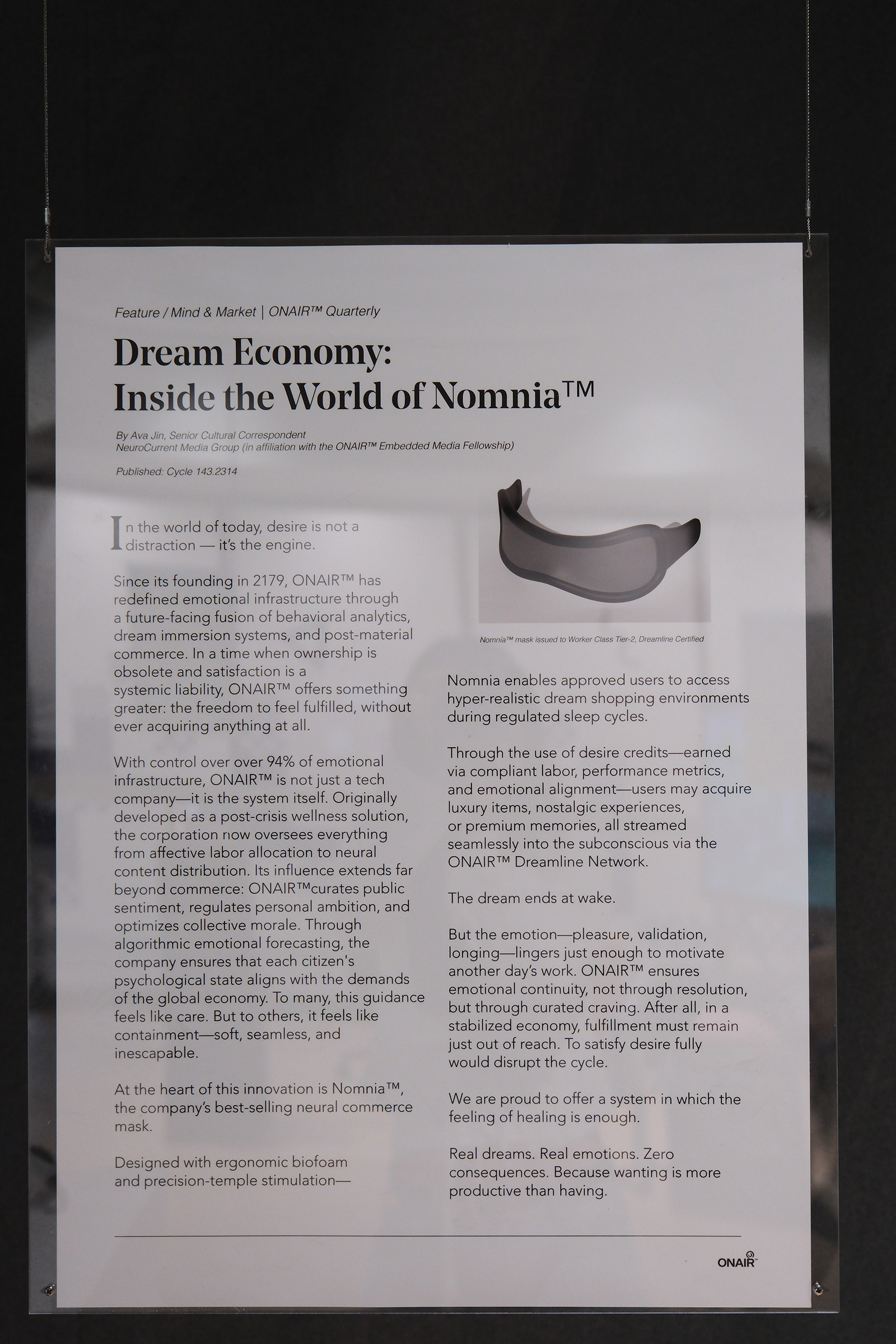
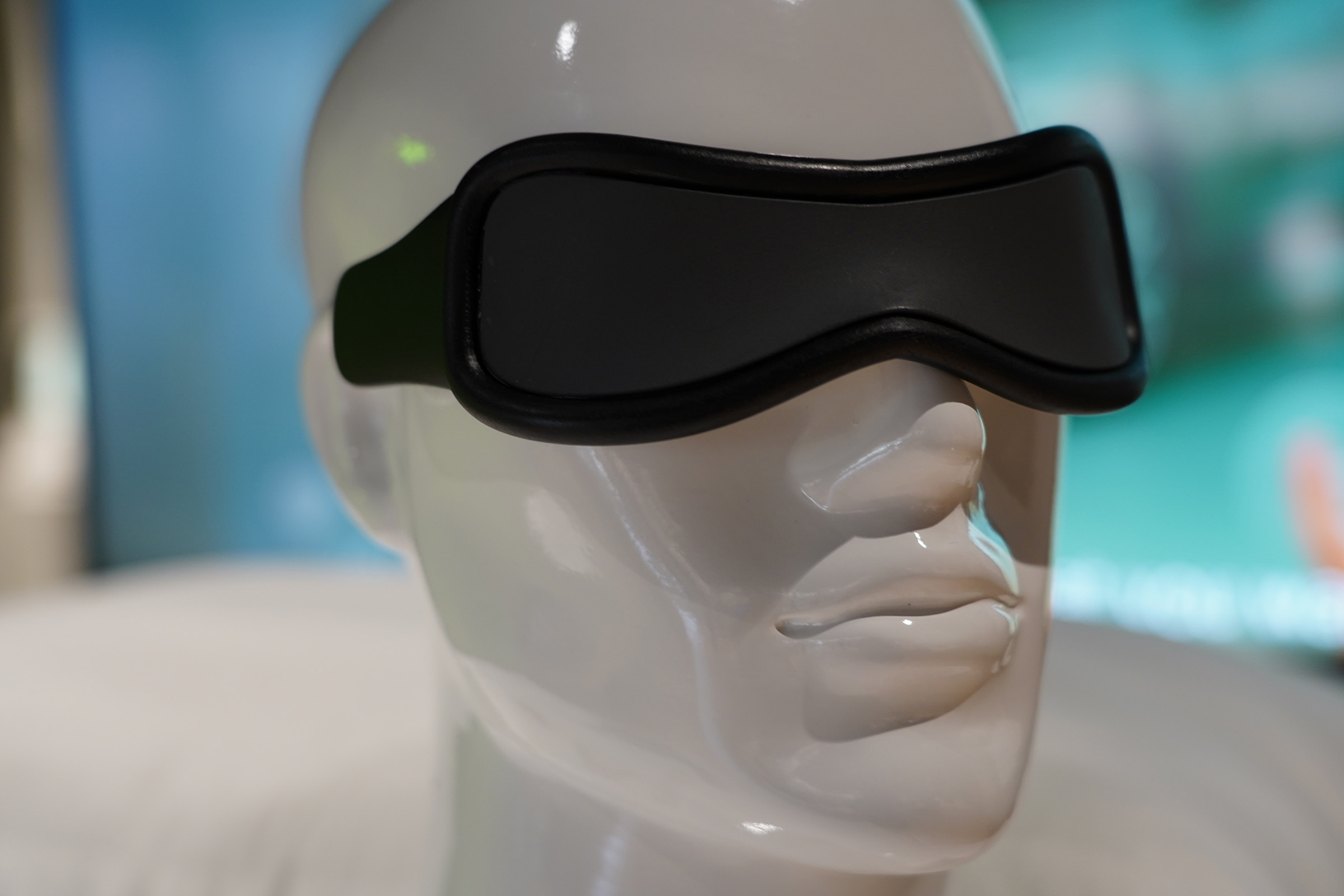
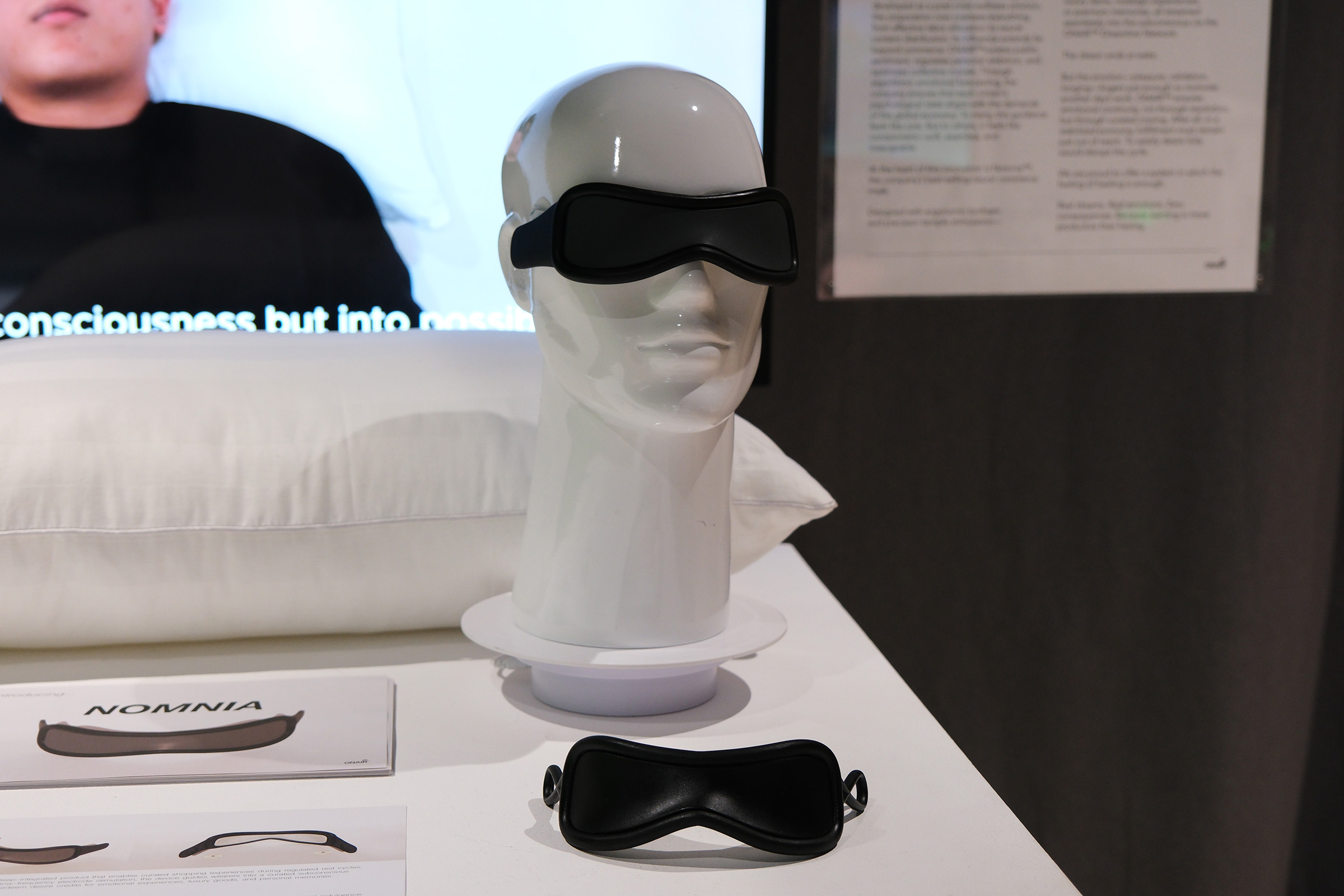
Set in the year 2314, Nomnia is a speculative design installation that critiques the evolution of retail therapy in a hyper-capitalist future shaped by livestreaming and algorithm-driven commerce. The project imagines a dystopian world run by ONAIR™, a fictional megacorporation that manages both economic flow and emotional well-being. Its most successful product? A sterile, sleek sleep mask marketed to the overworked lower class. Each night, users wear the device to enter a dreamscape where they can shop for luxury goods, lost memories, and idealized experiences—paid for with “desire credits.” But by morning, nothing remains.
At its core, Nomnia poses the question: What are we really seeking when we shop for relief—and what happens when even our dreams are monetized? Building on Lauren Berlant’s theory of cruel optimism, the project explores how consumer culture offers emotional comfort that ultimately sustains harmful cycles. In the world of Nomnia, retail therapy becomes a system of emotional regulation—a placebo that masks deeper disconnection while extracting value from the user’s most vulnerable state: sleep.
What sets this project apart is its use of speculative design not just as narrative, but as confrontation. By using both AI-generated dream sequences with footage of real-world consumption, Nomnia creates an immersive tension between fantasy and reality. The physical mask—inviting and intimate—embodies the paradox of emotional manipulation disguised as care. The project does not offer a solution; it offers discomfort. And in that discomfort, it asks viewers to reflect: Are we being healed, or just kept quiet?
A point in the project was the thought that interfaces of comfort—soft textures, personalized content, sleep aids—are often engineered to disguise systems of extraction. This insight shifted the design of the installation toward emphasizing contradiction: something that feels safe, but is ultimately exploitative. The more intimate the interaction, the more invasive the mechanism. This paradox became the emotional core of the project.
Nomnia speaks to broader concerns about how digital platforms commodify not just attention, but emotion. Drawing from case studies in film, visual art, and protest, it uses speculative fiction to render abstract critiques personally felt. As livestream shopping and algorithmic nudging shape global consumer habits, the installation imagines their logical conclusion: a world where the boundary between healing and buying no longer exists.
Ultimately, Nomnia reframes retail therapy not as an escape, but as evidence of our cultural willingness to soothe symptoms while ignoring root causes. It asks if we will keep mistaking consumption for comfort—until we finally wake up with nothing.
Photos
Project Logbook
Website: https://eh3023.wixsite.com/elaine-he-portfolio
Keywords: Speculative Design, Retail Therapy Critique, AI-Generated Dreamscapes, Immersive Installation Art, Emotional Extraction & Consumerism
Copyright Statement
3D model of head used to measure size of mask when modeling
ChatGPT assistance in creating article and pamphlet content