

Take Me Back is an interactive video installation that invites audiences into a reimagined childhood bedroom—complete with a custom-built retro game console—where they can explore intimate stories from different generations. Blending tactile controls and nostalgic visuals, the project transforms interviews with loved ones into a shared, reflective experience.
Abstract
Take Me Back is an interactive, memory-driven experience made to resemble the aesthetics of a classic video game. This project is a personal archive, a collection of childhood stories from people close to me—my grandmother, brother, partner, and others who have shaped my world. Each of them comes from a different place, a different generation. Some hadn’t thought about these memories in years—until they began to speak. With everything around us advancing so quickly, I often find myself wishing for the simplicity of “before.” Hence, the obsession with nostalgia—desperately longing to experience a time in the past, that sudden anchor that pulls us back to moments we didn’t even know we missed. This project experiments with both the universality and particularity of memory and the mediation of nostalgia. It is not only about recollection, but about creating a space for remembering through, with, and for others.
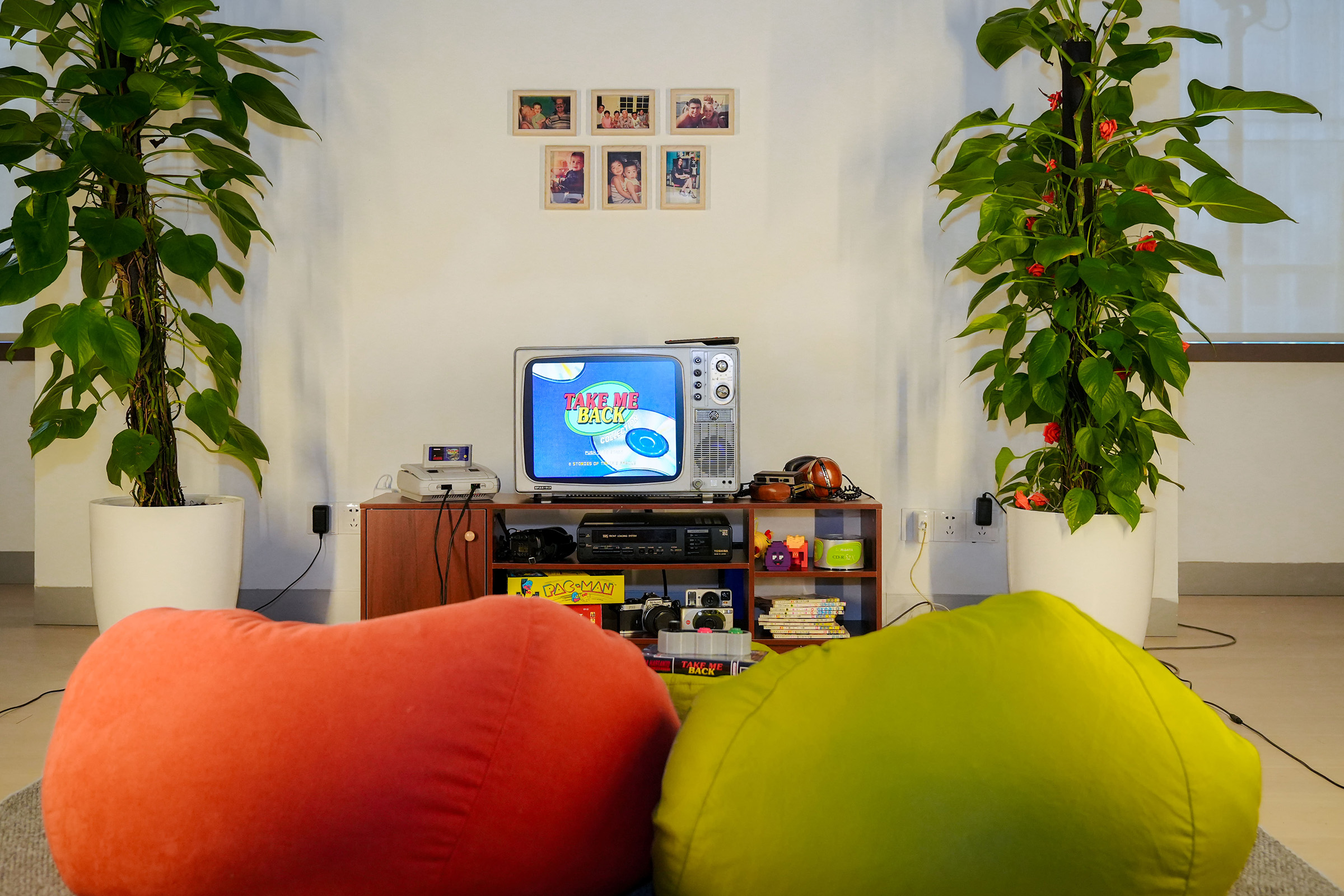
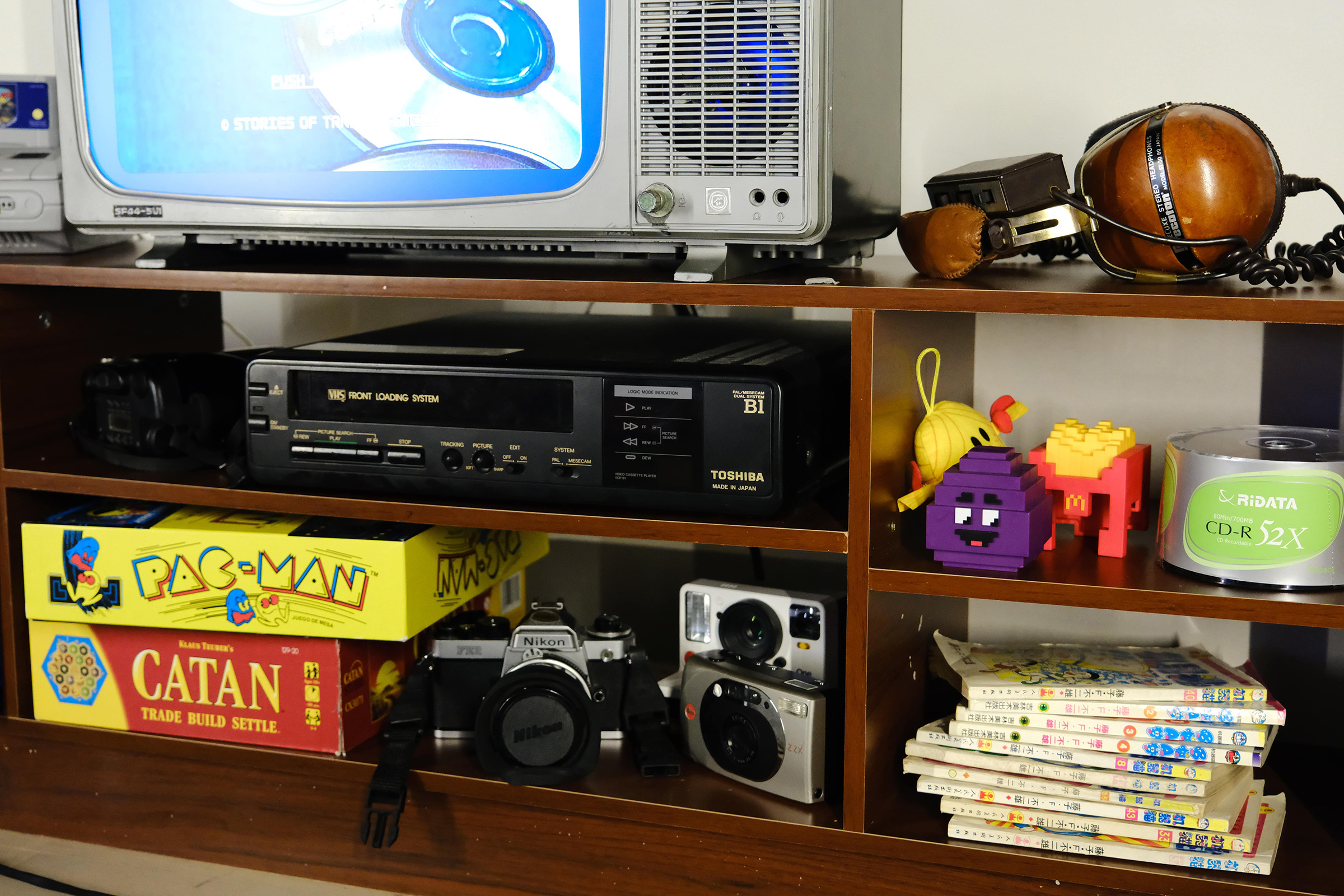
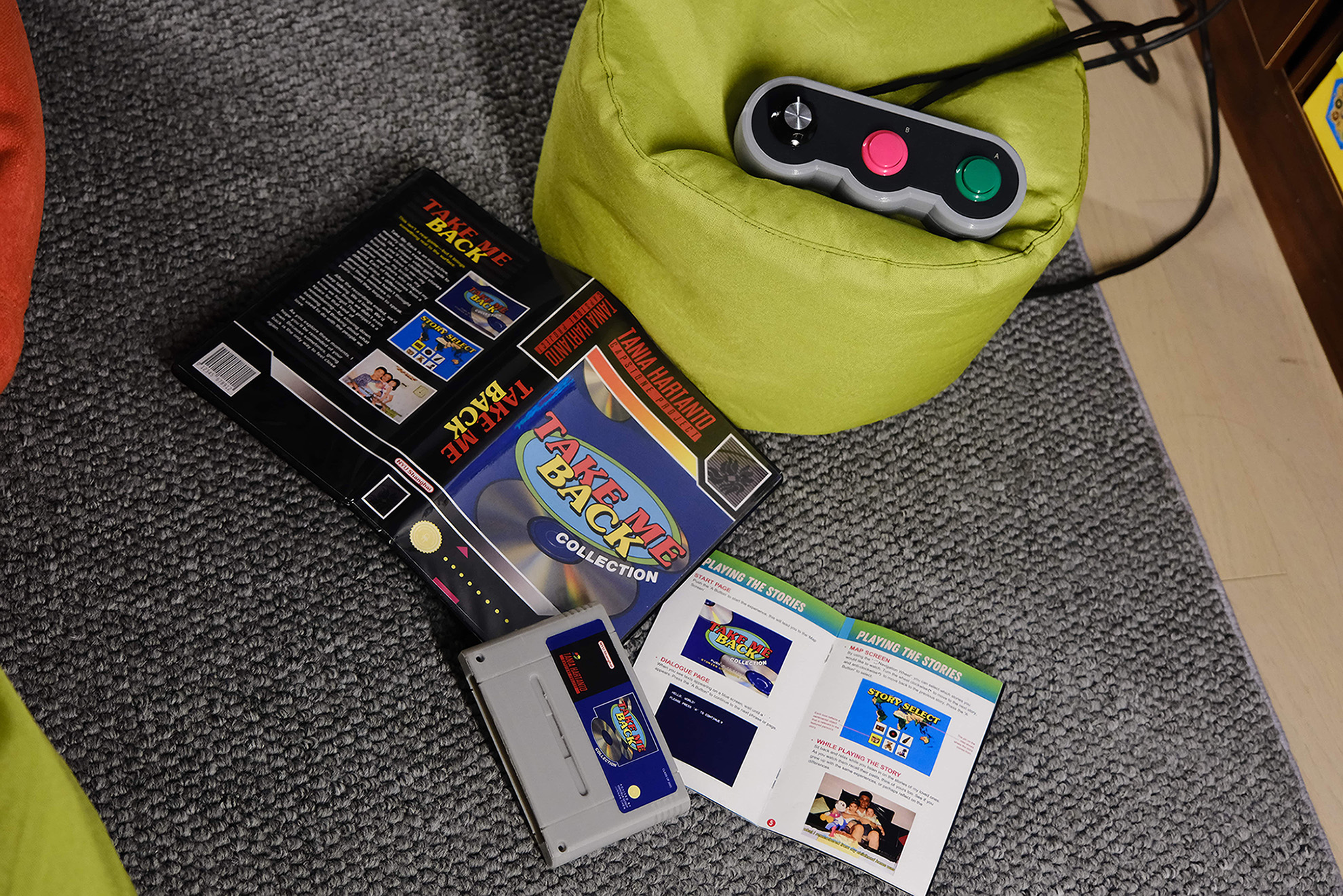
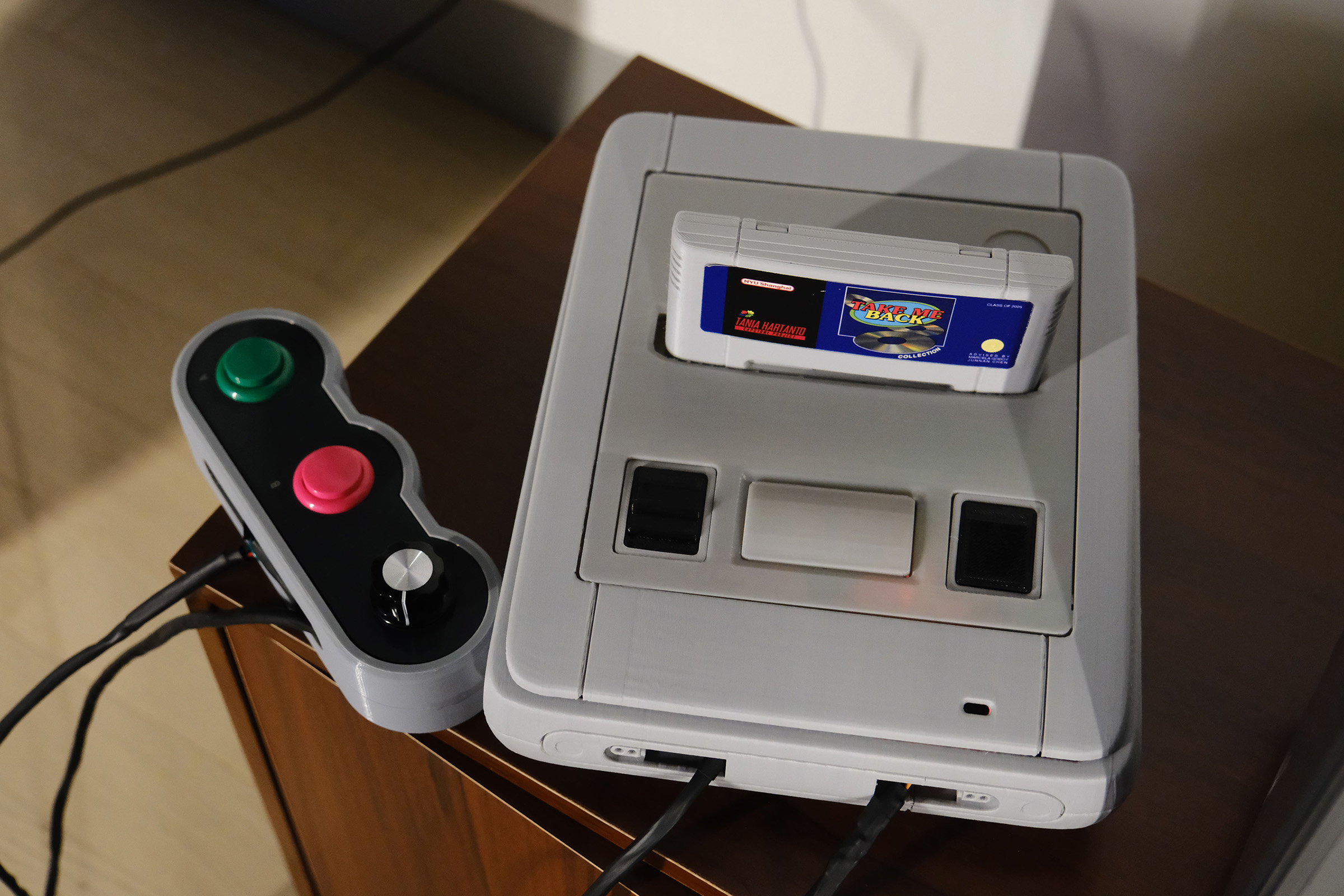
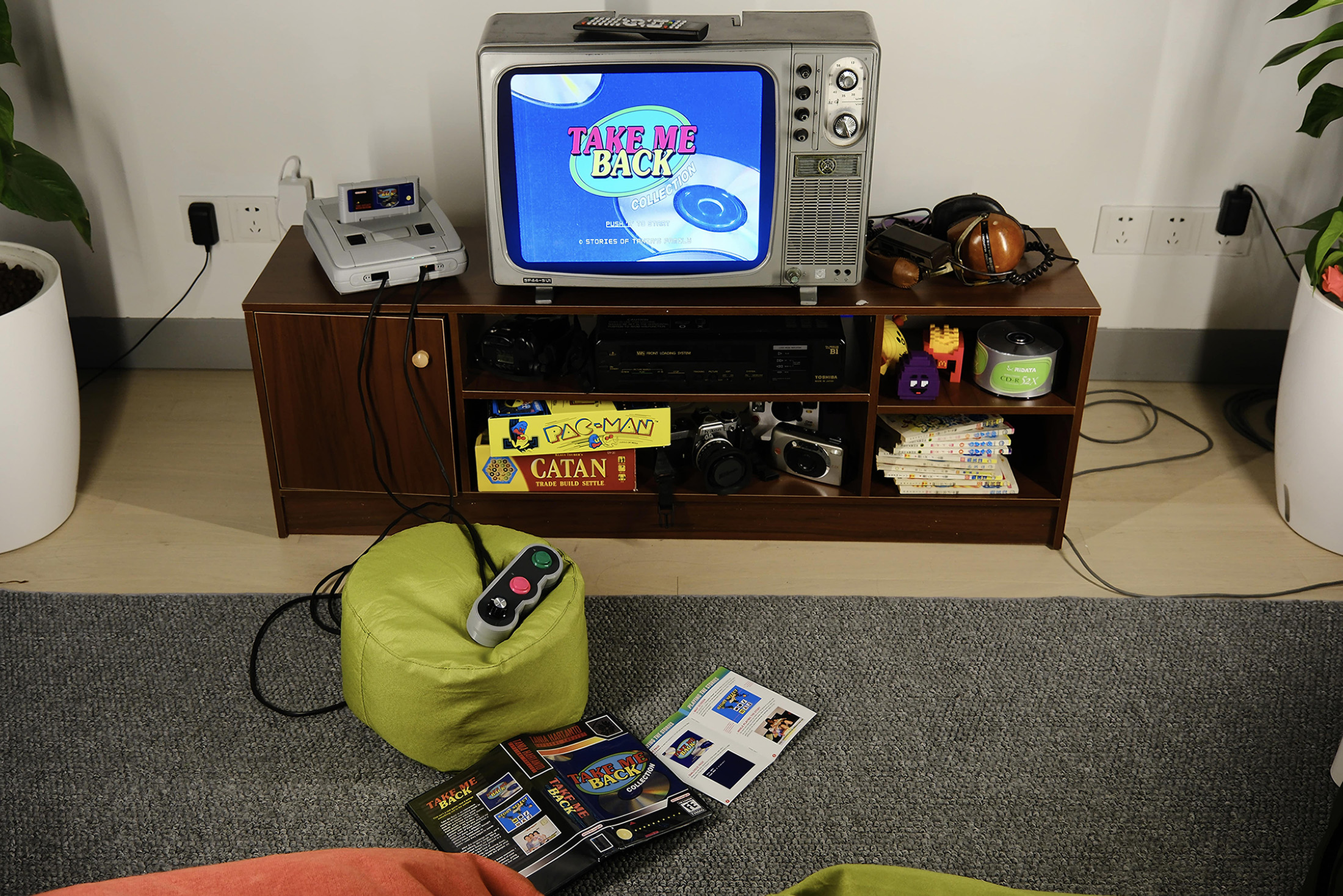
The installation recreates a bedroom space from the early 2000s—beanbags on the floor, photos on the wall, lamps and plants, board games and toys, old cameras, a CD stack, and a replica of an old TV monitor. This setting is personal but designed to feel familiar to many. The interactive interface is controlled by a custom-built video game console, navigated with a controller made using arcade buttons and a rotary encoder, connected to an Arduino board and housed in a 3D-printed shell. I printed a replica cartridge to fit into the console, complete with a sticker I designed and an instruction manual modeled after old Nintendo packaging. The screen interface—developed in p5.js—mimics the rhythm and layout of classic games: blinking “START” screens, a pixelated map for story selection, and pictures of sentimental objects belonging to the interviewees that users select to access each story. The interviews play back with no additional music or sound design—just the raw audio and visuals of each speaker, presented in sequential dialogue lines like game text. It’s deliberately quiet, slow, and simple—just like how memories often return.
What continues to stay with me is what happened after the recordings ended. We’d keep talking. We’d remember things we didn’t even know we forgot. That part—the unscripted part—is what this project tries to hold space for. It highlights the emotional and cognitive process of memory retrieval and how certain triggers—like being asked, or hearing someone else remember—can unlock entire stories. While the project begins as a personal exploration, it has evolved into a broader reflection on cultural memory, technological mediation, and intergenerational storytelling. Take Me Back invites users to experience memories not just as passive viewers, but as participants navigating an emotional landscape that blends the tactile, the digital, and the deeply human. In a time obsessed with speed and novelty, this project offers a pause—an attempt to remember, reconnect, and reflect through stories that matter.
Photos
Project Logbook
Keywords: Interactive Installation, Nostalgia & Memory, Immersive Environment, Media & Technology, Intergenerational Narratives
Copyright Statement
Nintendo Console 3D Model: https://www.thingiverse.com/thing:5897163#google_vignette
Nintendo Cartridge model: https://www.printables.com/model/455661-snes-pal-reproduction-cartridge