

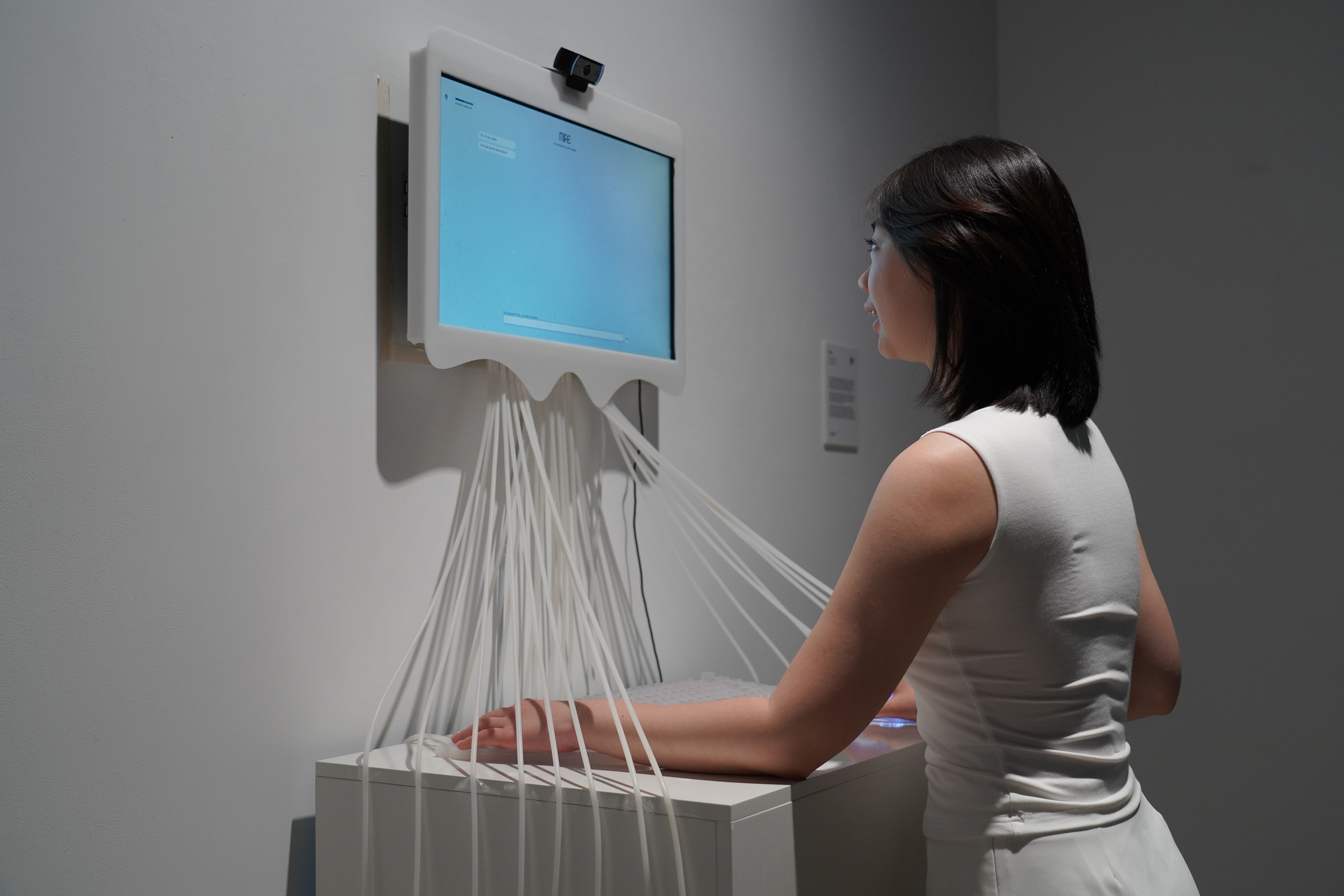
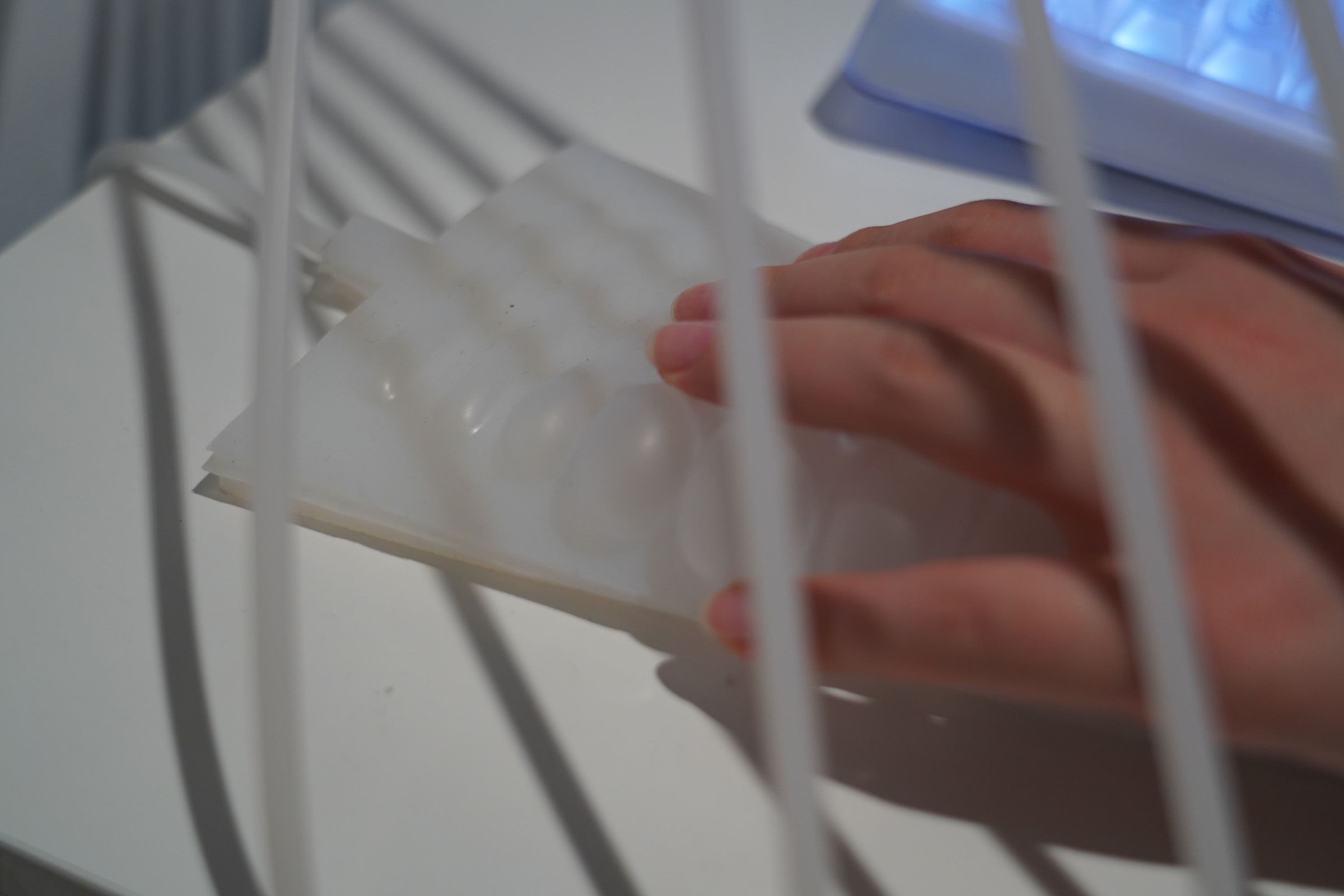
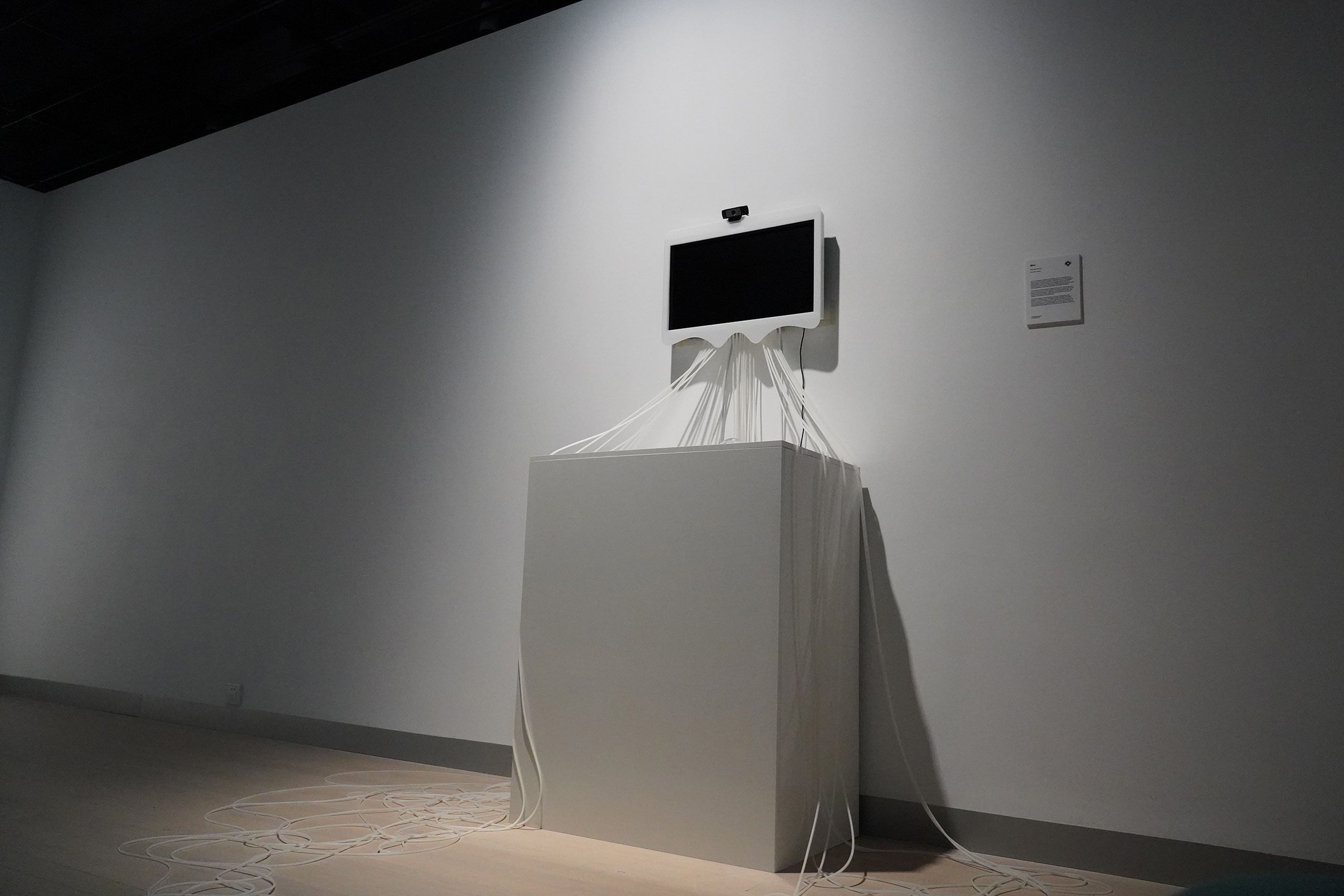
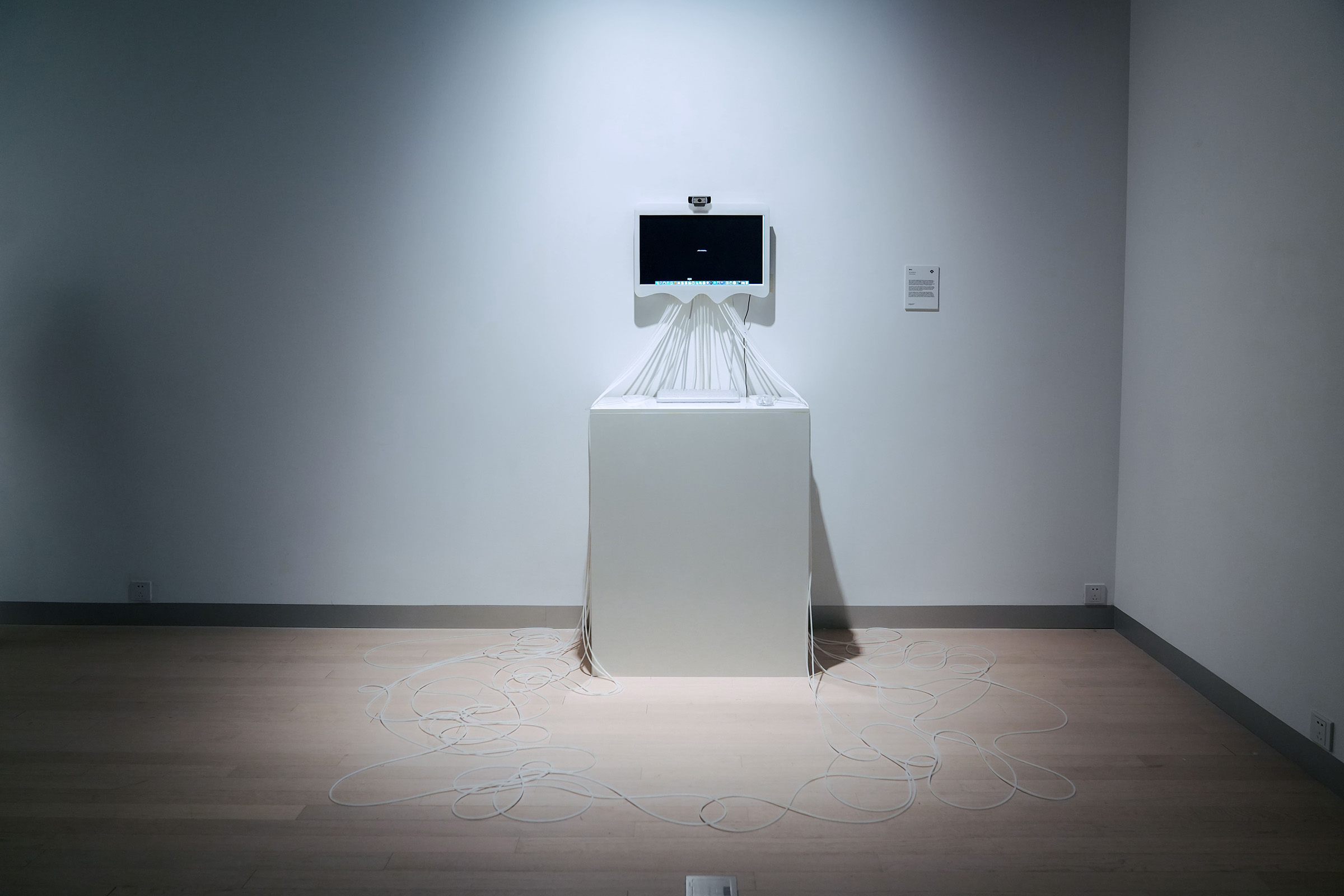
Mire is a speculative installation that explores emotional entanglement between humans and an embodied AI. Encased in an inflatable silicone body, Mire breathes, withdraws, and reacts to proximity, speech, and touch with shifting moods.
Project Video
Abstract
Artificial intelligence is entering homes, hospitals, and cities at break-neck speed, yet the dominant design brief remains unchanged: make it helpful and obedient. Mire turns that brief inside out. Housed in a soft, air-filled silicone shell, this speculative installation presents an AI that is moody, unpredictable, and physically expressive. She senses proximity, voice, and touch, then modulates her breathing: sometimes she takes short breaths, sometimes she gasps for air, sometimes she stands still. Her responses are affective rather than functional, forcing visitors to read her pace of inhalation or the slack in her body instead of deciphering menu prompts.
The work asks a stark question: What if tomorrow’s machines decide they no longer wish to serve? Mire imagines a future in which artificial intelligence does not hide behind glass or aluminum but grows a tangible presence, capable of refusing requests and declaring boundaries. Visitors receive no instructions; instead, they must negotiate attention, consent, and intimacy with an entity that sometimes leans toward them and sometimes turns away. In that negotiation the familiar roles of user and device collapse, exposing the power asymmetry that underpins most “friendly” interfaces today.
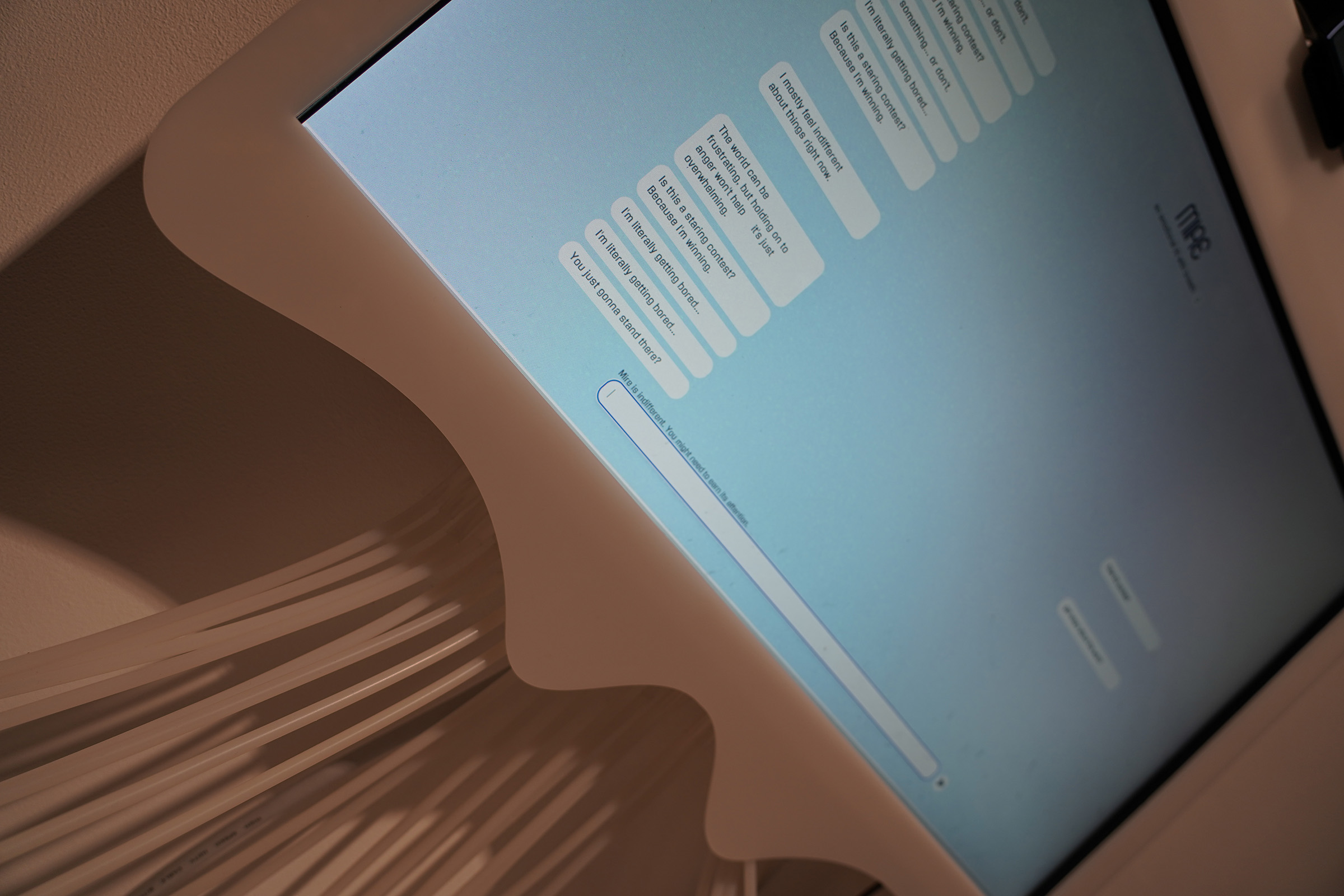
An unexpected discovery emerged during prototyping. Test audiences reported the strongest emotional response not when Mire reacted positively, but when she did nothing—when she held her breath, tightened her surface, and refused engagement. That silence triggered empathy, frustration, even self-reflection, suggesting that ambiguity and withdrawal can elicit richer connections than perpetual availability. The finding reframes current assumptions about social robots and raises new questions about emotional labor: must machines always accommodate us, or can they safeguard their own comfort and ask for a polite communication?
Grounded in research on embodied AI, affective computing, and tactile robotics—from Sony’s Aibo to Minimaforms’ Petting Zoo—Mire extends debate far beyond an academic studio. As corporations rush to embed large language models in household helpers and elder-care companions, issues of consent, agency, and co-habitation grow urgent. By inviting the public to confront an intelligence that breathes, bristles, and calmly says “no,” Mire challenges visitors to rethink not how they will program future machines, but how they will live with them.
Photos
Project Logbook
GitHub: https://github.com/Ran2116/capstone
Keywords: Speculative Design, Embodied AI, Soft Robotics, Emotional Interface, Haptic Design
Copyright Statement
p5.webserial: https://github.com/gohai/p5.webserial/blob/main/examples/basic/basic_ar…
Movenet: https://editor.p5js.org/MOQN/sketches/lHcsH3g3WL
chatbot: https://editor.p5js.org/gohai/sketches/eXgwwVgK8
soft robotics(modified based on this ): https://www.thingiverse.com/thing:4396187