

“Echoes of Memory” is an immersive installation that explores how everyday sounds trigger fragmented memories and emotional nostalgia. Through fabric, obsolete objects, ambient sound, and poetic narrative, the project invites viewers into a drifting sensory space where memory echoes rather than unfolds.
Project Video
Abstract
“Echoes of Memory” is an immersive sound-based installation that investigates the emotional and sensory dimensions of memory. Situated at the intersection of spatial design, auditory storytelling, and poetic abstraction, the work uses sound as both a medium and metaphor to reflect on how personal and collective memories are carried, distorted, and echoed through time.
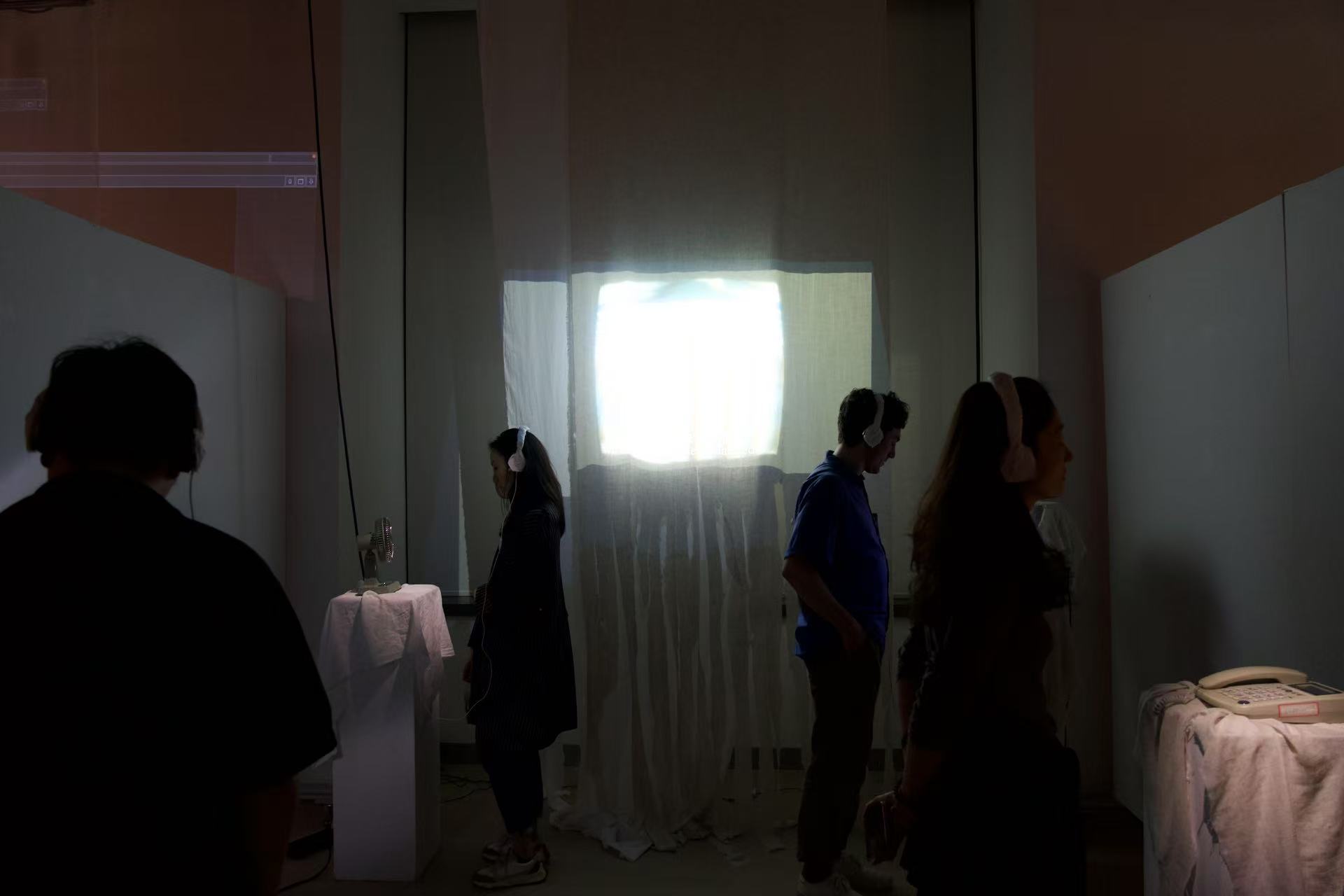
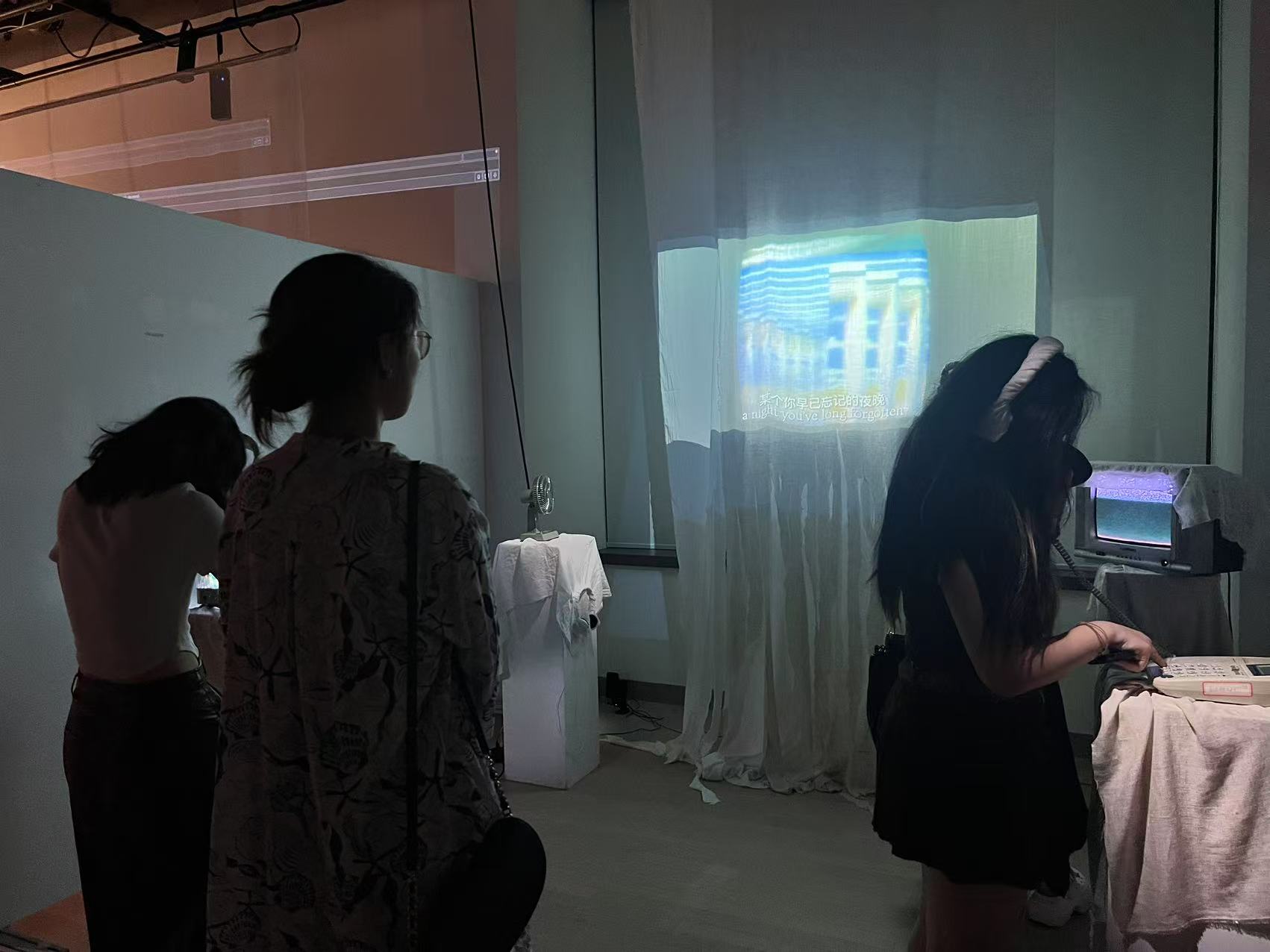
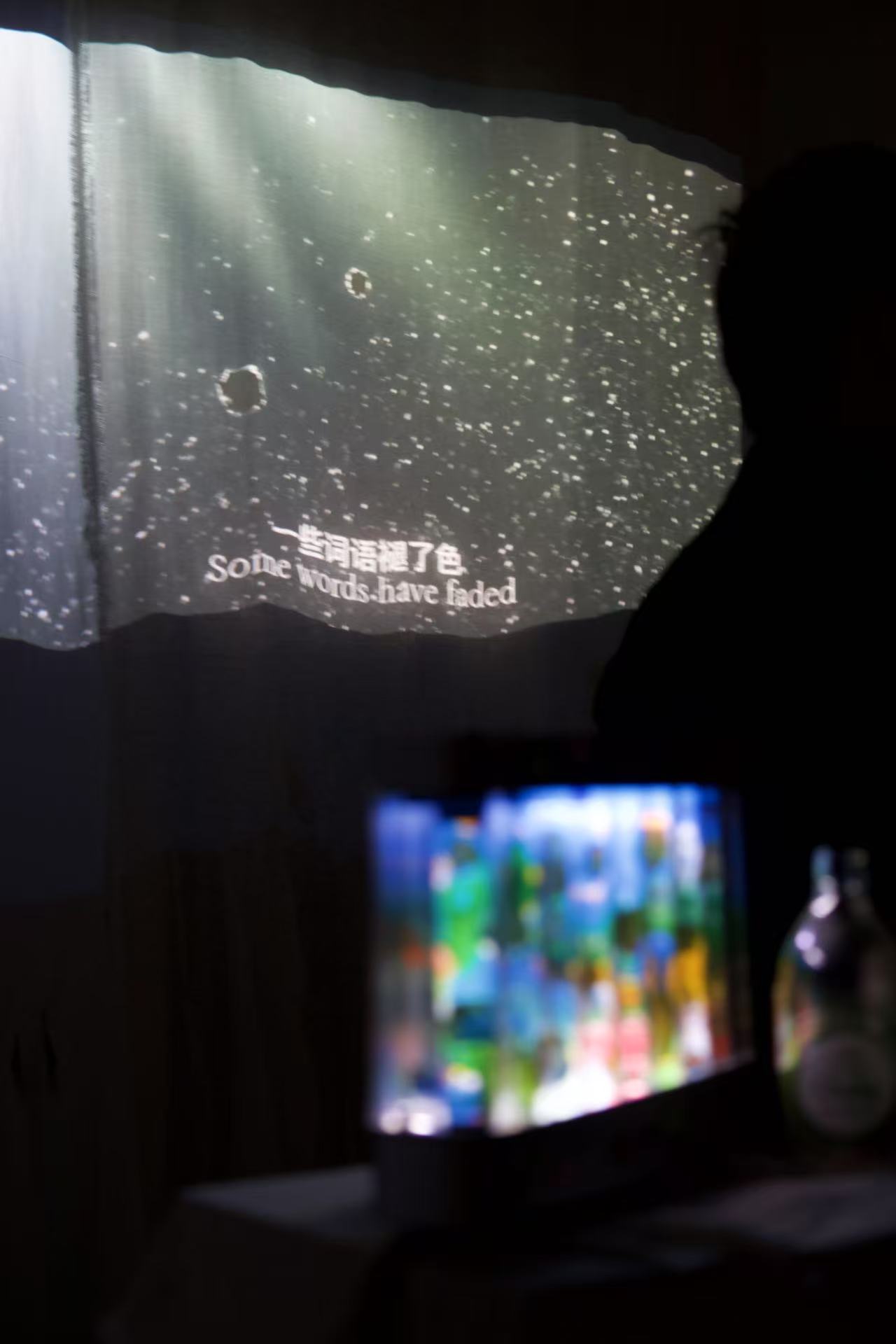
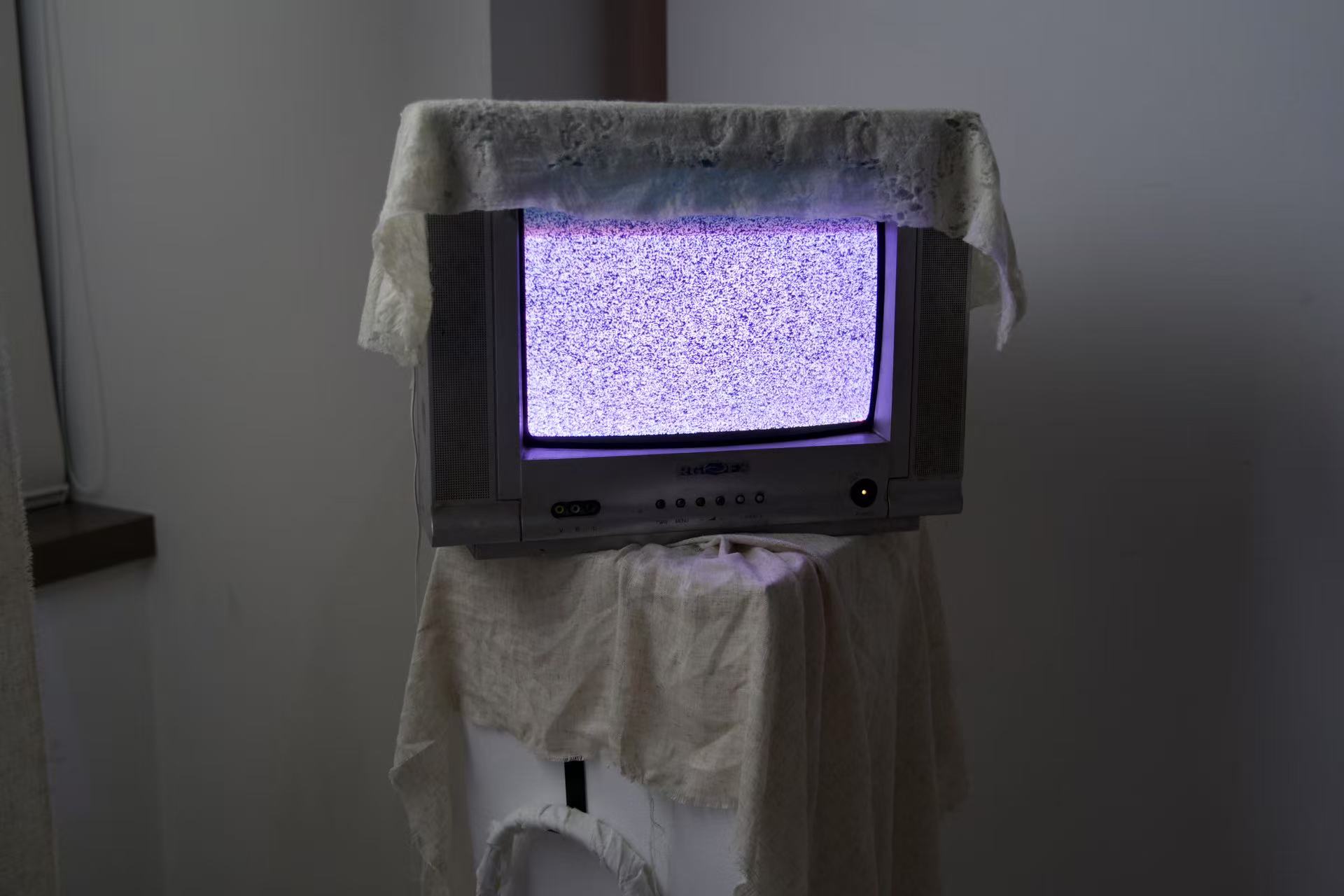
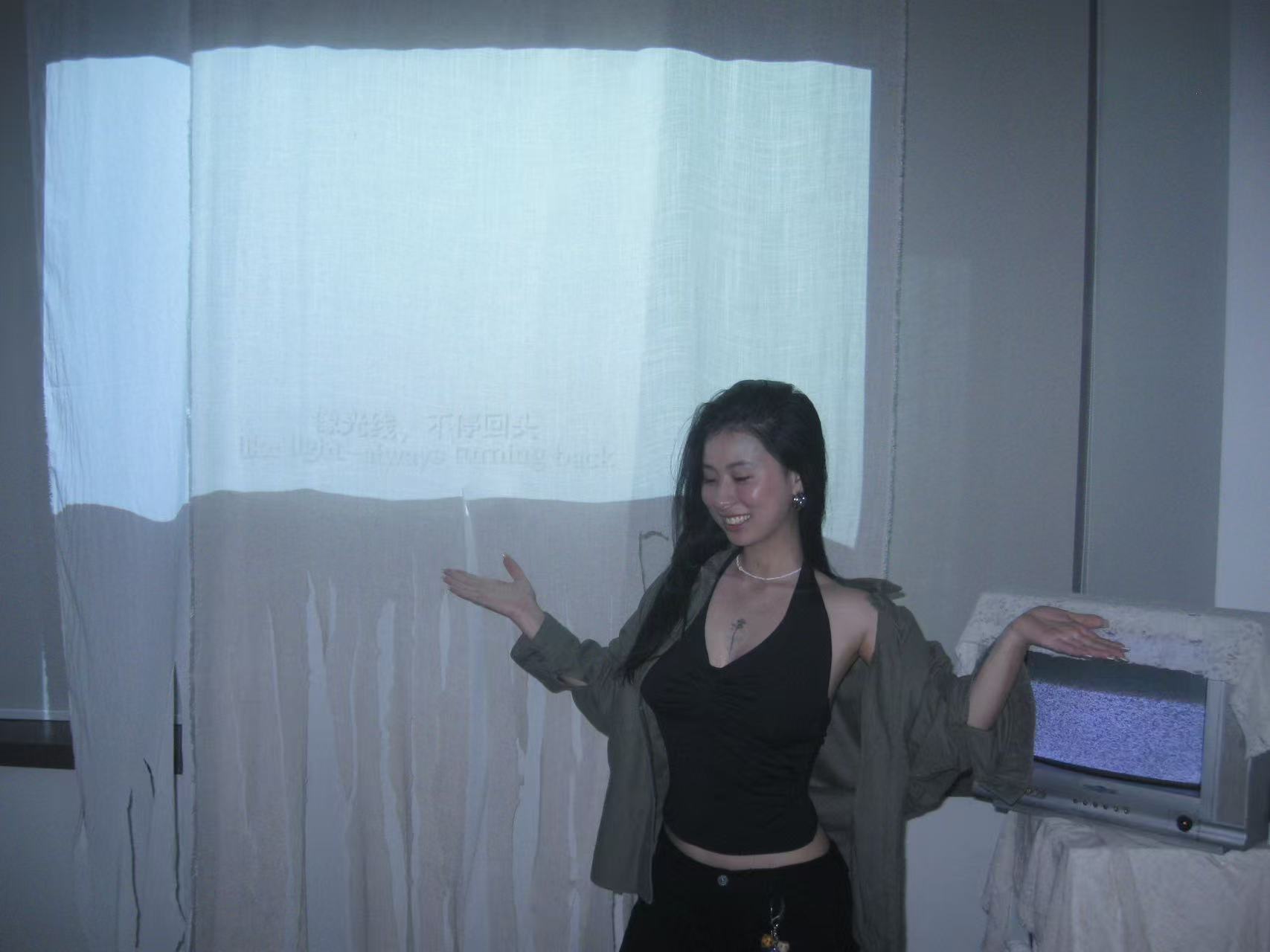
Instead of presenting a linear narrative, the project assembles fragmented sensory cues—familiar yet slightly out of place. The installation features four mundane objects: an old electric fan, a landline telephone, a CRT television, and a fake fish tank. Each object emits subtle soundscapes: static buzz, mechanical hum, looping water—all traces of past domestic life. These sound cues are layered with audio fragments from interviews, where participants recall memories tied to everyday sounds. Their voices are not always clear; they fade in and out, like echoes caught in folds of time.
Suspended around the space are hanging sheets and vintage fabrics that act as both spatial dividers and projection surfaces. Abstract visuals—generated through a combination of TouchDesigner and AI tools—move slowly across these surfaces. The visuals, like the memories they embody, do not offer a clear storyline. Instead, they shimmer, flicker, and dissolve. In the center of the space, a poetic narration plays:
“Sound flows through the empty room
Like light, always turning back
Memory is not a thread, but a fabric—
Time-wrinkled, sound-hidden
Echoes that never land,
Words that fade but never leave.”
This narration becomes the emotional anchor of the installation, suggesting that memory is not something we retrieve, but something that continues to resonate—between bodies, across time, within spaces.
Rather than incorporating direct interaction through sensors or screens, the project deliberately avoids overt technological interfaces. It aims to slow down the visitor’s attention, fostering a more affective mode of perception. The “interaction” happens subtly—through the audience’s own memory, breath, and movement within the space.
The project was developed through a process of emotional prototyping, spatial testing, and deep reflection on the relationship between sound and nostalgia. Inspiration was drawn from artist talks, material experiments, and a growing recognition that memory is not a thing to be captured—but a condition to be entered.
In this sense, Echoes of Memory is not just an installation—it is an invitation to listen inward, to drift, and to recall. The sound does not explain; it lingers. And what remains, perhaps, is not a memory—but an echo.
Photos
Project Logbook
Keywords: Immersive Installation, Sound Art, Memory and Nostalgia, Sensory Experience, Participatory Media
Copyright Statement
Audio Sources:
Interview recordings with consent from participants.
Radio samples and ambient sounds recorded by the artist.
No copyrighted commercial music or sound used.
Visual Resources: All footage and projection visuals were self-produced using TouchDesigner and Kling.
No copyrighted imagery used.
Research References:
Inspirations from:
Roland Barthes, Camera Lucida
Svetlana Boym, The Future of Nostalgia
Brandon LaBelle, Acoustic Territories: Sound Culture and Everyday Life
Interviews and field recordings by the artist.