

Cocooning is an immersive interactive experience that explores proprioception, the body’s innate sense of position and movement, by translating it into a living landscape of touch and sound. By giving form to internal sensing, the work invites participants to inhabit the present with heightened awareness and rediscover the body as a ground of perception in the visually-dominant digital era.
Project Video
Abstract
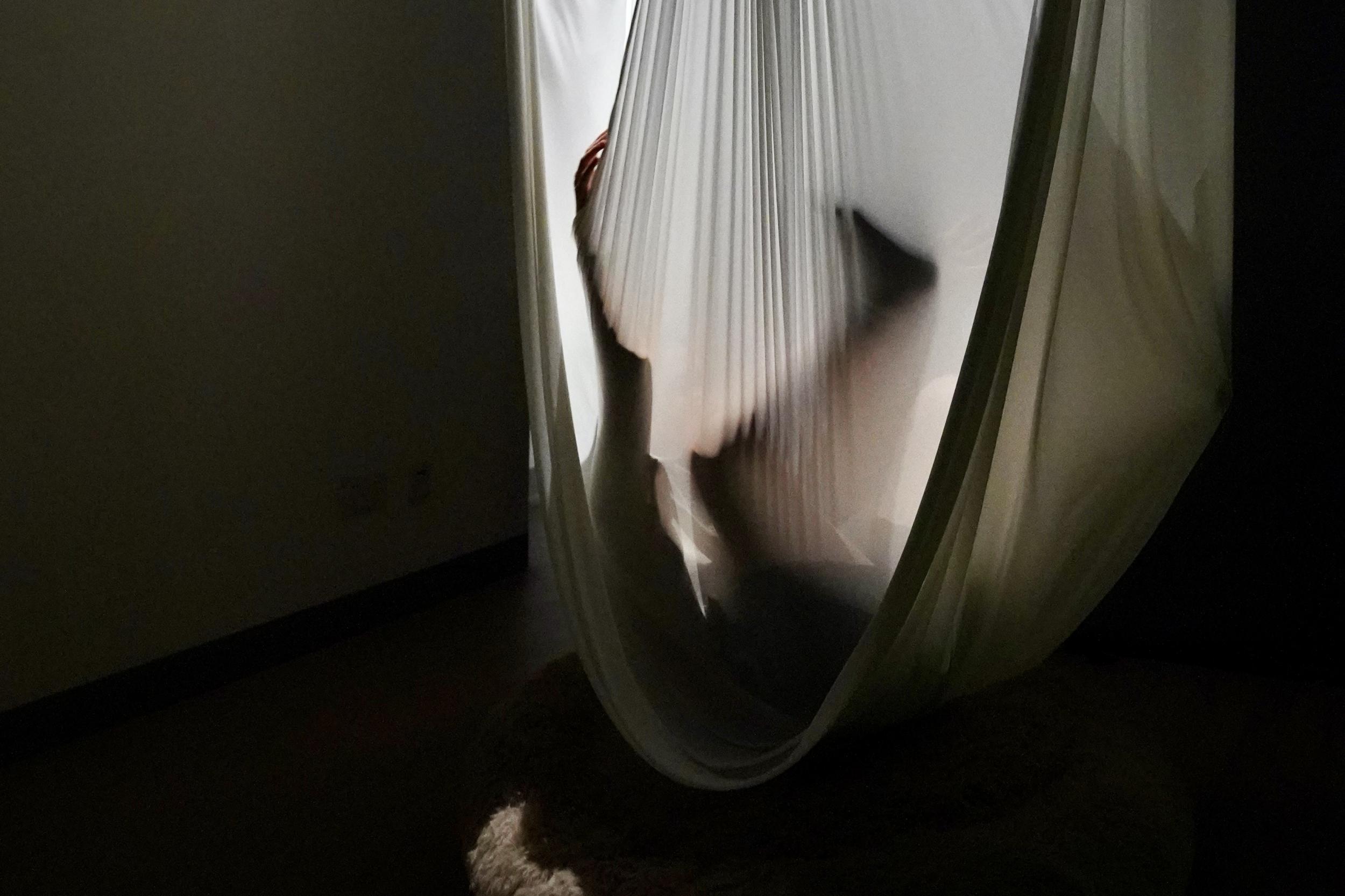
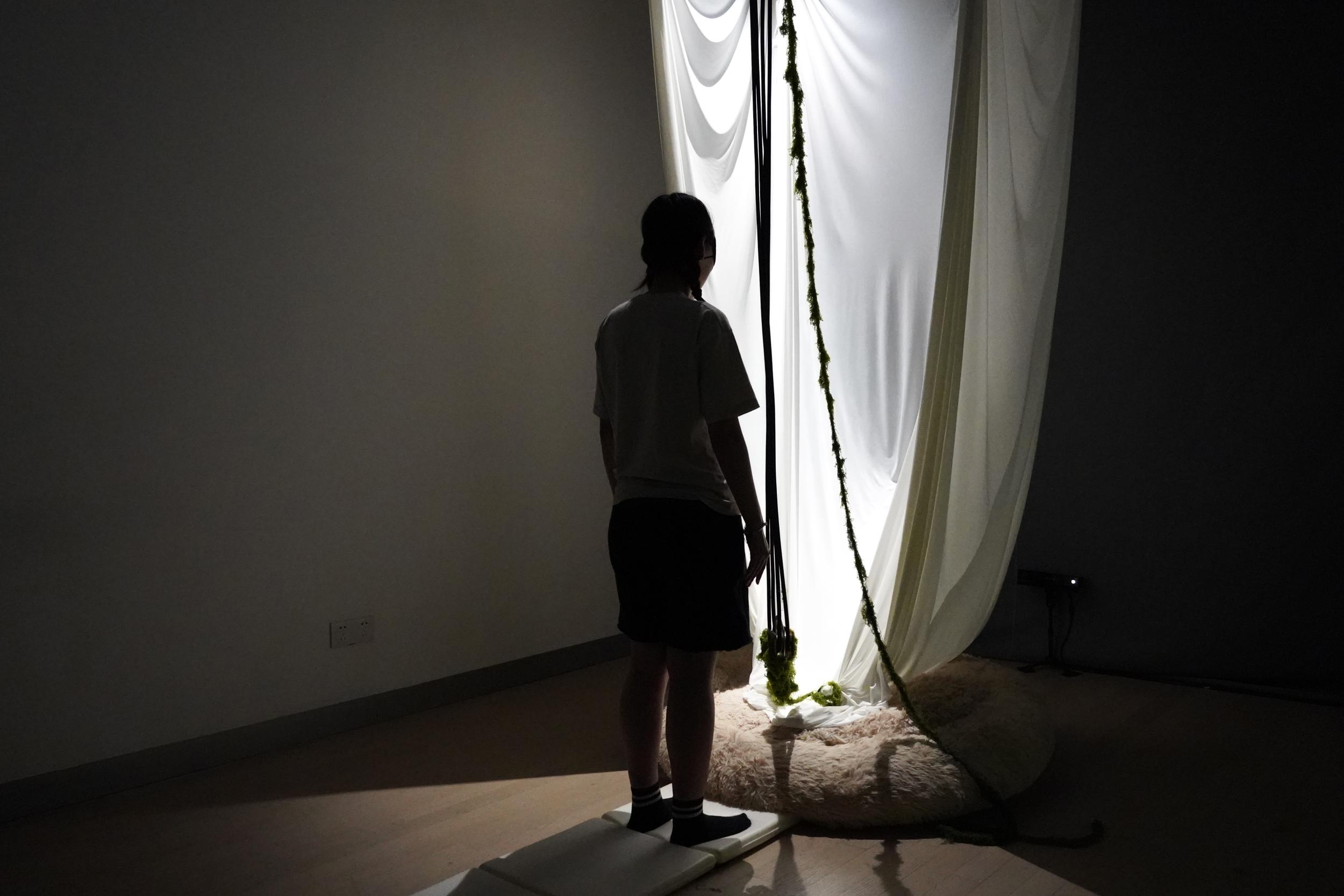
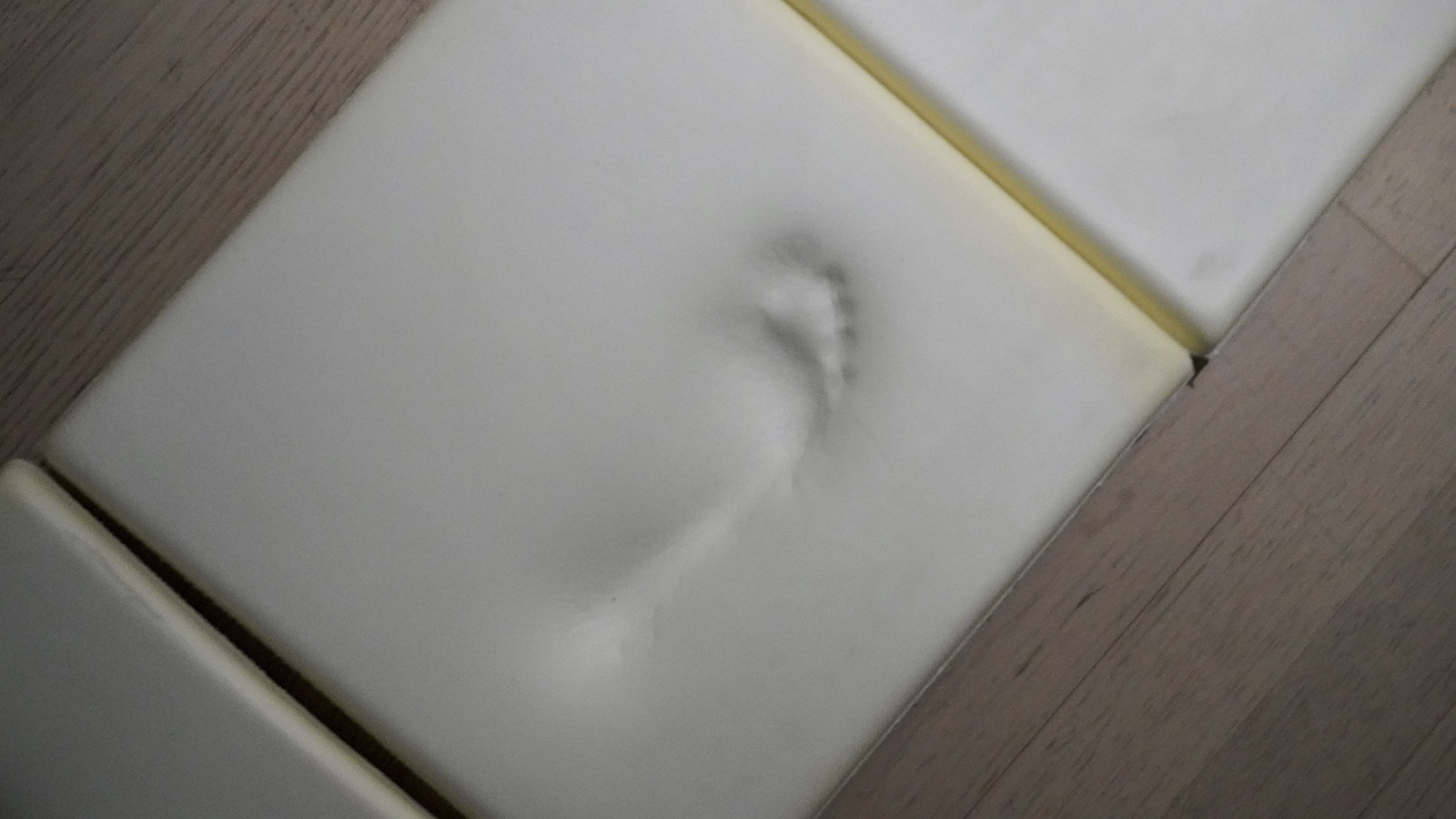
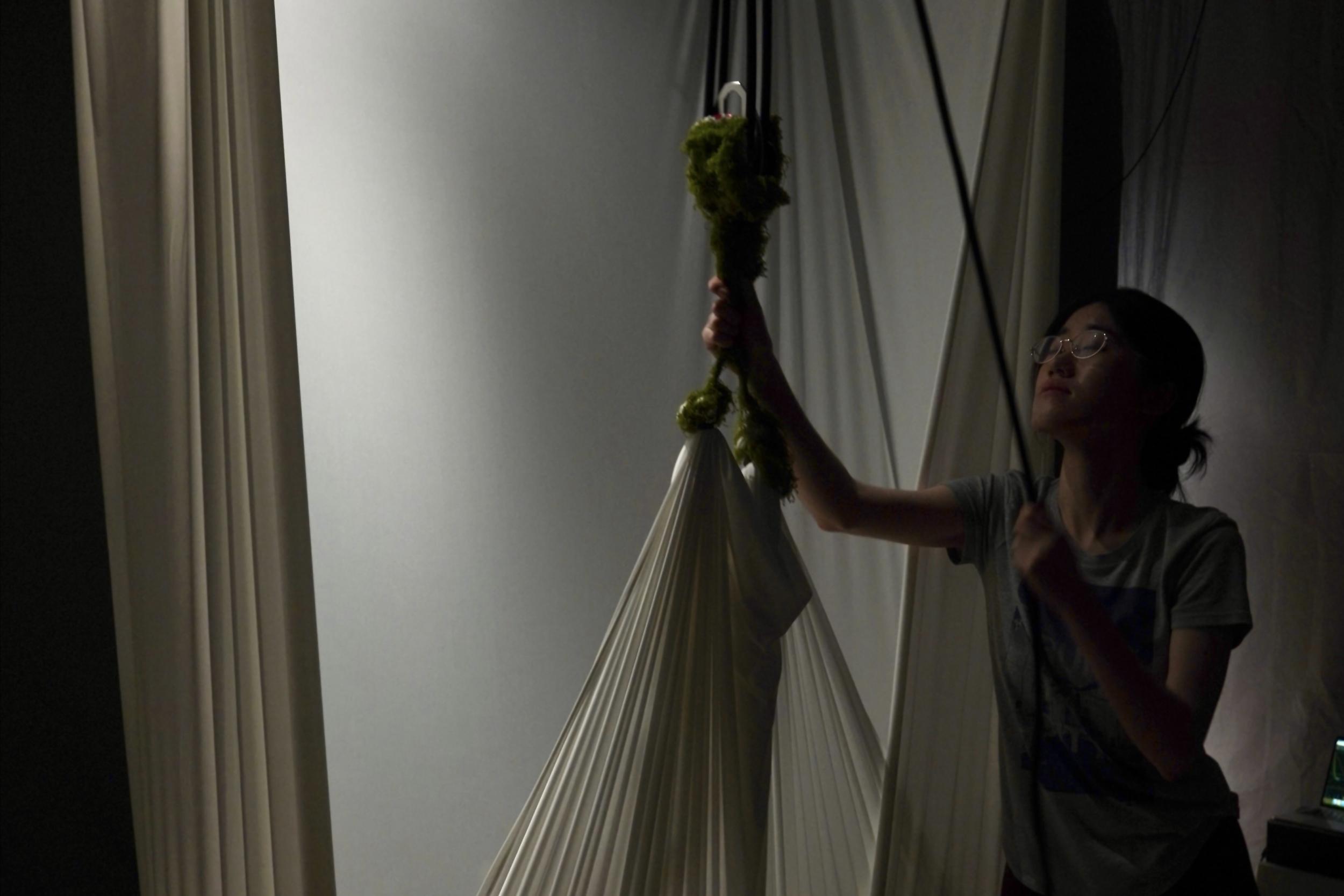
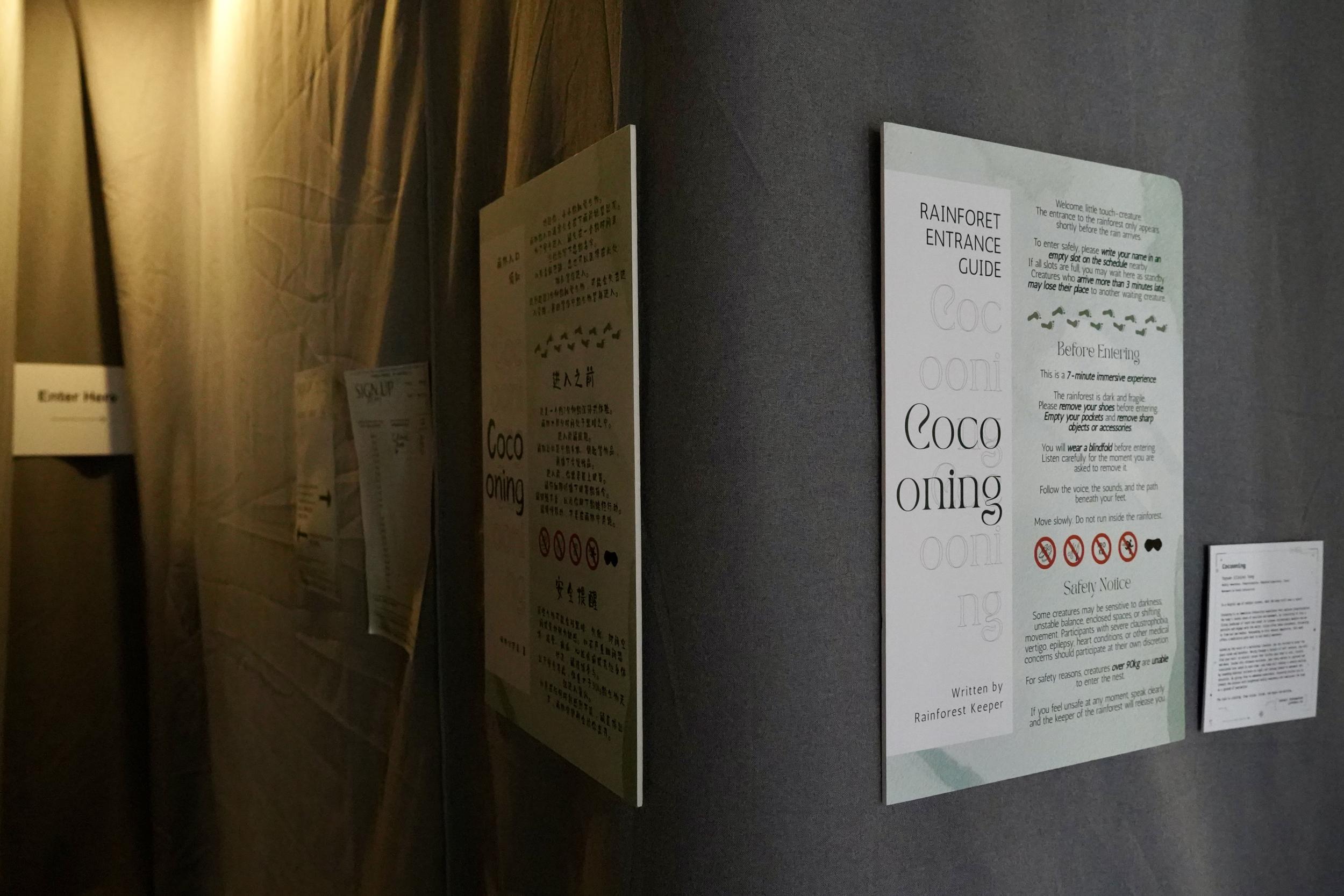
In a digital era increasingly mediated by screens and visual interfaces, human perception is often dominated by sight. The “amputation” of other senses, including the sense of touch, are now distancing us from the body’s internal sensations. Cocooning is an immersive interactive experience that explores how interactive media can support embodied awareness by translating proprioception into a responsive experience of touch and sound. The project aims to explore how sensory experience might change when vision is no longer the dominant mode of perception. Participants are invited to enter the space alone and barefoot, guided by the voice of a mysterious creature through an unfamiliar sensory landscape in the rainforest. Moving through darkness, soft textures, and tactile pathways, participants eventually encounter an elastic cocoon-like structure that surrounds and responds to the body. In this intimate enclosure, bodily movement becomes the primary mode of interaction. Motions are captured in real time through Kinect tracking and translated into responsive sound feedback using the Optical Flow node in TouchDesigner. The experience encourages participants to hear the rhythm, percussions, and intensity of their own movements as they balance and explore the space. Drawing from theories of embodiment, phenomenology, and sensory perception, Cocooning shows how interactive media and digital systems might cultivate bodily awareness. The work is particularly influenced by the concept of proprioception as a largely invisible yet fundamental aspect of human perception, one that is often overlooked within screen-based interactions. Through immersive spatial interaction, tactile engagement, and movement-generated sound, the project creates conditions for participants to turn attention inward and experience the body as an active sensing subject. Cocooning proposes interactive media as a space for slowness, presence, and sensory reattunement. By externalizing internal sensation into material and sonic form, the work invites participants to rediscover bodily awareness and cultivate a grounded sense of being in the digital age.
Photos
Project Logbook
Keywords: Bodily Awareness, Proprioception, Digital Performativity, Touch, Embodiment
Copyright Statement
Eliasson, Olafur. “Din Blinde Passager.” Studio Olafur Eliasson, 2010. https://olafureliasson.net
/artwork/din-blinde-passager-2010/.
Hansen, Mark B. N. Bodies in Code: Interfaces with Digital Media. New York: Routledge, 2006.
ebookcentral.proquest.com/lib/nyulibrary-ebooks/detail.action?docID=291873.
Kozel, Susan. Closer: Performance, Technologies, Phenomenology. Cambridge, MA: The MIT
Press, 2007.
Ménard, Phia. “L’après-Midi d’un Foehn.” Compagnie Non Nova, 2011. https://www.cieno
nnova.com/spectacles/spectacles-en-tourn%C3%A9e/l-apr%C3%A8s-midi-d-un-foehn-2
011-1/.
Massumi, Brian. Parables for the Virtual: Movement, Affect, Sensation. Durham, NC: Duke
University Press, 2002. ebookcentral.proquest.com/lib/nyulibrary-ebooks/detail.action?
docID=6688376.
McLuhan, Marshall, and Quentin Fiore. The Medium Is the Massage: An Inventory of Effects.
New York: Bantam Books, 1967.
Merleau-Ponty, Maurice. The World of Perception. Translated by Oliver Davis. New York:
Routledge, 2004.
Montero, Barbara Gail. “Proprioception as an Aesthetic Sense.” The Journal of Aesthetics and
Art Criticism 64, no. 2 (2006): 233–242. www.researchgate.net/publication/227984458_
Proprioception_as_an_Aesthetic_Sense.
Neto, Ernesto. “Nhó Nhó Nave.” Artera, January 1, 1999. https://www.artera.ae/artworks/
76613ccf-0f1c-426d-84bb-5e393d063f27.
O’Shaughnessy, Brian. “Proprioception and the Body Image.” In The Body and the Self, edited
by José Luis Bermúdez, Anthony Marcel, and Naomi Eilan, 175–203. Cambridge, MA:
The MIT Press, 1995. books.google.com.hk/books?hl=en&lr=&id=hwBh9nDDDFQC
&oi=fnd&pg=PP9&ots=Y29D9dNGXK&sig=kxssuBnnIPVqI5vI2S3SmvCJg9w&redir_
esc=y#v=onepage&q&f=false
Rokeby, David. Very Nervous System, 1986. http://www.davidrokeby.com/vns.html.
Shibolet, Yotam. “Bodyminds in Movement: Embodied Cognition in the Practice and Discourse of Contact Improvisation.” Junctions: Graduate Journal of the Humanities 3, no. 1
22 (2018): 72–91. research-portal.uu.nl/en/publications/bodyminds-in-movement-embodiedcognition-in-the-practice-and-disc/.
Spence, Charles. “Proprioceptive Art: How Should It Be Defined, and Why Has It Become So
Popular?” i-Perception 13, no. 5 (2022).pmc.ncbi.nlm.nih.gov/articles/PMC9459486/.
Varela, Francisco J., Evan Thompson, and Eleanor Rosch. The Embodied Mind: Cognitive
Science and Human Experience. Revised edition. Cambridge, MA: The MIT Press, 2016.
direct.mit.edu/books/monograph/4061/The-Embodied-MindCognitive-Science-and-Hum
an.