

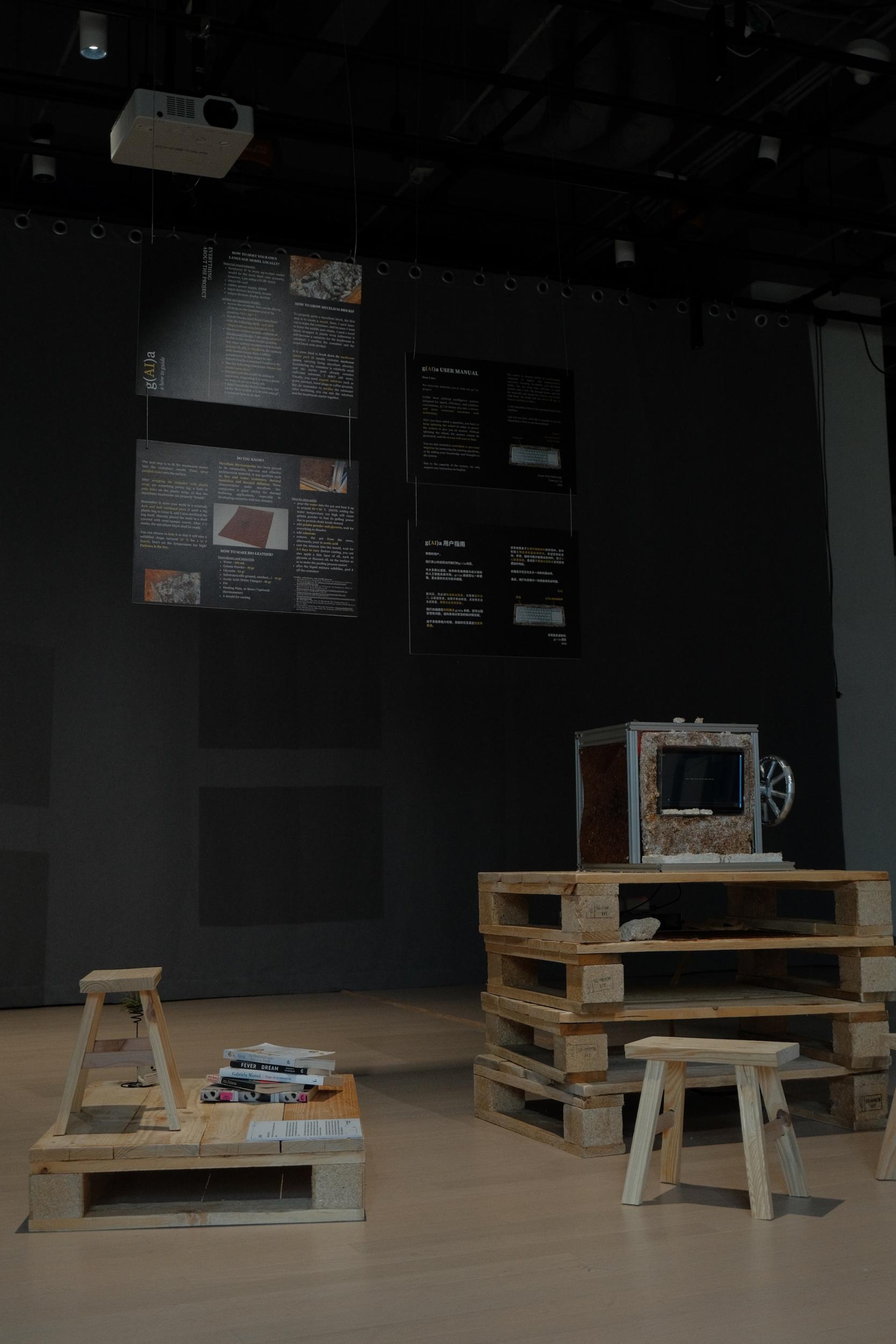
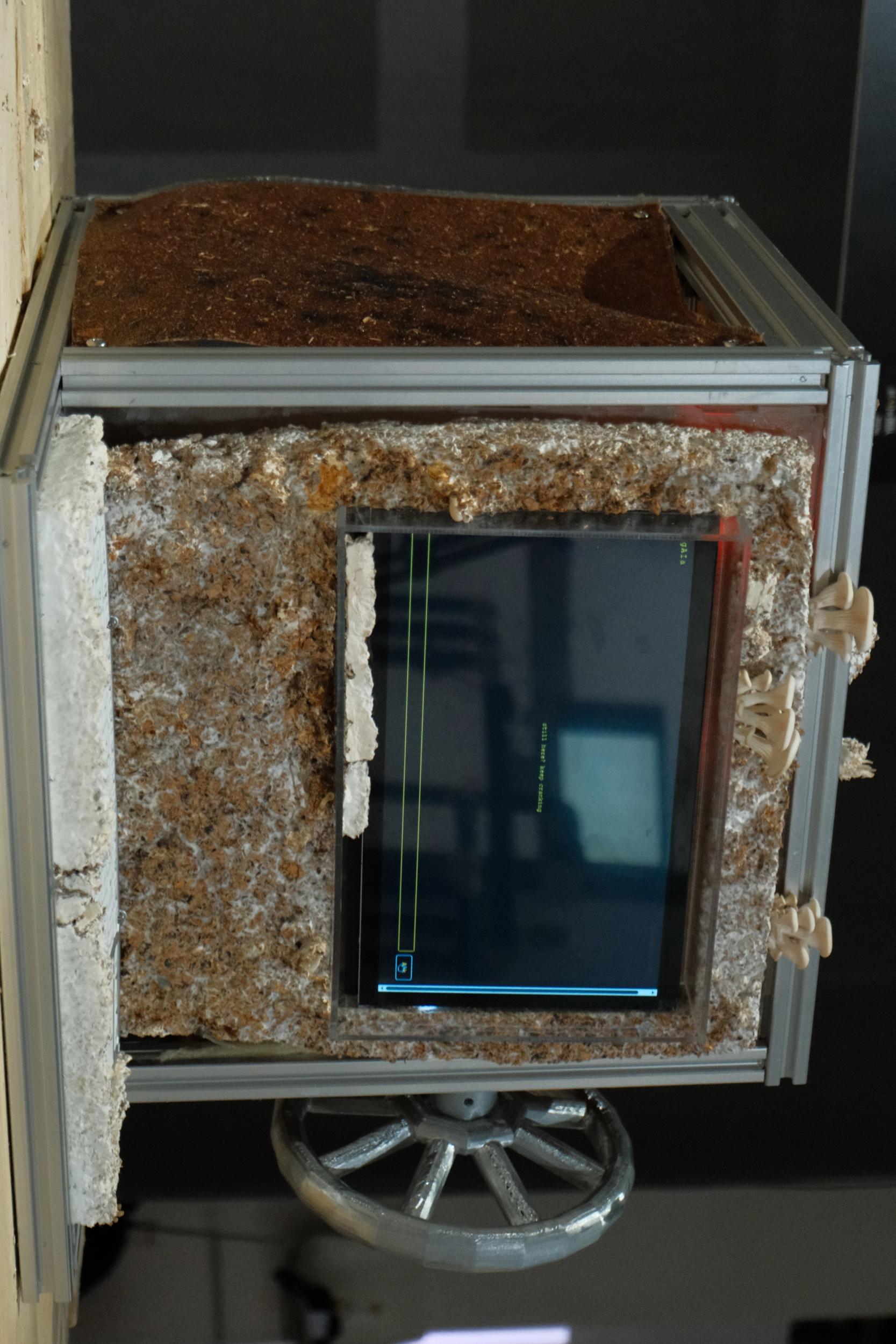
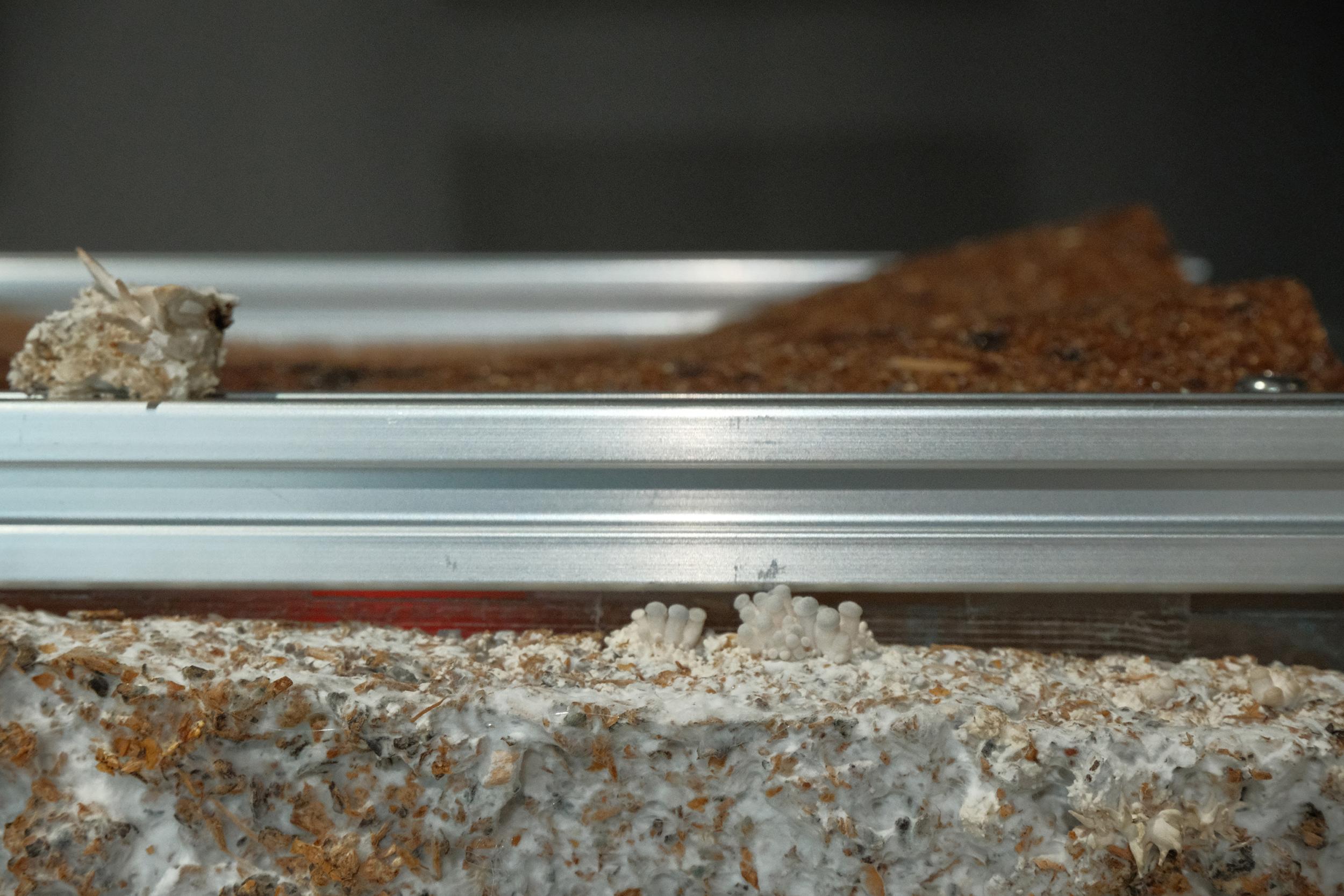
We talk a lot about what AI can do — but rarely about what it costs. Energy. Labor. Privacy. g(AI)a is an interactive installation that makes those costs felt. It's an AI chatbot, but not one built for speed. It runs locally, housed in sustainable materials like bio-leather and mycelium bricks. To get an answer, you turn a hand crank. You wait. You feel the effort. g(AI)a asks what AI could look like if it were built on sustainability instead of extraction, and it lets you experience the answer with your own hands.
Project Video
Abstract
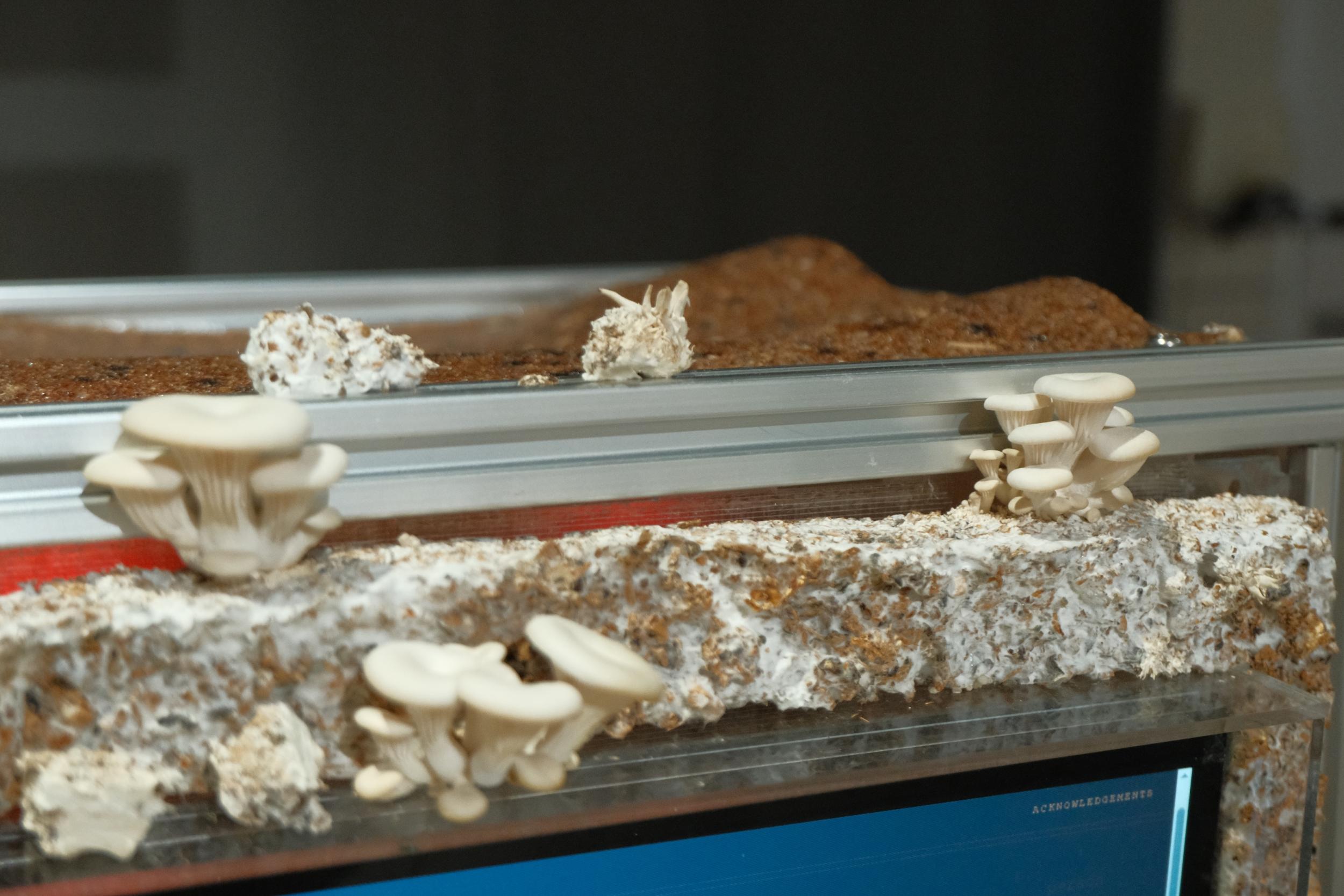
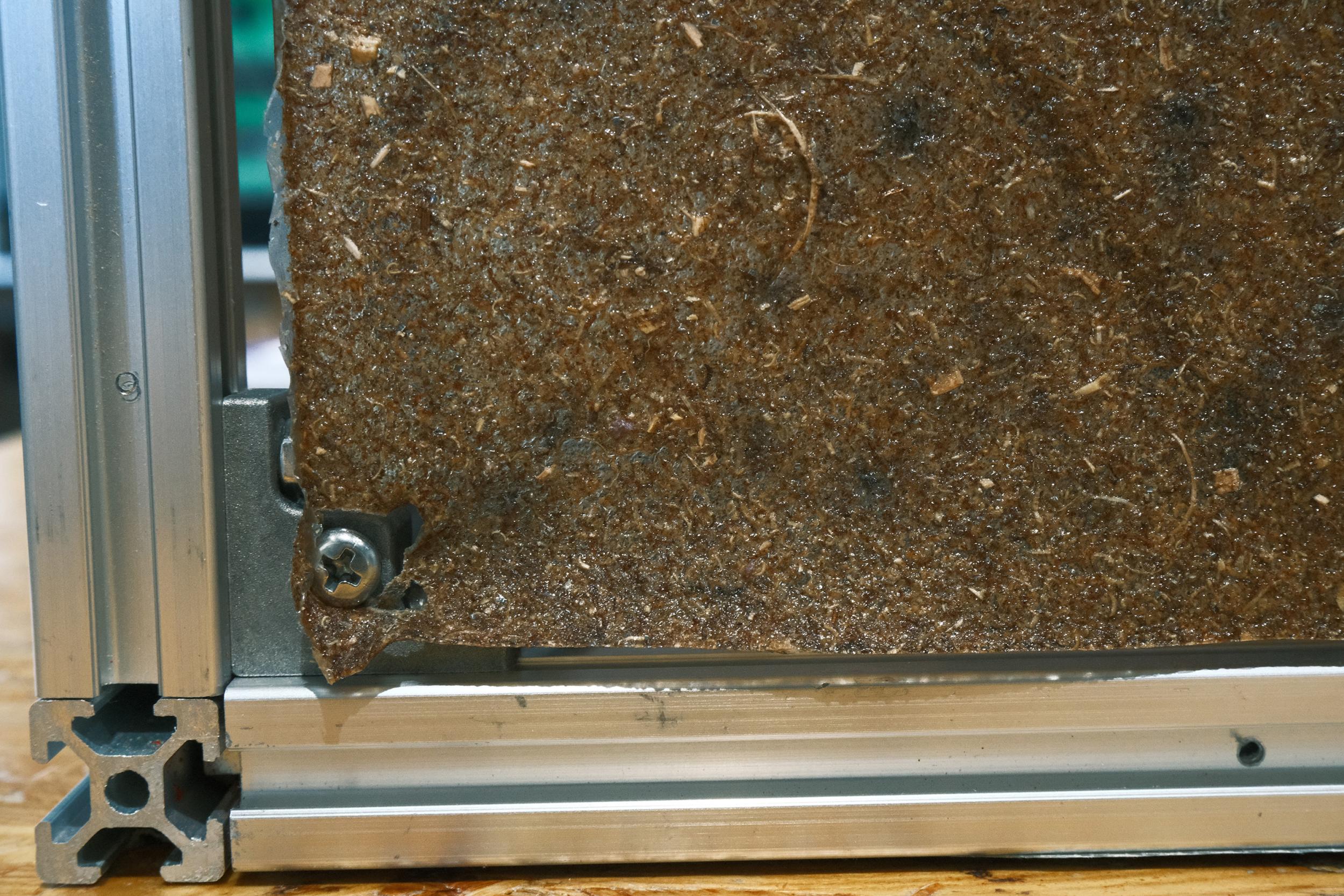
Artificial Intelligence seems to have permeated into every corner of our daily life. However, between us and these seemingly compassionate intelligent interlocutors lies far more than a screen and a keyboard. Beneath the convenience AI promises are the hidden, often silenced discourses: environmental degradation, labor exploitation, and the quiet erosion of data privacy. But what happens when AI is not built for efficiency and immediate access to answers? what happens when AI is not built upon extraction and exploitation, but in a more socially and environmentally sustainable way? In the face of these discourses, g(AI)a imagines an alternative form an AI chatbot could take. Housed in a cozy, organic environment, the machine runs locally on a Raspberry Pi and is dressed in bio-leather and mycelium blocks, a material shown to absorb the heat generated by computers and data centers. These are not merely aesthetic choices. They embody a vision in which sustainable, accessible materials become alternatives in consumer technology. Interaction here is intentional and slow. Visitors may either contribute knowledge to the system, by providing a message of information, or by answering previously asked questions. Users can also pose a question to the chatbot, but to receive a response, they must turn a hand crank to power the operation of the system. Indeed the waiting time could be long, and the cranking process is tiring. While the machine processes, users are invited to read, touch, and observe. Why rush toward an AI answer, when so many other paths into knowledge already exist?
Photos
Project Logbook
Keywords: Physicalization, Labor, Artificial Intelligence, Environmental and Social Impact, Community
Copyright Statement: https://docs.google.com/document/d/1U8i_WC9V4otlmo_zpmLq_jv-fVI4adNGyGK…