

Ec(h)o exhibits a vision for humans’ future use of technology, exploring how new-media design could aid in harmonizing human-nature relationships.
Project Video
Abstract
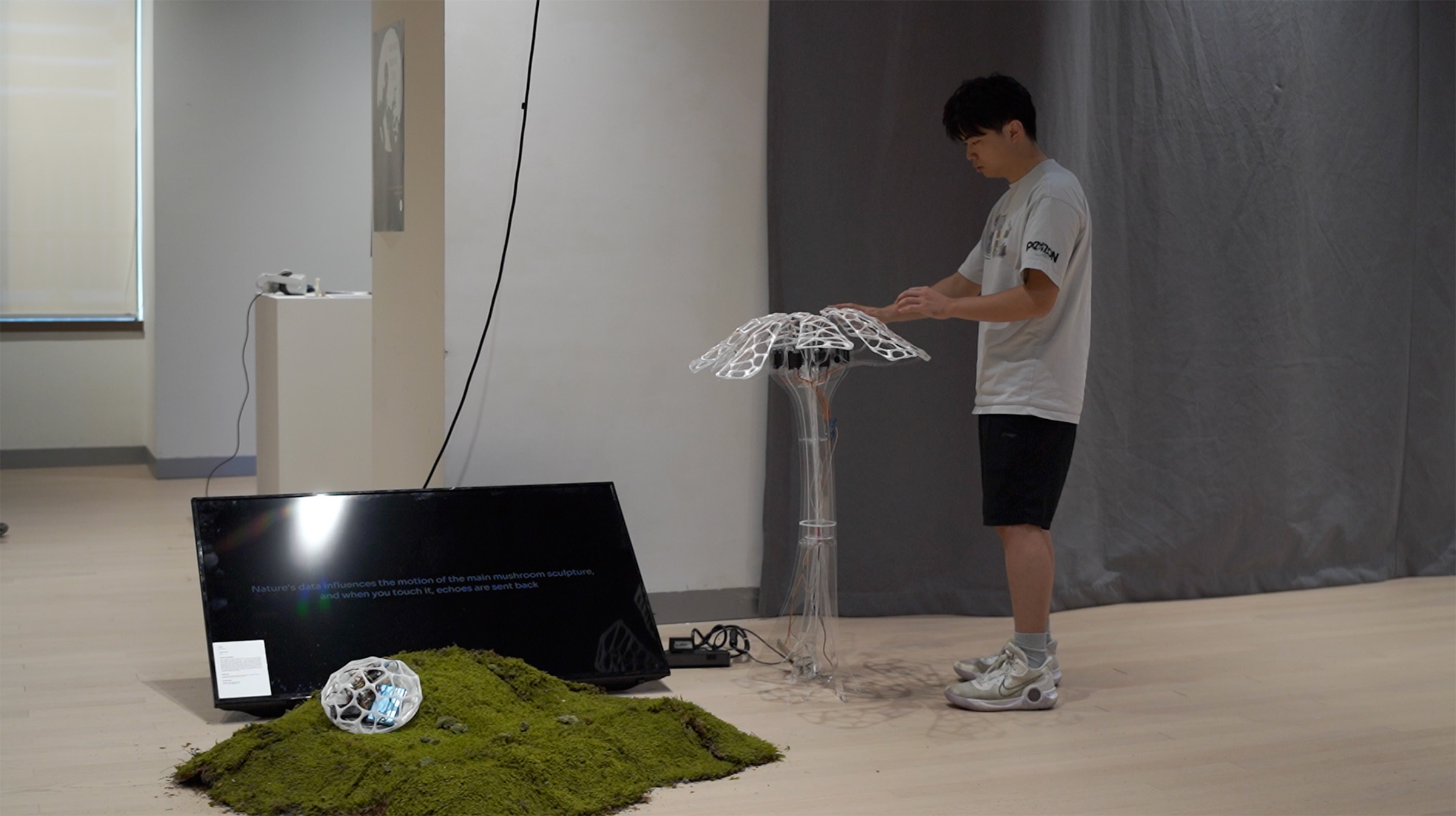
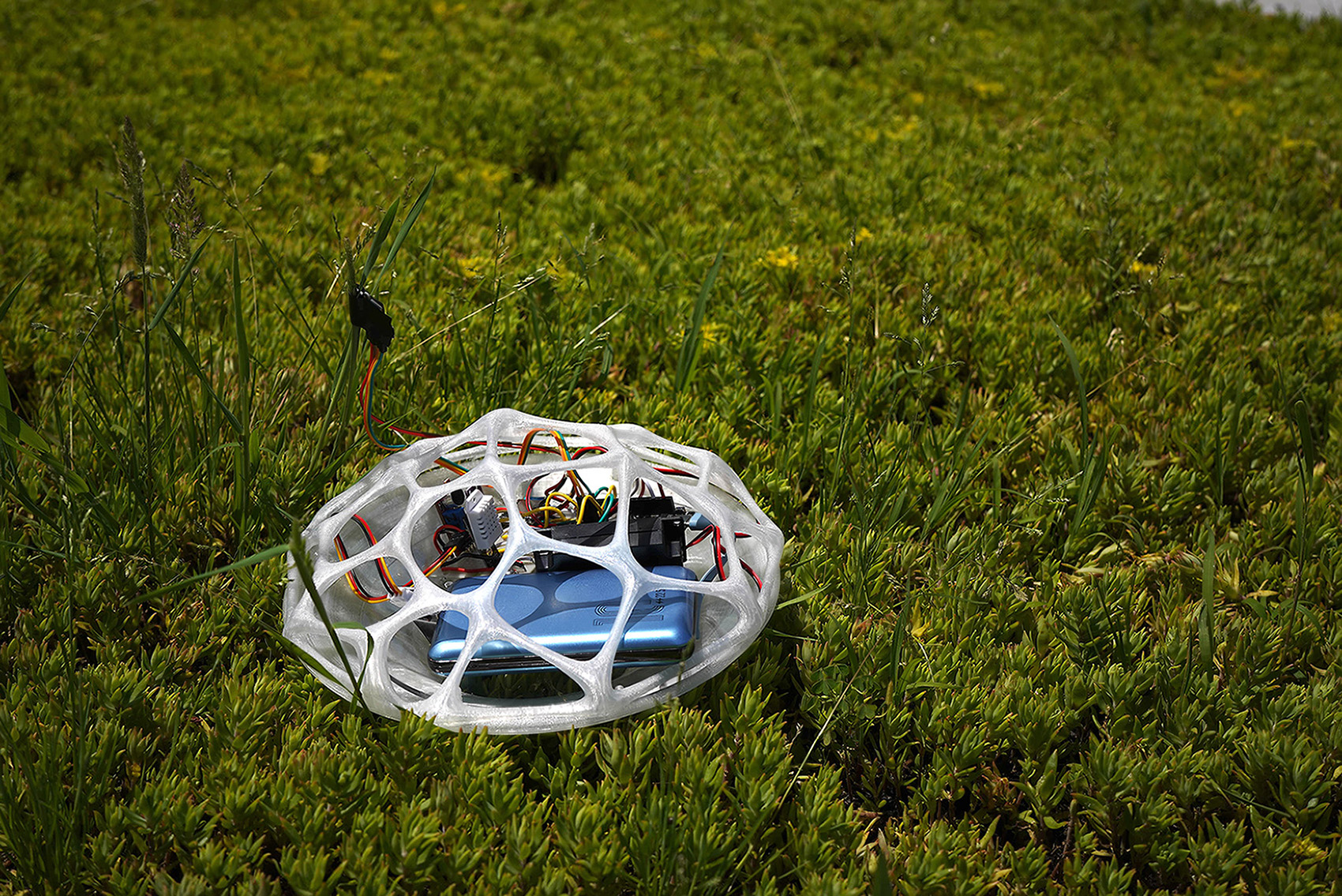
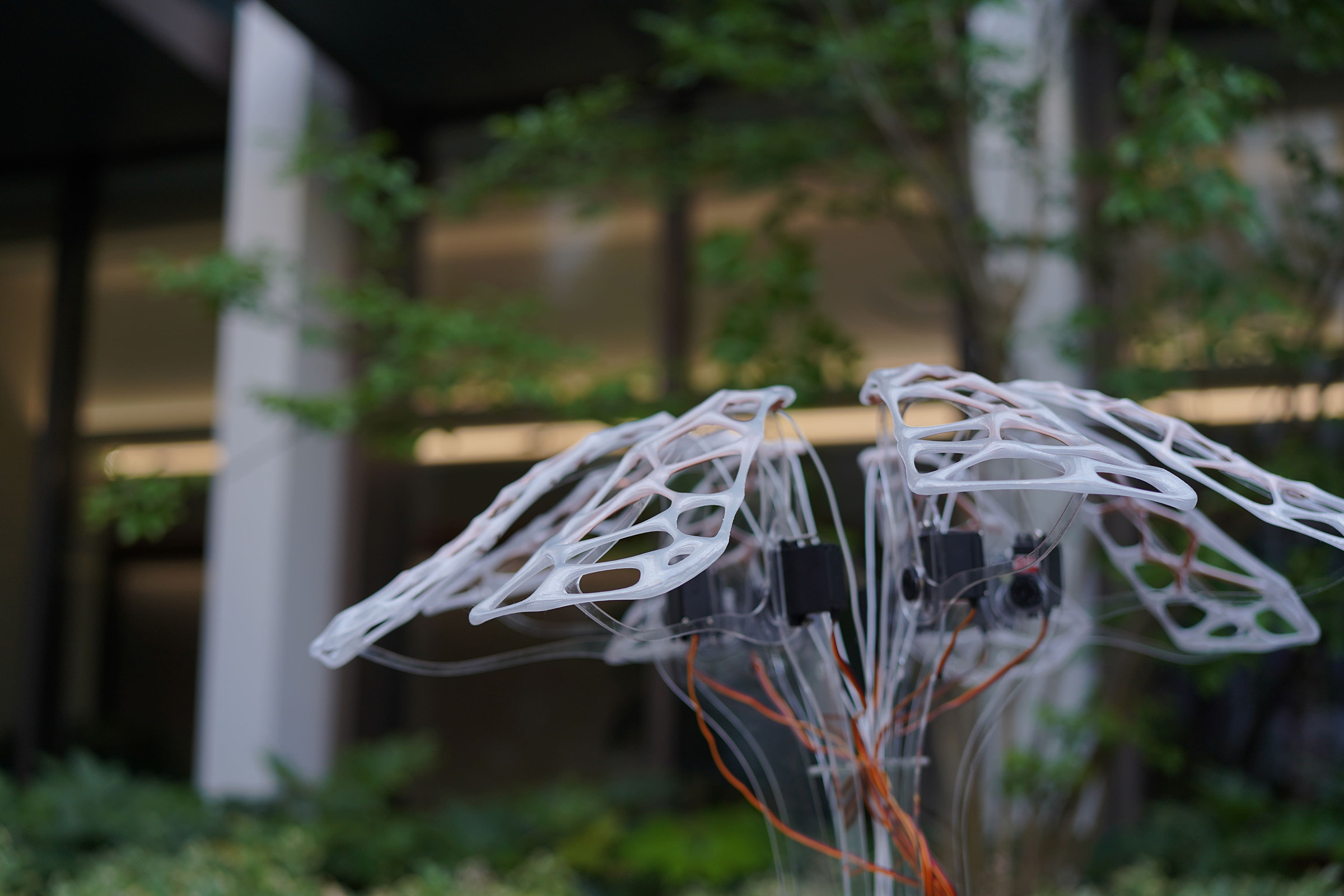
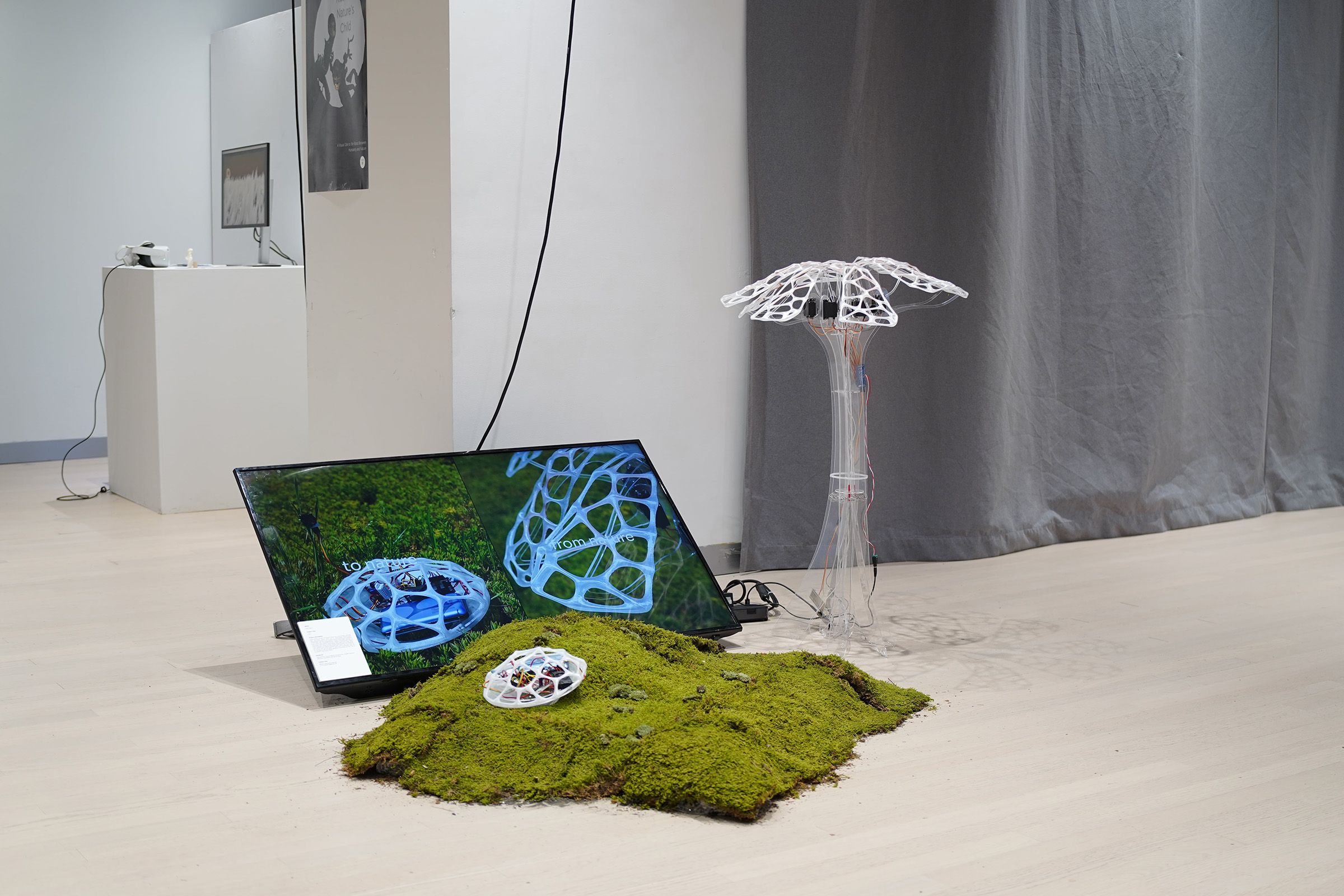
Ec(h)o examines how technology mediates between humans and nature. With new technologies being wildly implanted into everyday human life, how much should we consider their applications’ ecological and cultural implications? Originating from cosmotechnics and embodiment theories, the project aims to unite moral and natural orders with technology. While numerous recent art projects invite audiences to interact with nature, these interactions are often one-sided and forced. Instead, I propose a model of multi-sensory communication that facilitates more spiritual and intimate dialogue. With two components—one at the human side and the other at nature's—communicating via cloud, it explores a new-media solution for harmonizing human-nature relationships, aesthetically and functionally. Designed to be positioned in outdoor spaces, the project’s design alludes to fungi's role as information centers in the real ecosystem. It appears in the form of two techno-mushrooms transmitting data via the MQTT protocol for Internet-of-Things: a big one on the human side and a small one on nature’s. More specifically, the small mushroom collects eight environmental data points with sensors (temperature, humidity, sound, ultraviolet, soil moisture, acceleration in three dimensions), which would influence the big mushroom sculpture’s motion in front of the audience. Meanwhile, when people touch the kinetic mushroom, the small ones generate sounds to the big nature. The sound was made from hitting wood with metal, while the slow, even subtle, motion of the big mushroom conveys and symbolizes the ubiquitous existence of nature, the external environment. In regard to production, the project chose to integrate digital fabrication techniques like 3D printing and laser cutting to achieve a transparent, technical, beautiful, and yet organic appearance of unique mushrooms, which echoes the theme of merging nature and human culture. By interacting with the mushroom that reveals its own machinery components, Ec(h)o goes beyond one-way or mono-sense communication, and creates a form of rather spiritual and abstract bond that engages different senses as an approach to reshaping technology’s role in-between humans and nature. In contrast to common dualist philosophy prevalent in the West after the Enlightenment, where culture and nature are perceived as separate entities, Chinese philosophy aims to promote a more unified view, evident in common phrases such as “tianrenheyi.” Yuk Hui’s ‘cosmotechnics,’ a concept developed in his recent book The Question Concerning Technology in China, is a comprehensive theory of how, rather than being a mere tool in the hands of humans, technology could serve us in uniting human goals with cosmic logic (the Way, dao). Inspired by these ideas, the project explores how design could aid in harmonizing human-nature relationships, aiming to inspire humans in their future ways of employing technology and biology.
Images
Project Logbook
GitHub: https://github.com/EadinWang/IMA-Capstone
Keywords: Physical computing, Remote communication, Human-nature relationships