

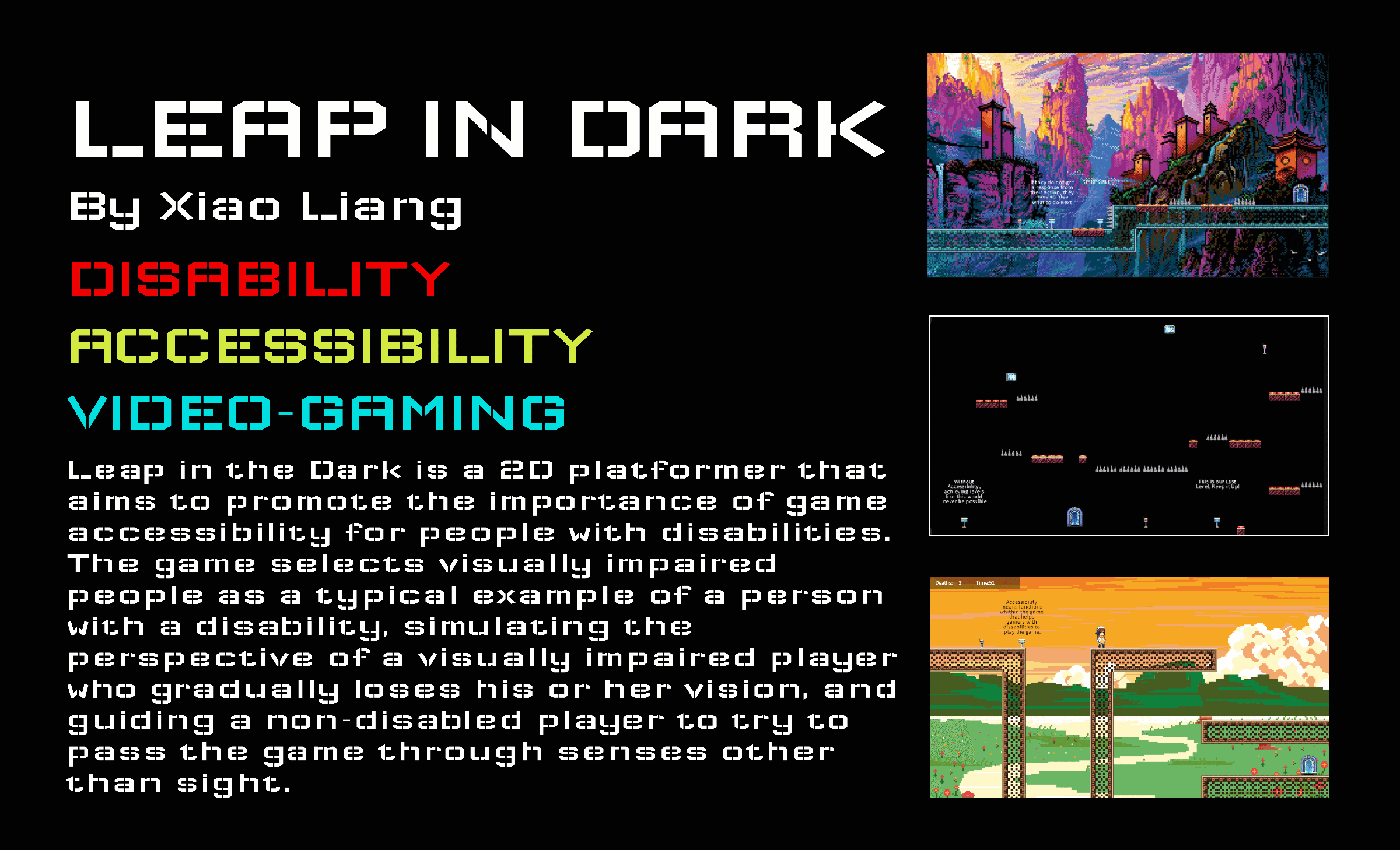
LEAP in the Dark is a 2D platform game designed to introduce you to the meaning and importance of game accessibility for visually impaired players.
Project Video
Abstract
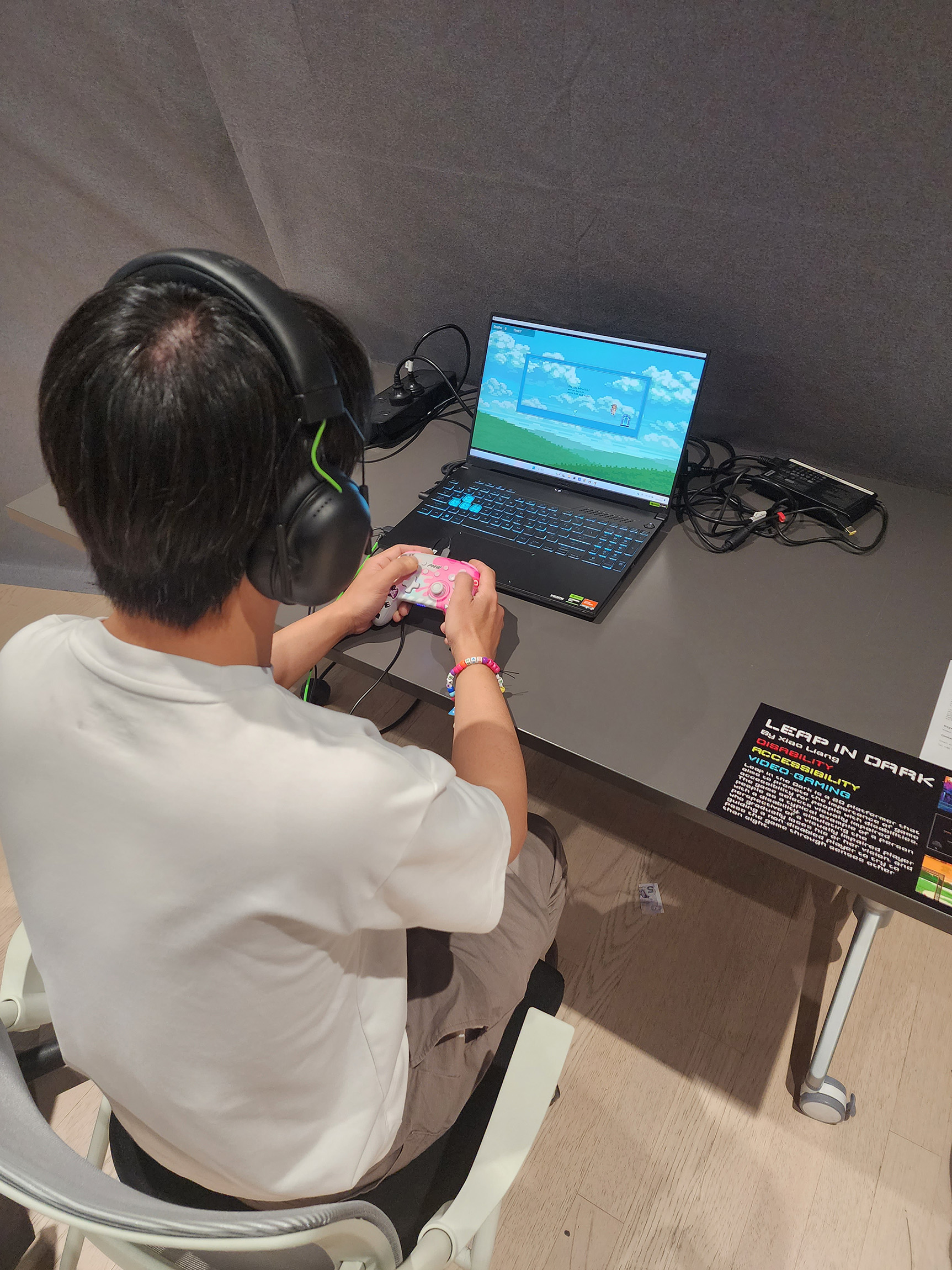
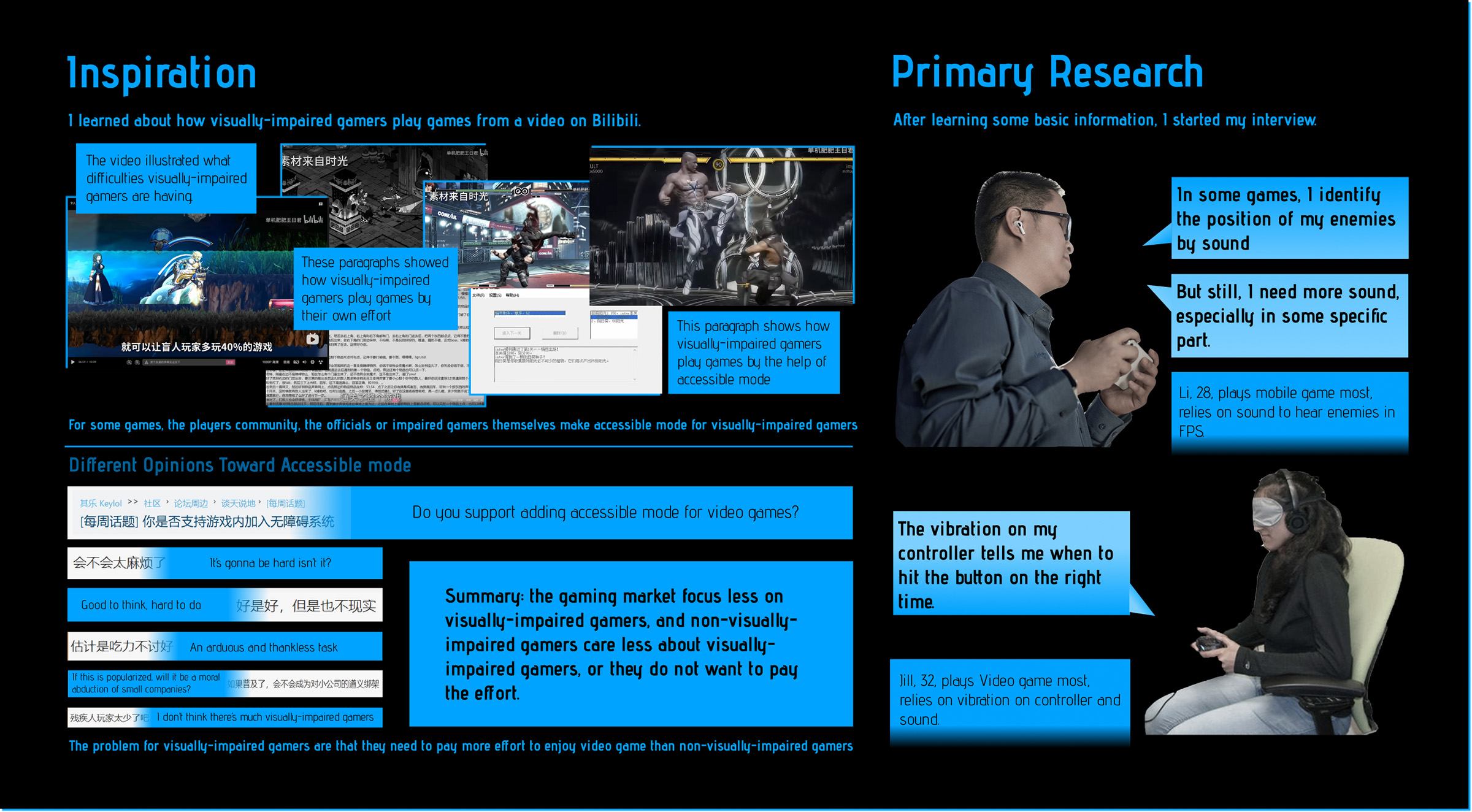
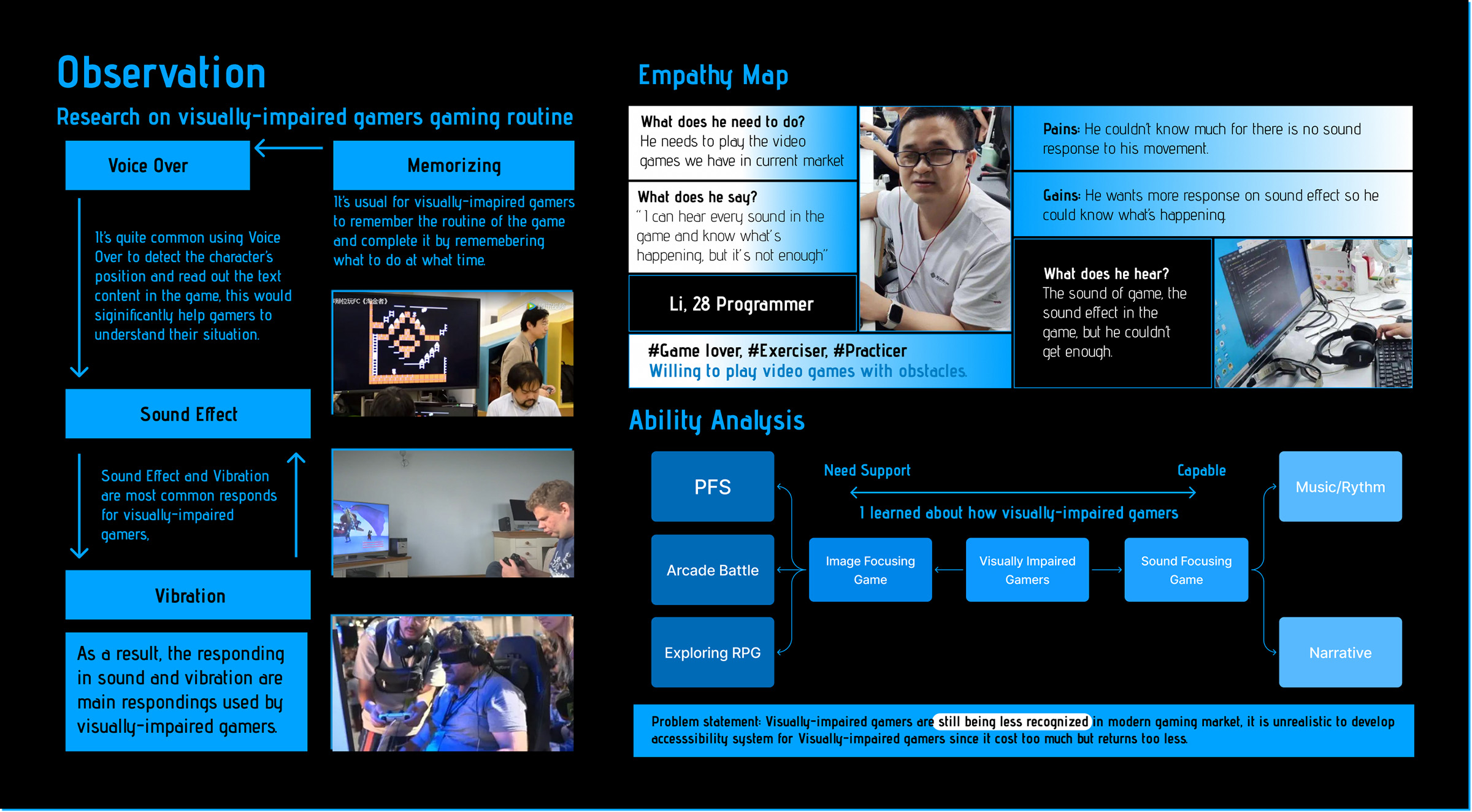
Games and gamification have taken a high place in the modern entertainment market, and people are demanding more from their gaming experience. However, for most gamers with impairments, the lack of a certain level of accessibility in most games on the market results in them not being able to enjoy games on the same level as accessible gamers. Through research and surveys, the main reason for the lack of accessibility design by most game makers stems from the large amount of resources and time consumed in developing accessibility, which is a great burden for smaller game development teams. Developing reachability also fails to get enough recognition given to teams. Therefore. The aim of this game is to create awareness of game accessibility amongst accessible players, to draw their attention to it, and to recognize the need for game accessibility amongst players with impairments. By obscuring most of the visible entities in the game to increase the difficulty of the game and simply simulating the inability of the visually impaired player to grasp what is displayed on the screen, it forces the non-impaired player to utilize the game's accessibility to complete the levels. During play, the game focuses on the accessibility provided by sound. Sound provides the player with information to respond to when the screen is not visible, which is the accessibility element that visually impaired players rely on. During the development of the game, I realized that most players could not handle the sudden increase in difficulty, and if the screen was suddenly obscured at the end of an instructional level, it would discourage the player from completing the level. Therefore, I chose to gradually increase the difficulty of the levels by blocking the game's screen a little bit, so that the players would gradually get used to it and eventually find themselves using reachability to play the game in order to understand the main idea introduced in the game.
Images
Project Logbook
Keywords: Video Game, Disability, Accessibility
Copyright Statement: JOHN R. PORTER AND JULIE A. KIENTZ. 2013. AN EMPIRICAL STUDY OF ISSUES AND BARRIERS TO MAINSTREAM VIDEO GAME ACCESSIBILITY. IN PROCEEDINGS OF THE 15TH INTERNATIONAL ACM SIGACCESS CONFERENCE ON COMPUTERS AND ACCESSIBILITY (ASSETS '13). ASSOCIATION FOR COMPUTING MACHINERY, NEW YORK, NY, USA, ARTICLE 3, 1–8. HTTPS://DOI.ORG/10.1145/2513383.2513444