

Digital Reimagination of Borges' Story
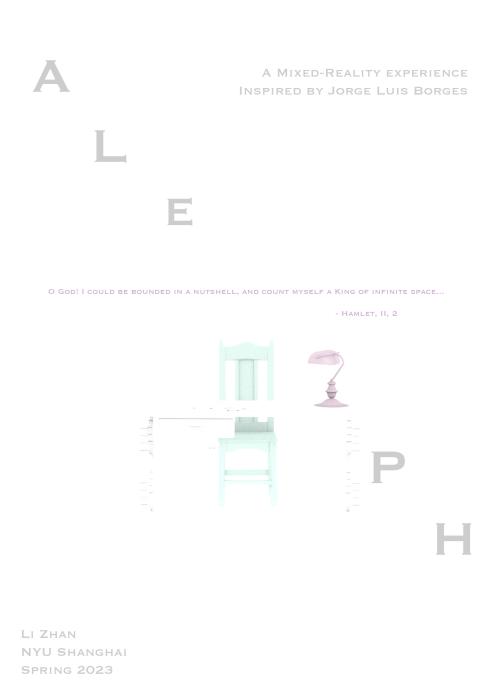
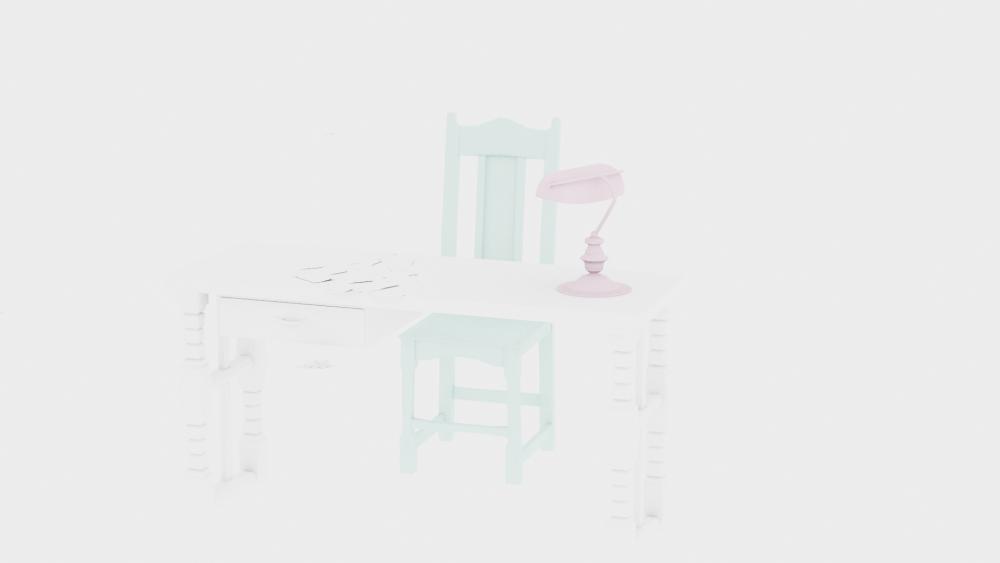
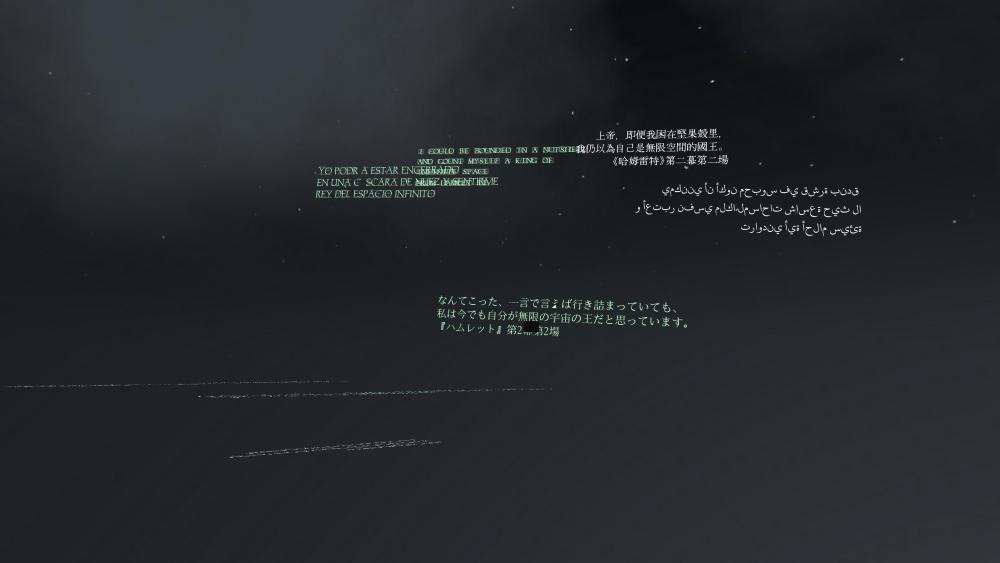
In the story from Argentine writer Jorge Luis Borges, the Aleph is a shimmering point located in the main character's room, allowing individuals to see everything from every perspective in the universe at the same time. For my VR reconstruction, I try to explore the possibility of digital media to represent such “organic massiveness”.
Project Video
Abstract
“I saw the Aleph from every point and angle, and in the Aleph I saw the earth and in the earth the Aleph and in the Aleph the earth; I saw my own face and my own bowels; I saw your face; and I felt dizzy and wept, for my eyes had seen that secret and conjectured object whose name is common to all men but which no man has looked upon — the unimaginable universe.”
-- Aleph, Jorge Luis Borges
The research begins by identifying the "Aleph" as a literary foresight of Borges on virtual reality. Jorge Luis Borges introduces the concept of the Aleph, a point in space "that contains all other points" (Borges 9). This metaphor has often been connected to the idea of a perfect simulated world just like "Alice in Wonderland" as described by Ivan Sutherland in his writing "The Ultimate Display" (Sutherland 2). According to Borges, the Aleph is a shimmering point located in the main character's room, allowing individuals to see everything from every perspective in the universe (Borges 9). Through the Aleph, the protagonist is able to view "daybreak and nightfall," "the delicate bone structure of a hand," and "the coupling of love and the modification of death," among other things (Borges 9). Borges playfully explores the possibility of seeing every perspective of the world at all times through the use of the Aleph.
The omniscience depicted in Borges’ Aleph can be seen as analogous to certain core features of virtual reality. Both the Aleph and VR provide immersive experiences that cut into and supplement real life, offering continuous coverage of every corner of the world. Additionally, the comprehensive nature of both the Aleph and VR allows them to simulate reality to some extent, giving the viewer a sense of complete understanding and awareness.
Therefore, the project applies VR as the medium for exploring the controversies on “simulation”, while experimenting with its possibilities for reviving and reconstructing literature works with interactive media solutions.
Images
Website: https://www.li-zhang.com/aleph
GitHub: https://github.com/Ritacow/Aleoh.git
Keywords: Immersive experience, Digital literature, Jorge Luis Borges
Copyright Statement
Literature Review & Case Study
Baudrillard, Jean. Simulacra and Simulation. Translated by Sheila Glaser, University of Michigan Press, 1994.
Borges, Jorge Luis. The Garden of Forking Paths. Penguin Classics, 2018. ---. 1899-1986. El Aleph. Buenos Aires :Emecé Editores, 1957.
Borges, Jorge Luis, 1899-1986. El Aleph. Buenos Aires :Emecé Editores, 1957. Stine, Eli, “The Metamorphosis VR Installation.”, https://elistine.com/events-blog/2017/12/25/the-metamorphosis-vr-instal….
Sepp, Hans Rainer. “Worldly-Being Out of World: Animality in Kafka’s The Metamorphosis.” Environmental Philosophy, vol. 11, no. 1, 2014, pp. 93–108. JSTOR, https://www.jstor.org/stable/26169793. Accessed 5 Dec. 2022.
Development References: https://docs.unity3d.com/
3D Assets: https://assetstore.unity.com/
https://sketchfab.com/3d-models/buoy-river-rb-4-01-ee00dc9d61af4e3f84e4…
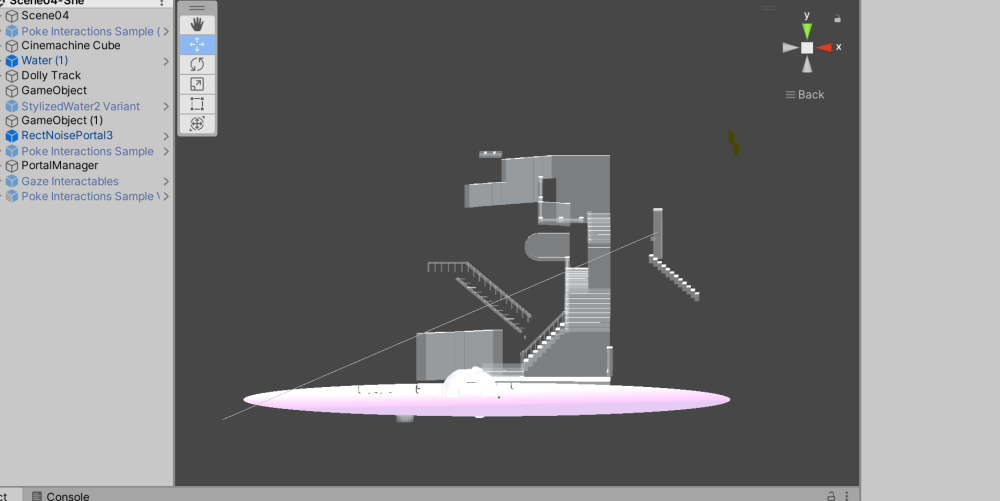
https://sketchfab.com/3d-models/escher-stairs-efcac2fdda874bf1b1031548a…
https://sketchfab.com/3d-models/antique-table-dae51a6a6d5e4acfa5c54eac4…
https://sketchfab.com/3d-models/retro-table-lamp-f369afe78b10459090909a…