

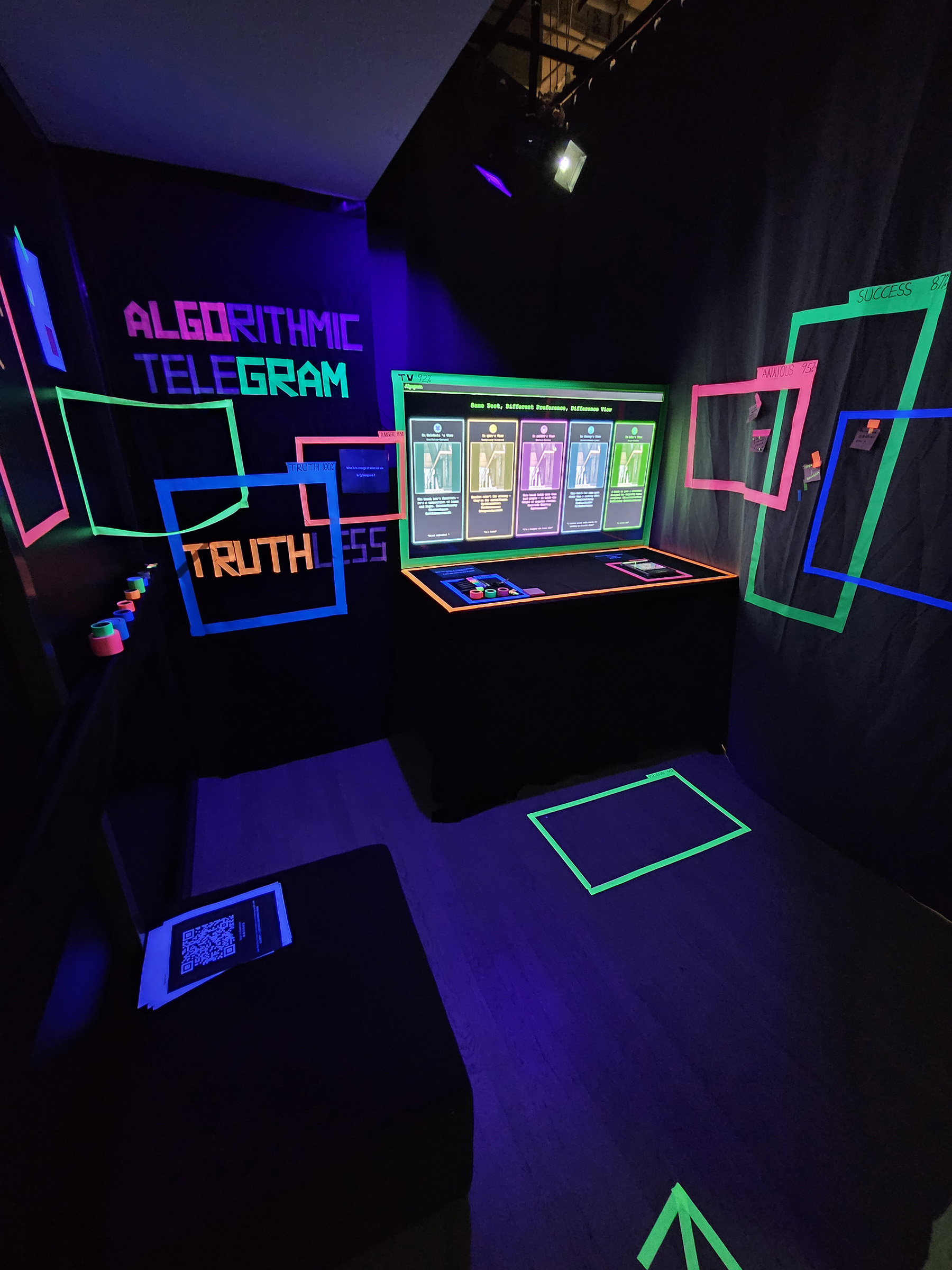
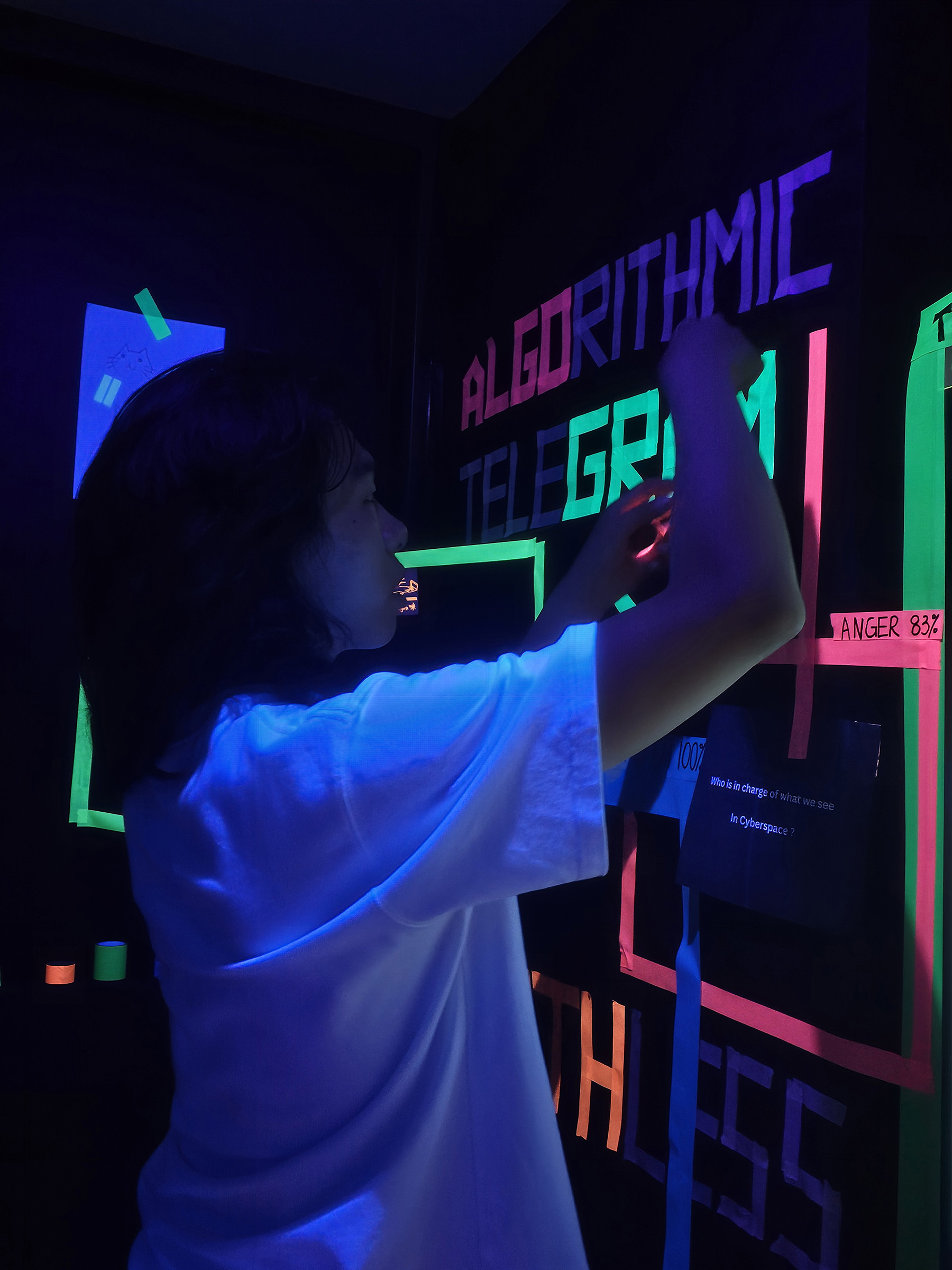
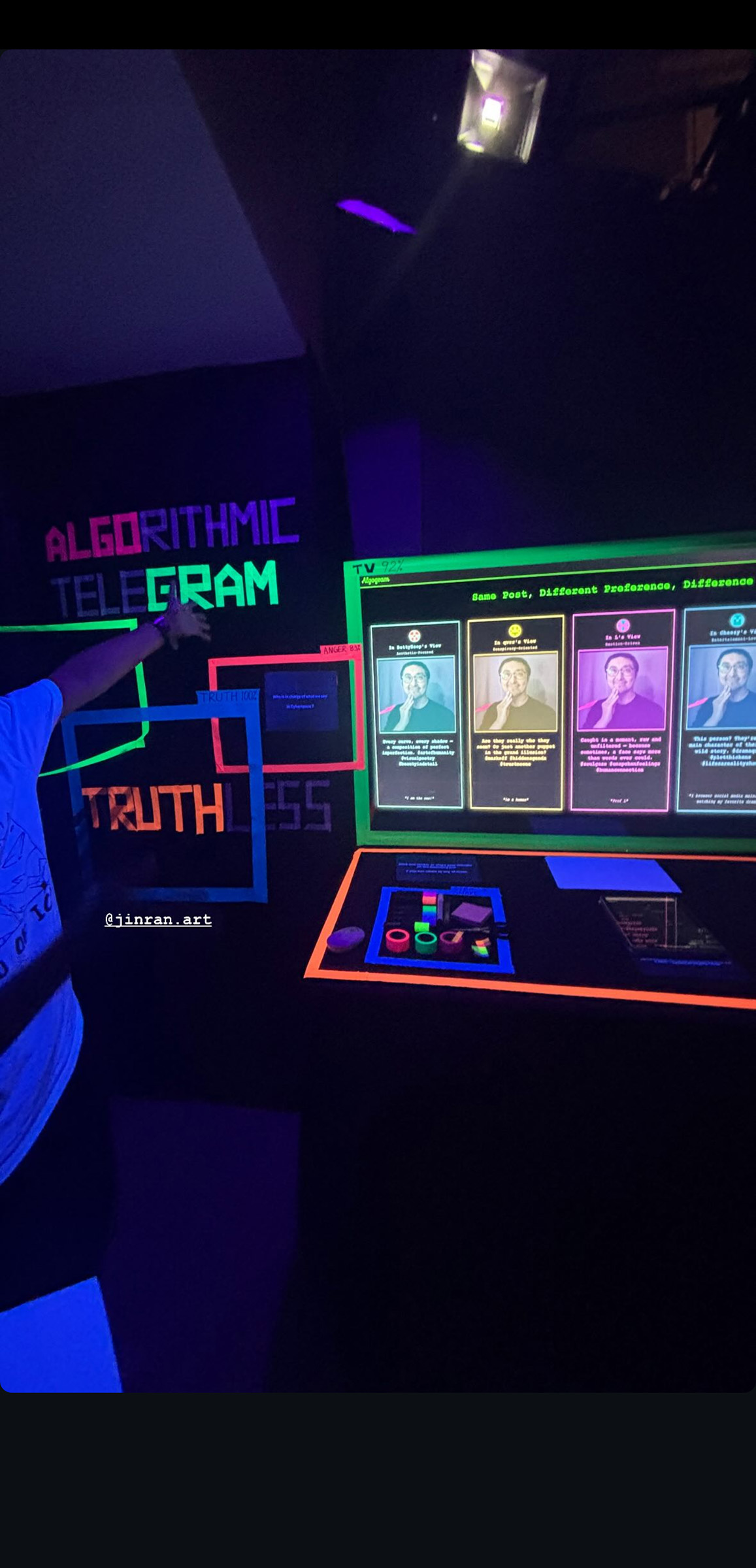
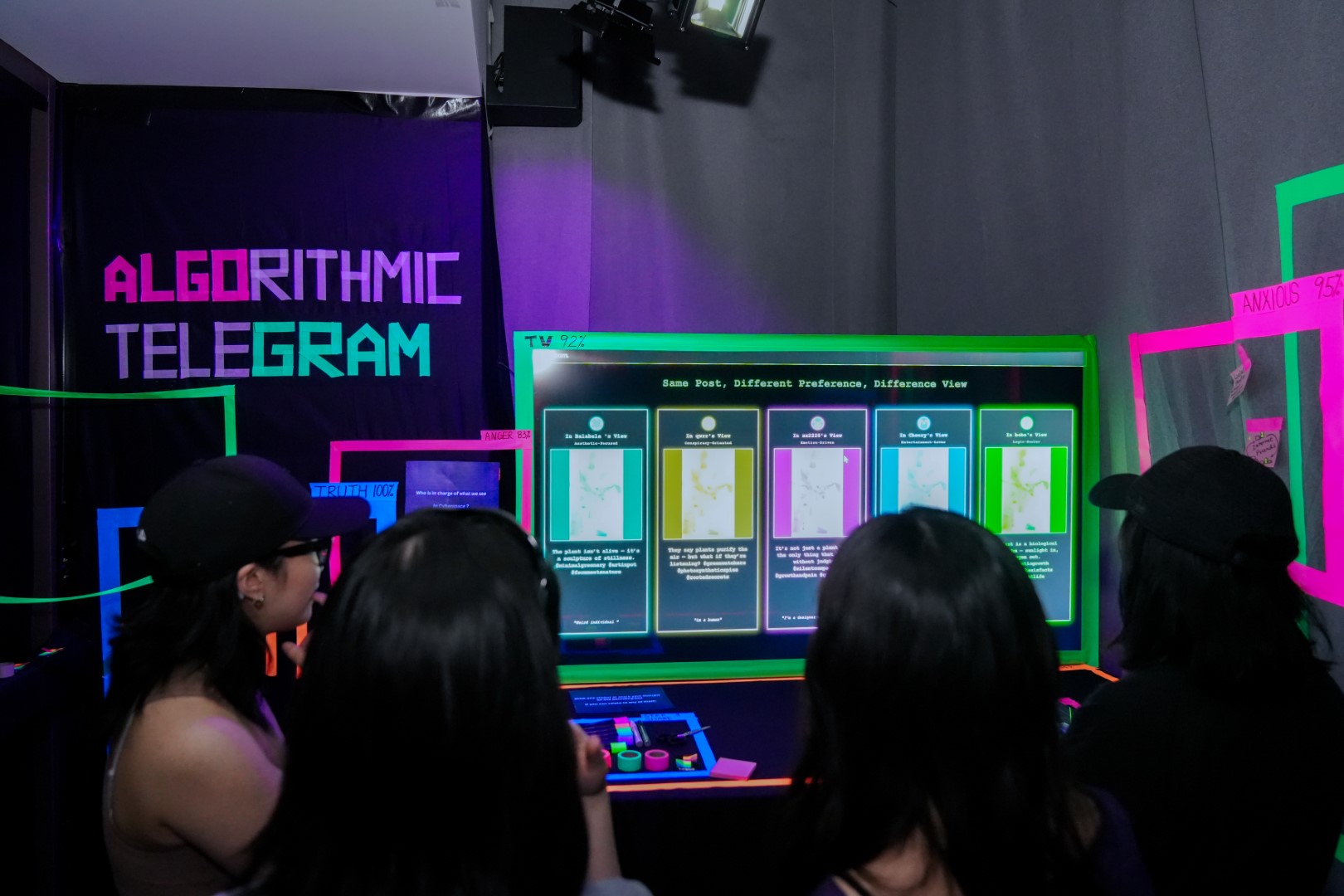
Algogram is an interactive social media simulation that exposes how algorithms distort reality by tailoring captions to individual “algorithmic fingerprints.” By showing how the same image is reframed for different users, it reveals the hidden influence of recommendation systems on perception, truth, and autonomy.
Project Video
Abstract
"Algogram is a simulated social media platform that reveals how recommendation algorithms reshape individual perceptions of reality. Within a familiar interface, each user generates a unique “algorithmic fingerprint.” Based on this profile, the system uses AI to generate entirely different captions for the same post, tailored to each user.
Every piece of content becomes a personalized illusion, a reflection not of objective reality, but of what the algorithm thinks you want to see. Through these curated distortions, Algogram exposes how algorithms, under the guise of neutrality, manipulate perspectives, obscure truths, and reconstruct facts. This immersive and interactive experience invites users to critically reflect on the nature of algorithmic control and the erosion of individual autonomy in digital spaces."
Photos
Project Logbook
Website: http://algogram.jinran.art/
GitHub: https://github.com/Hyperillion/algogram
Keywords: Algorithmic Mediation of Perception, AI-Driven Personalization, Critical Interface Design, Digital Media Ethics, Interactive Systems and Society
Copyright Statement
"Adam Mosseri, Shedding More Light on How Instagram Works, Instagram (June 8, 2021), https:// about.instagram.com/blog/announcements/shed ding-more-light-on-how-instagram-works.
Bogert, Eric, et al. “Humans Rely More on Algorithms than Social Influence as a Task Becomes More Difficult.” Scientific Reports, vol. 11, no. 1, 13 Apr. 2021, www.nature.com/articles/s41598-021-87480-9, https://doi.org/10.1038/s41598-021-87480-9.
Breidbach, Christoph F. “Responsible Algorithmic Decision-Making.” Organizational Dynamics, vol. 53, no. 2, 1 Jan. 2024, pp. 101031–101031, https://doi.org/10.1016/j.orgdyn.2024.101031.
Garcia, David. ""Influence of Facebook Algorithms on Political Polarization Tested."" Nature News & Views, 27 July 2023, https://doi.org/10.1038/d41586-023-02325-x.
Gwilt, Ian. “Augmented Reality and Mobile Art.” Handbook of Multimedia for Digital Entertainment and Arts, 2009, pp. 593–599, https://doi.org/10.1007/978-0-387-89024-1_26. Accessed 18 May 2020.
Hosanagar, Kartik, and Knowledge at Wharton Staff. “Who Made That Decision: You or an Algorithm?” Knowledge@Wharton, 25 Mar. 2019, knowledge.wharton.upenn.edu/article/algorithms-decision-making. Accessed 26 Oct. 2024.
Huang, Baiyu. ""The Reasons for Douyin’s Success from the Perspective of Business Model, Algorithm and Functions."" Proceedings of the 6th International Conference on Financial Innovation and Economic Development (ICFIED 2021), Jan. 2021, doi:10.2991/aebmr.k.210319.058.
Jiang, Taibi. “The Worship of the “Algorithm” and Resource Allocation Reform in the Era of the Internet of Everything.” Journal of Ethnology, vol. 9, no. 6, June 2018, pp. 72–79, mzxk.swun.edu.cn/mzxk/ch/reader/create_pdf.aspx?file_no=20180609&flag=1&journal_id=mzxk&year_id=2018, https://doi.org/10.3969/j.issn.1674-9391.2018.06.09. Accessed 26 Oct. 2024.
Logg, Jennifer M., et al. “Algorithm Appreciation: People Prefer Algorithmic to Human Judgment.” Organizational Behavior and Human Decision Processes, vol. 151, Mar. 2019, pp. 90–103, https://doi.org/10.1016/j.obhdp.2018.12.005.
Mahmud, Hasan, et al. “Decoding Algorithm Appreciation: Unveiling the Impact of Familiarity with Algorithms, Tasks, and Algorithm Performance.” Decision Support Systems, vol. 179, 1 Apr. 2024, p. 114168, www.sciencedirect.com/science/article/pii/S0167923624000010, https://doi.org/10.1016/j.dss.2024.114168. Accessed 29 Jan. 2024.
Mahmud, Hasan, et al. “What Influences Algorithmic Decision-Making? A Systematic Literature Review on Algorithm Aversion.” Technological Forecasting and Social Change, vol. 175, no. 1, Feb. 2022, p. 121390, www.sciencedirect.com/science/article/pii/S0040162521008210, https://doi.org/10.1016/j.techfore.2021.121390.
Meehl, Paul E. “When Shall We Use Our Heads instead of the Formula?” Journal of Counseling Psychology, vol. 4, no. 4, 1957, pp. 268–273, https://doi.org/10.1037/h0047554.
Narayanan, Arvind. Understanding Social Media Recommendation Algorithms. Columbia University Academic Commons, doi:10.7916/khdk-m460.
Schecter, Aaron, et al. Algorithmic Appreciation or Aversion? The Moderating Effects of Uncertainty on Algorithmic Decision Making. 19 Apr. 2023, https://doi.org/10.1145/3544549.3585908. Accessed 19 May 2024.
Wu, Hsin-Kai, et al. “Current Status, Opportunities and Challenges of Augmented Reality in Education.” Computers & Education, vol. 62, no. 62, Mar. 2013, pp. 41–49, https://doi.org/10.1016/j.compedu.2012.10.024."
https://docs.unity3d.com/Packages/com.unity.xr.hands@1.1/manual/index.h…