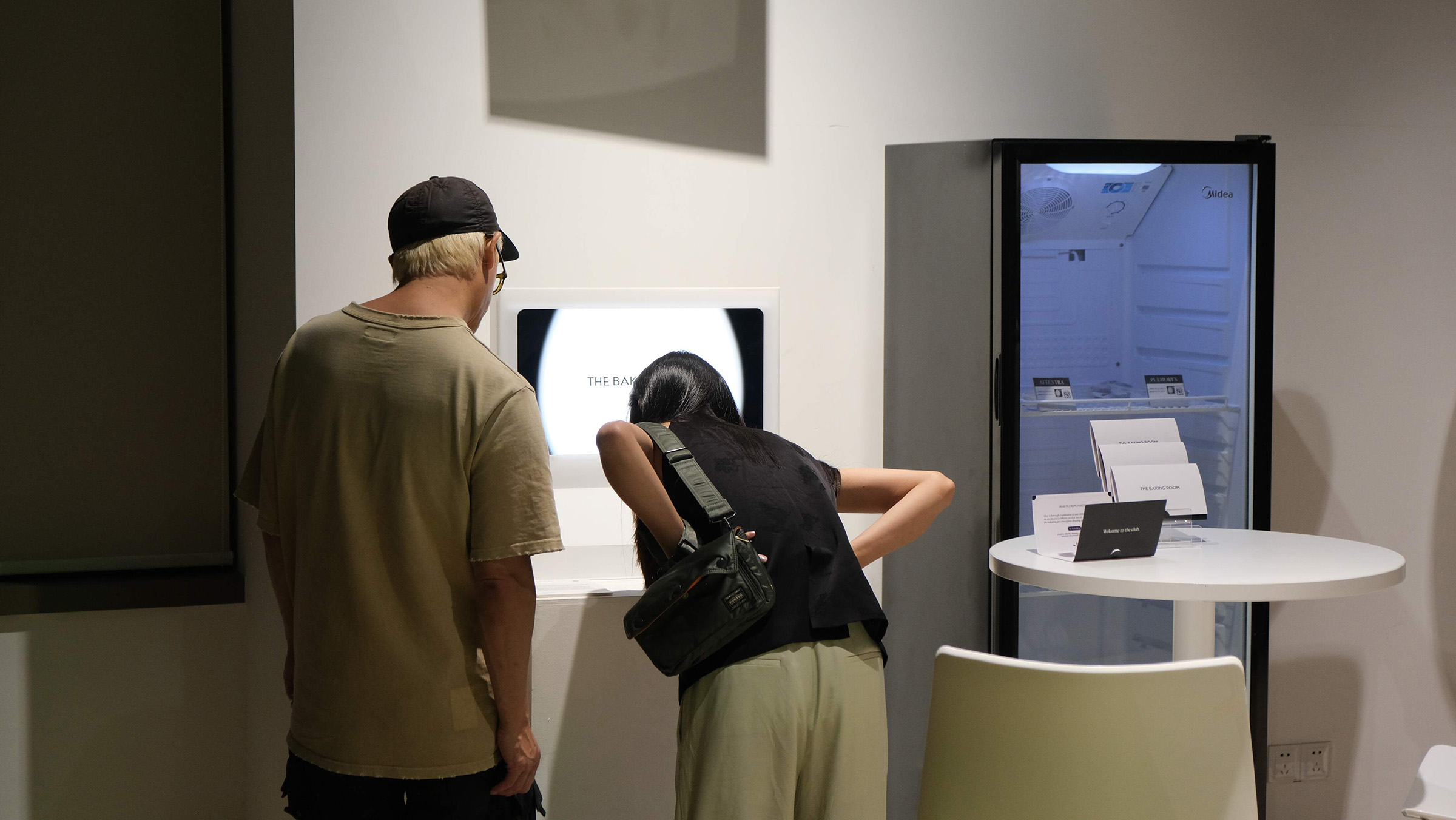
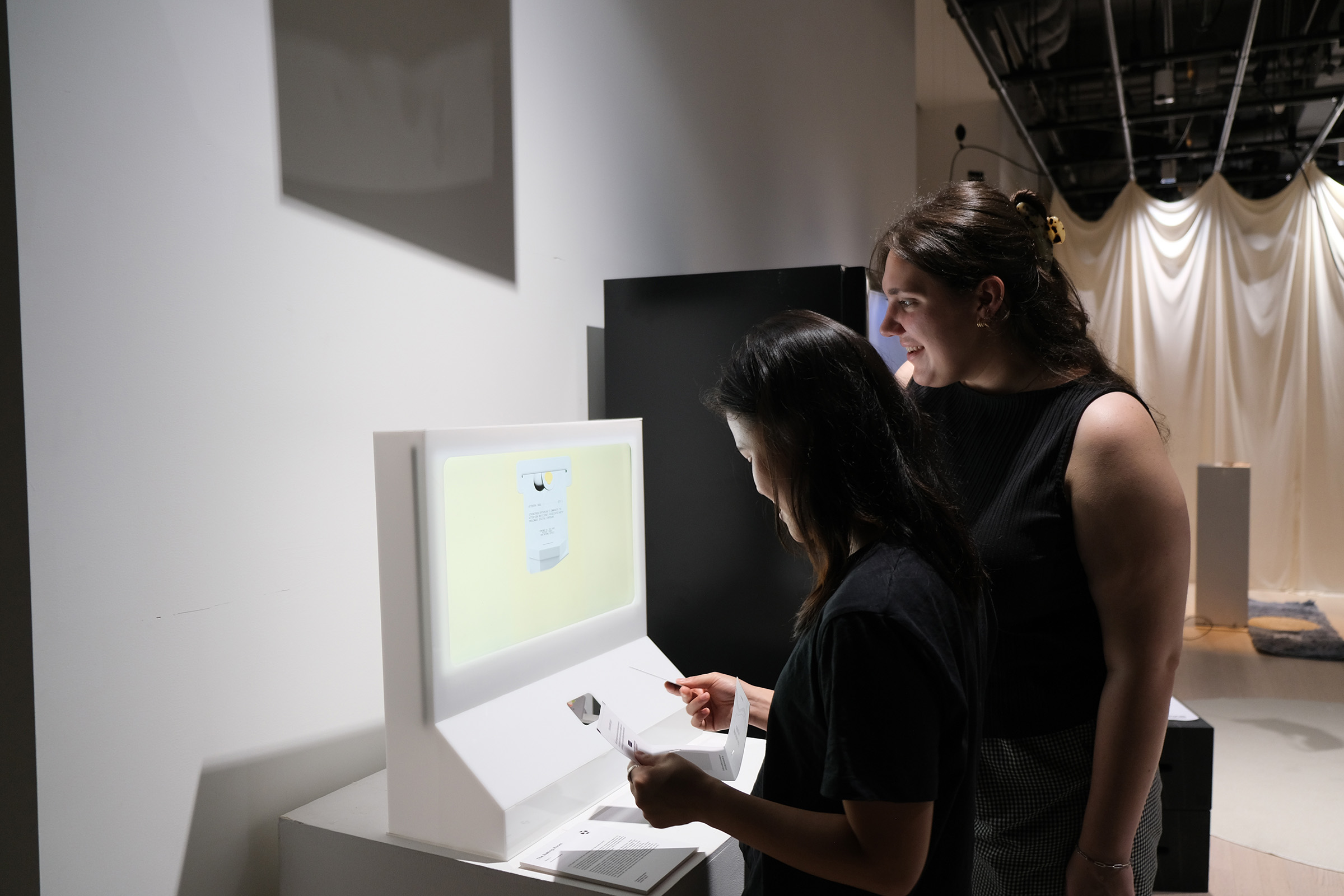
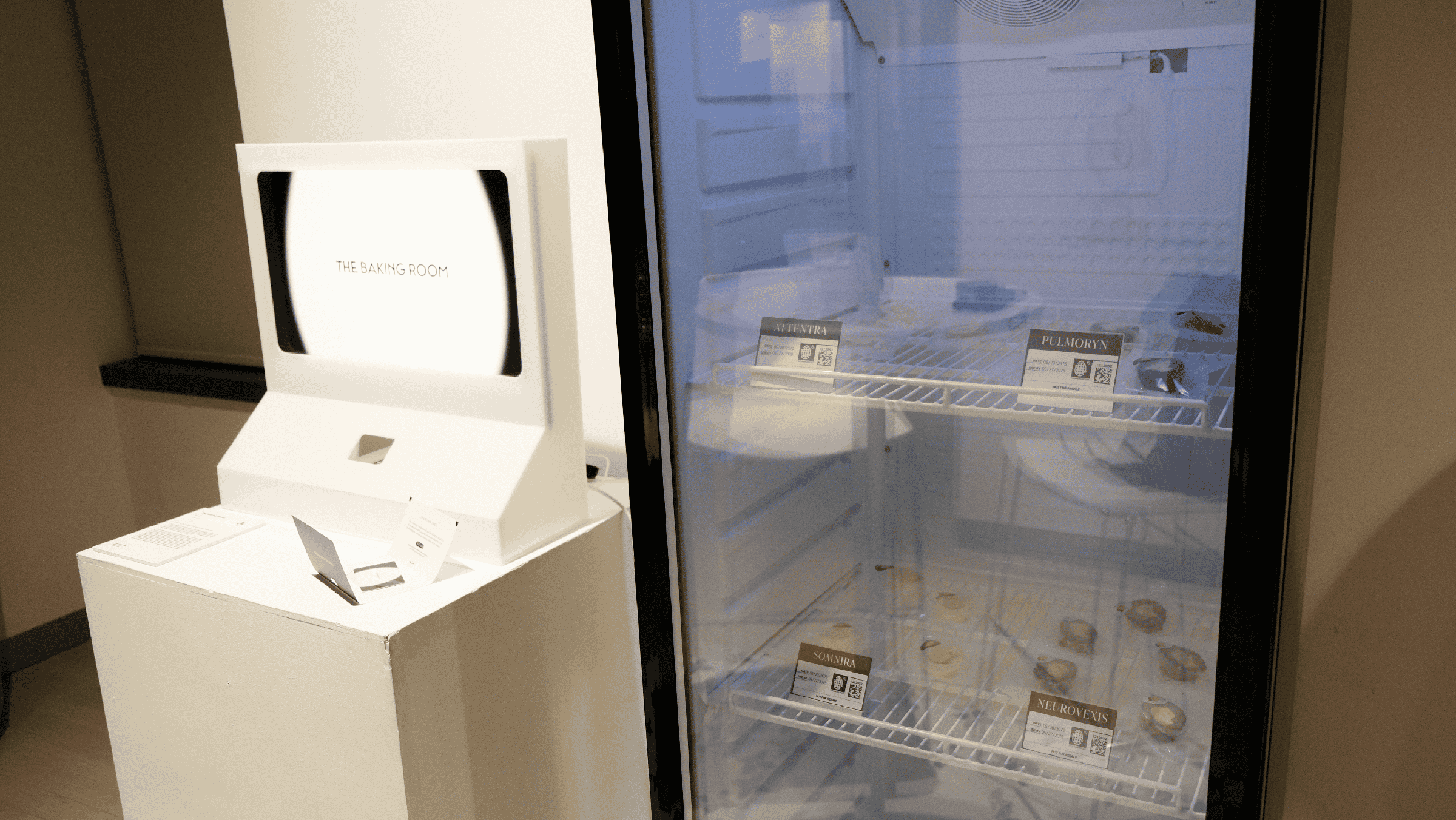
The Baking Room is a speculative food design project that offers luxurious, microbiome-enhancing foods to prospective parents, using familiar forms of eggs to ease fears around food technology. It reimagines artificial food as a nurturing, empowering tool for shaping the health of future generations.
Project Video
Abstract
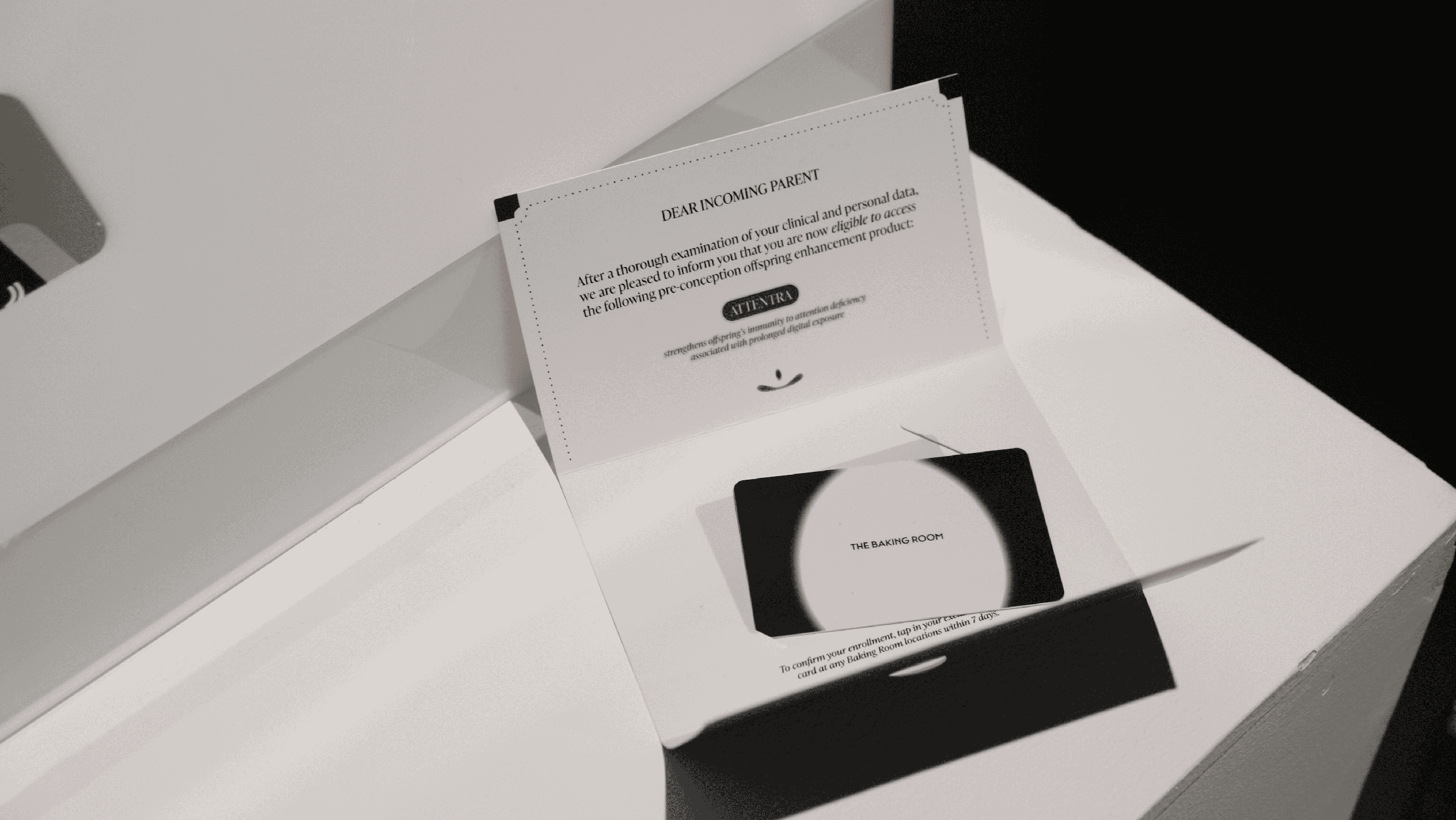
The Baking Room is a speculative food design project that imagines a future where food technology plays a central role in human reproduction. Set in a luxurious “food clinic,” the project offers microbiome-enhancing edible products to prospective parents before conception, inviting them to shape their future child’s health through diet. Presented in the familiar form of an egg, these artificial foods aim to ease technological anxieties and reframe synthetic nourishment as a tender, hopeful act of care.
The project engages with posthumanist ideas by challenging the boundary between the natural and the artificial, positioning food not just as sustenance but as an interface between biology and culture. Drawing from the history of artificial food—like the normalization of infant formula—The Baking Room speculates on how evolving food technologies such as GMOs, 3D-printed food, and microbiome manipulation may come to be accepted as integral tools for human enhancement. By confronting food technology neophobia, the project envisions a cultural shift where artificiality becomes familiar, even desirable.
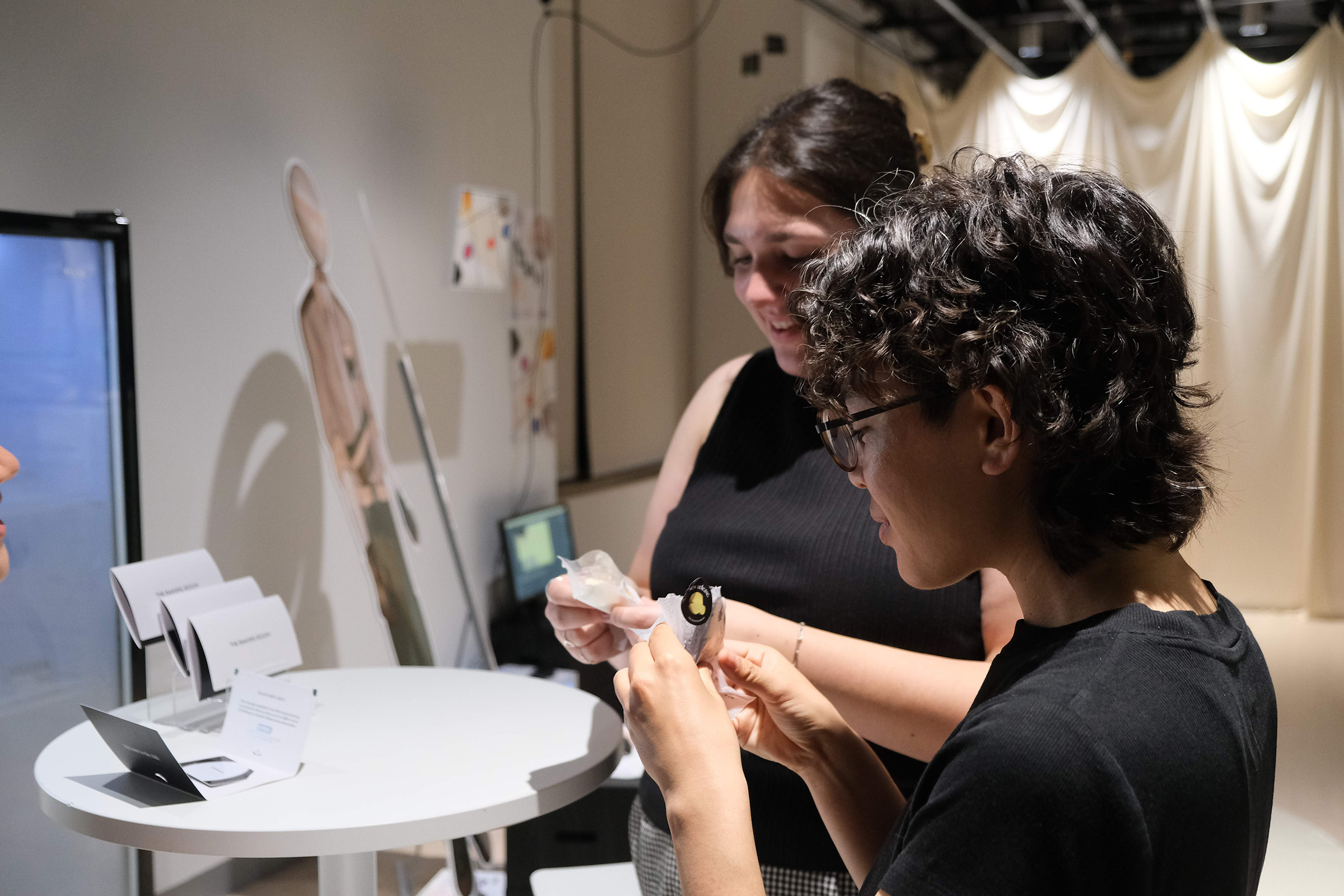
At its core, The Baking Room presents a future scenario in which artificial pregnancy enables parents to support fetal development externally, transferring microbiome nutrients via spit samples and consuming curated food products in preparation for conception. The clinic offers four edible “eggs,” each designed for a specific enhancement pathway. While the overall egg shape remains recognizable to maintain visual familiarity, the yolks feature four distinct designs, all created using 3D-printed molds. These subtle variations echo the soft roundness of natural yolks while signaling a controlled, purposeful intervention. The yolk remains light yellow, while the whites explore unfamiliar aesthetics—such as black, inspired by Chinese preserved eggs. The black and white design borrows from high-end wellness branding, presenting the clinic as an exclusive space of privilege and access. This aesthetic heightens the speculative tension: the eggs look familiar, but not quite—strange enough to signal a future possibility, yet grounded enough to feel real.
By immersing the audience in a multi-sensory interaction—inviting them to see, touch, smell, and even taste the eggs—the project fosters an embodied engagement with speculative nutrition. The Baking Room opens a dialogue around the ethics of enhancement, the commodification of fertility, and the evolving role of food in the architecture of human life. In doing so, it offers not dystopia, but a quiet vision of speculative care—where synthetic food becomes a medium for love, intention, and the design of future generations.
Photos