

An interaction between sound, shapes and frontal face detection
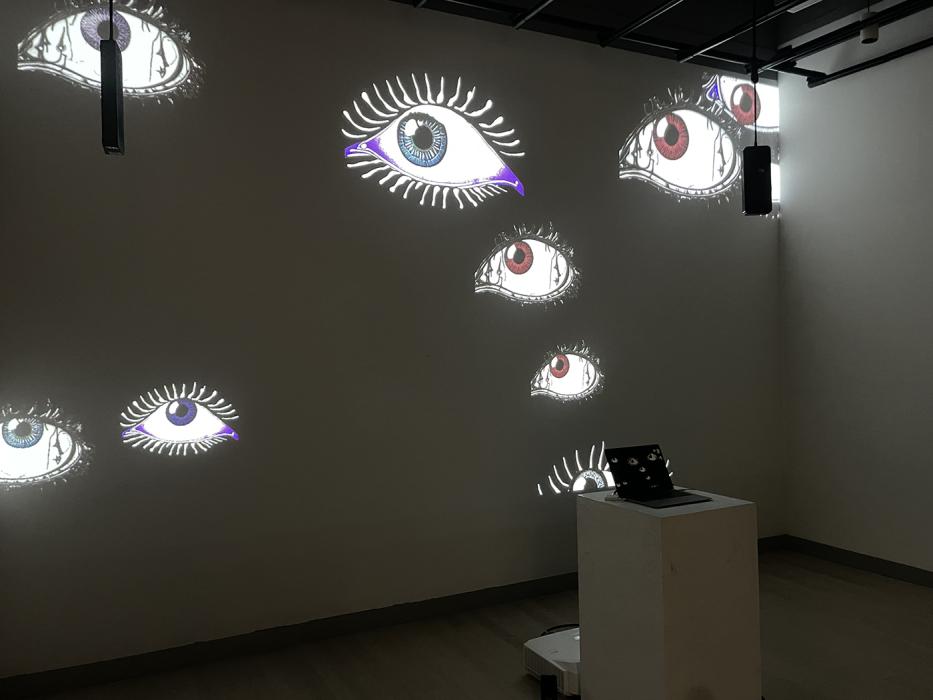
My capstone project is an immersive interactive media experience utilizing p5js webcam technology, where users confront the intensity of being watched in a social setting. Through dynamic eye patterns and escalating whispering sounds, the project creates a visceral encounter with the feeling of overwhelming attention, engaging users in a unique exploration of social dynamics.
Project Video
Abstract
In a world increasingly dominated by digital as well as social interactions, my capstone project, "Being Observed," delves into the profound implications of social attention by creating a captivating and thought-provoking interactive experience. This project, rooted in the realm of interactive media and powered by p5js webcam technology, explores the dynamics of social dynamics and the impact of attention on individuals in a unique and immersive way. At its core, "Being Observed" seeks to answer the question: What does it feel like to be the focal point of everyone's attention in a social situation? The project aims to accomplish this by utilizing facial detection technology to engage users in an experience that simulates the overwhelming sensation of being watched. The interactive media component employs a random pattern of eye visuals, with pupils that follow the user's face, accompanied by escalating whispering sounds to intensify the sense of scrutiny. During the development of this project, a particularly unexpected and intriguing discovery emerged: the profound impact of subtle visual and auditory cues on the user's perception of being observed. As the eye patterns follow the user's face and the whispers increase in intensity, rate, and frequency, testing users reported heightened feelings of discomfort and self-awareness. This unexpected discovery not only deepened the project's engagement but also prompted ongoing exploration into the psychological and emotional dimensions of simulated social scrutiny. Beyond the confines of an academic assignment, "Being Observed" addresses a pressing societal concern—the psychological toll of social attention in an era dominated by constant connectivity. In a world where virtual interactions often surpass face-to-face encounters, understanding the impact of being watched has profound implications for mental health, self-perception, and social dynamics. This project contributes to the broader discourse on the consequences of pervasive surveillance and the intricate ways in which technology intersects with our emotional experiences. The significance of "Being Observed" lies in its potential to foster empathy and awareness regarding the emotional challenges of navigating social spaces. By immersing users in the discomfort of heightened attention, the project prompts reflection on the broader societal implications of surveillance, judgment, and the need for digital literacy in an interconnected world. As we continue to grapple with the consequences of technology on our well-being, this project serves as a poignant reminder of the need to consider the human experience in the design and implementation of interactive media. In conclusion, "Being Observed" is not merely an academic endeavor but a compelling exploration of the intersection between technology and human emotion. Through its innovative approach to simulating social attention, this project engages with the complexities of our digital age, providing a unique and impactful perspective on the psychological implications of being in the spotlight.
Photos
Keywords: p5js Webcam, Social Interaction, Adobe Firefly
Copyright Statement
This interactive media project, including but not limited to code, design, audiovisual elements, and documentation ("Being Observed"), is the intellectual property of Kaitlyn Jade Chan.
Permission is hereby granted to use, copy, modify, and distribute the Work for educational and non-commercial purposes, provided that the above copyright notice and this permission notice appear in all copies of "Being Observed" or substantial portions of "Being Observed".
For all other uses, please contact kjc548@nyu.edu to request permission.
All code references are in project files.