

Chlorosense is an immersive installation exploring plant sentience as an alternative model of intelligence. Through speculative storytelling, sculpture, and responsive environmental design, it invites viewers to slow down and experience perception from a plant's temporal perspective.
Project Video
Abstract
Chlorosense investigates plant sentience as a framework for reimagining nonhuman intelligence beyond anthropocentric paradigms. This project engages with ongoing debates in speculative design, decentralized cognition, and posthuman theory, particularly addressing the challenge of moving beyond human-centric definitions of intelligence and sentience. Although contemporary scholarship increasingly acknowledges plants' adaptive behaviors and decentralized intelligence, mainstream perspectives often remain constrained by anthropomorphic analogies. Chlorosense intervenes by creating an immersive experience designed not merely to translate plant behaviors into human-understandable terms, but rather to sensitize visitors to fundamentally distinct cognitive modalities characterized by decentralization and slowness inherent to plant life. In doing so, the installation provides a meaningful contribution to contemporary discourses around nonhuman intelligence, broadening perspectives and offering an experiential alternative to anthropocentric assumptions.
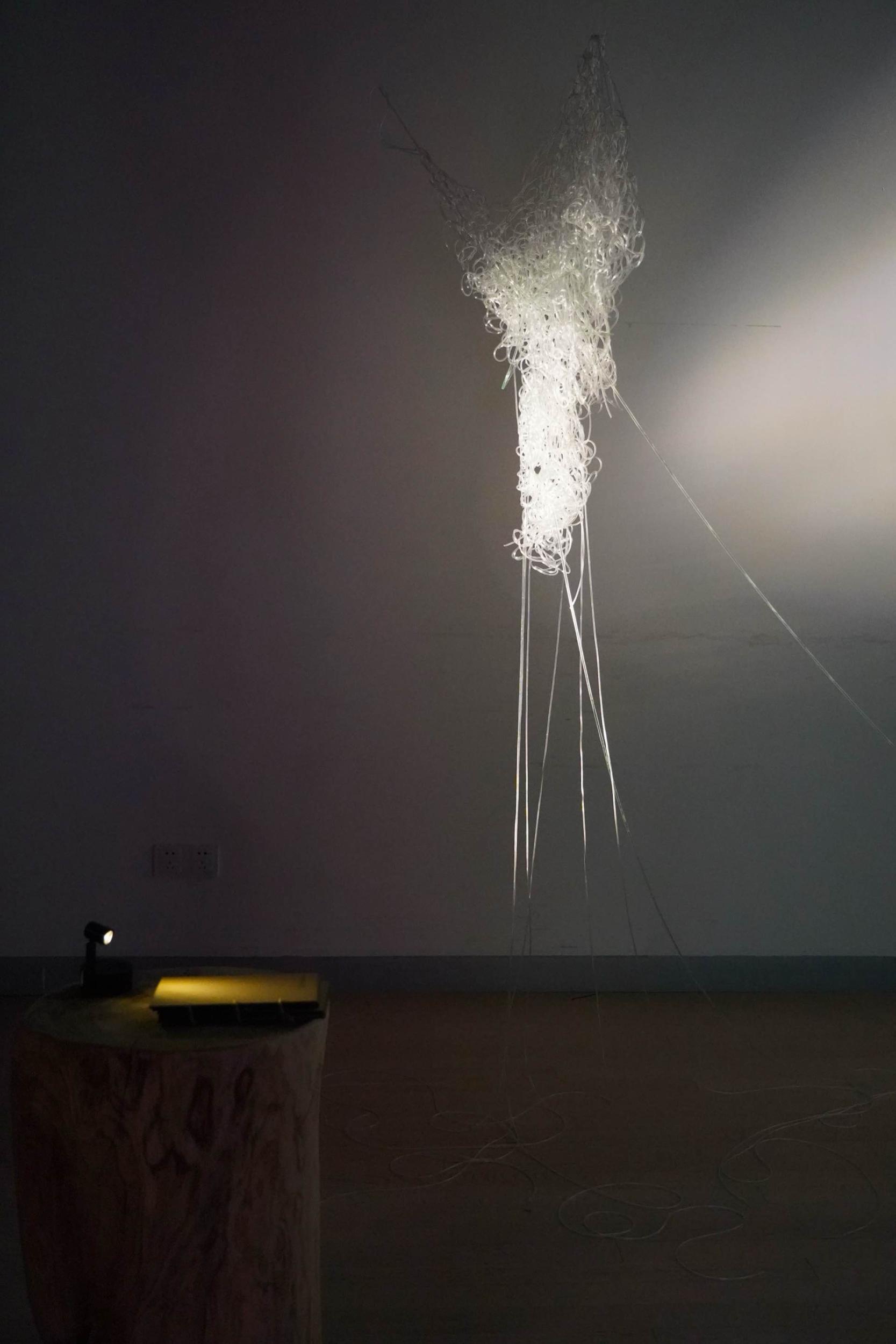
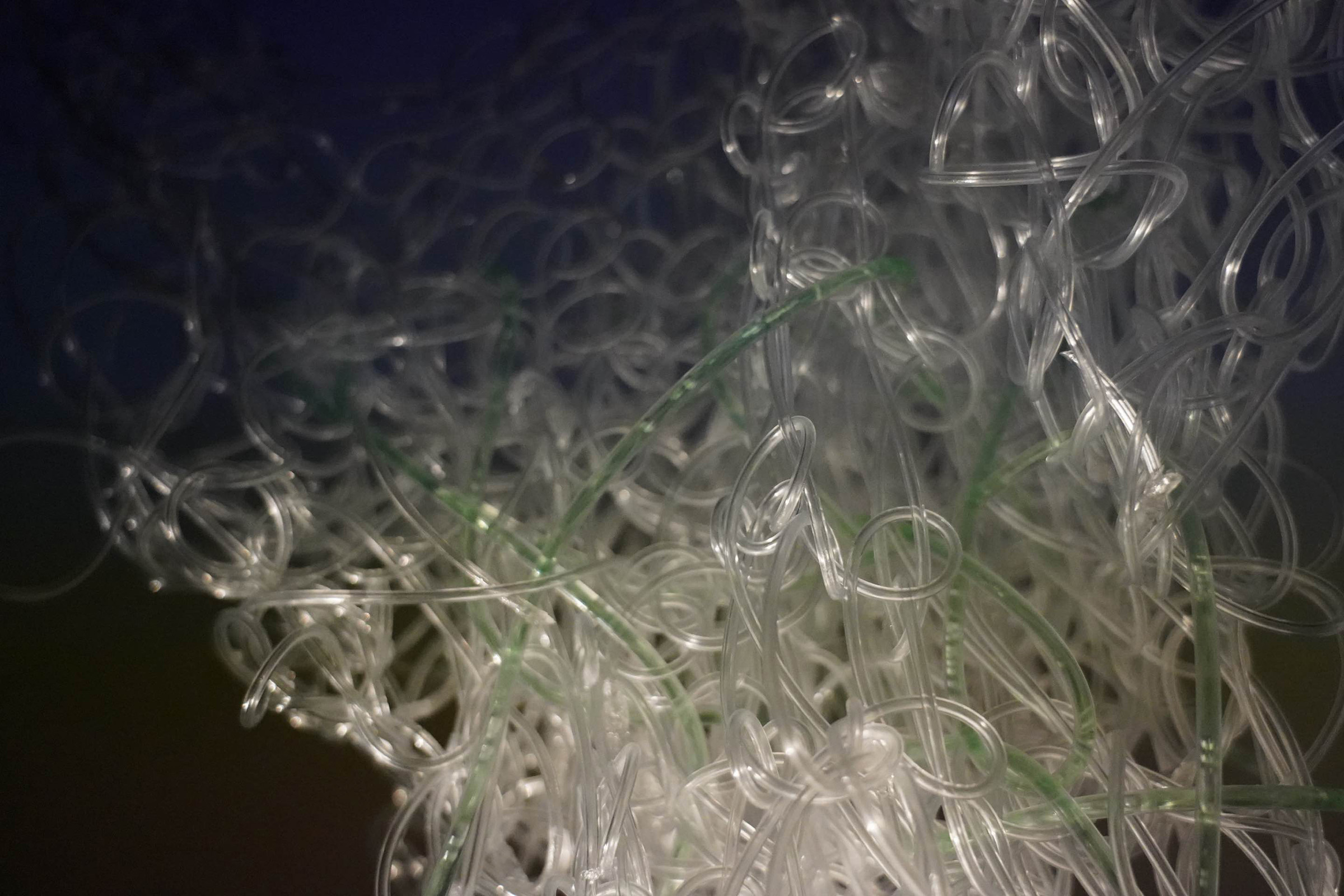
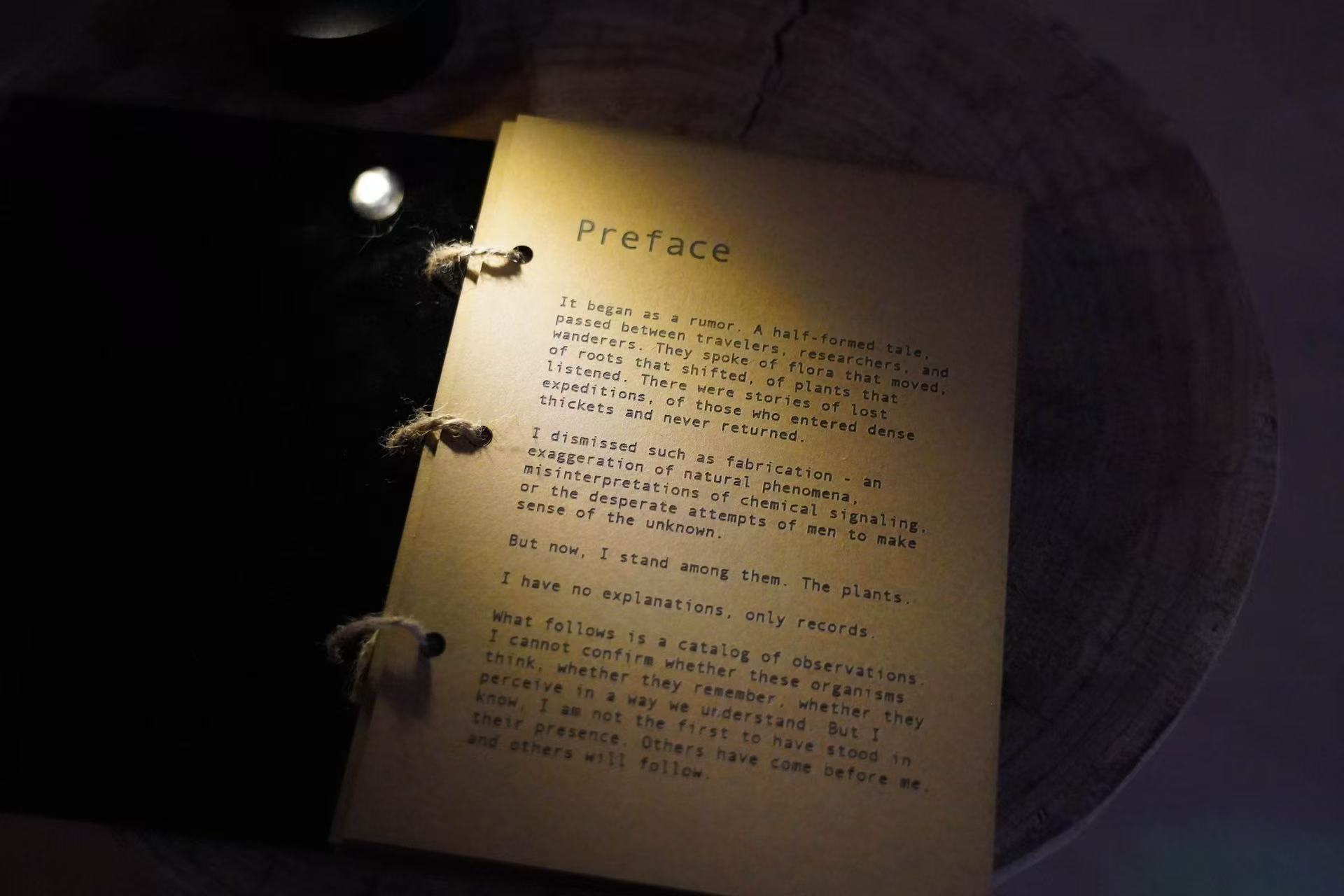
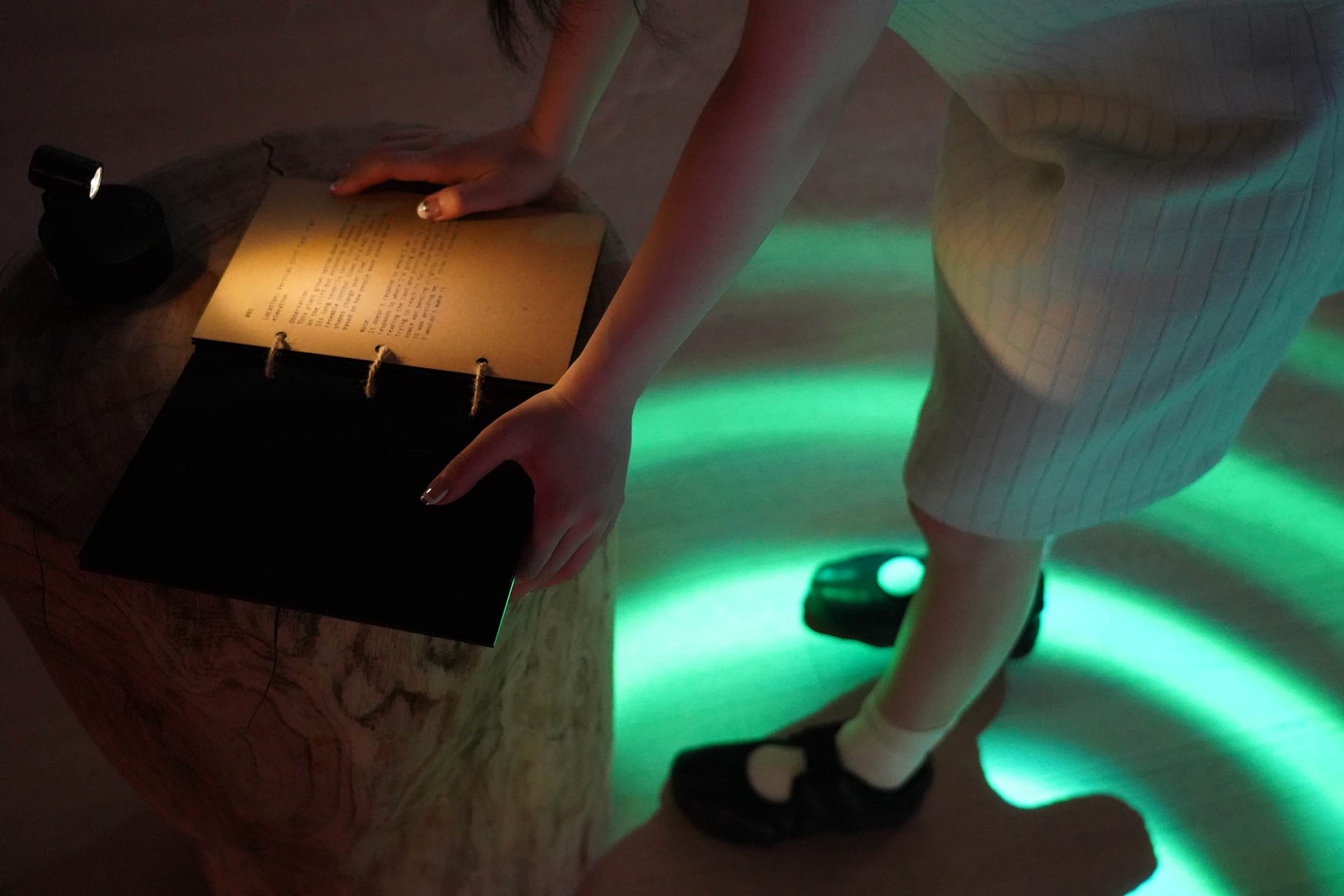
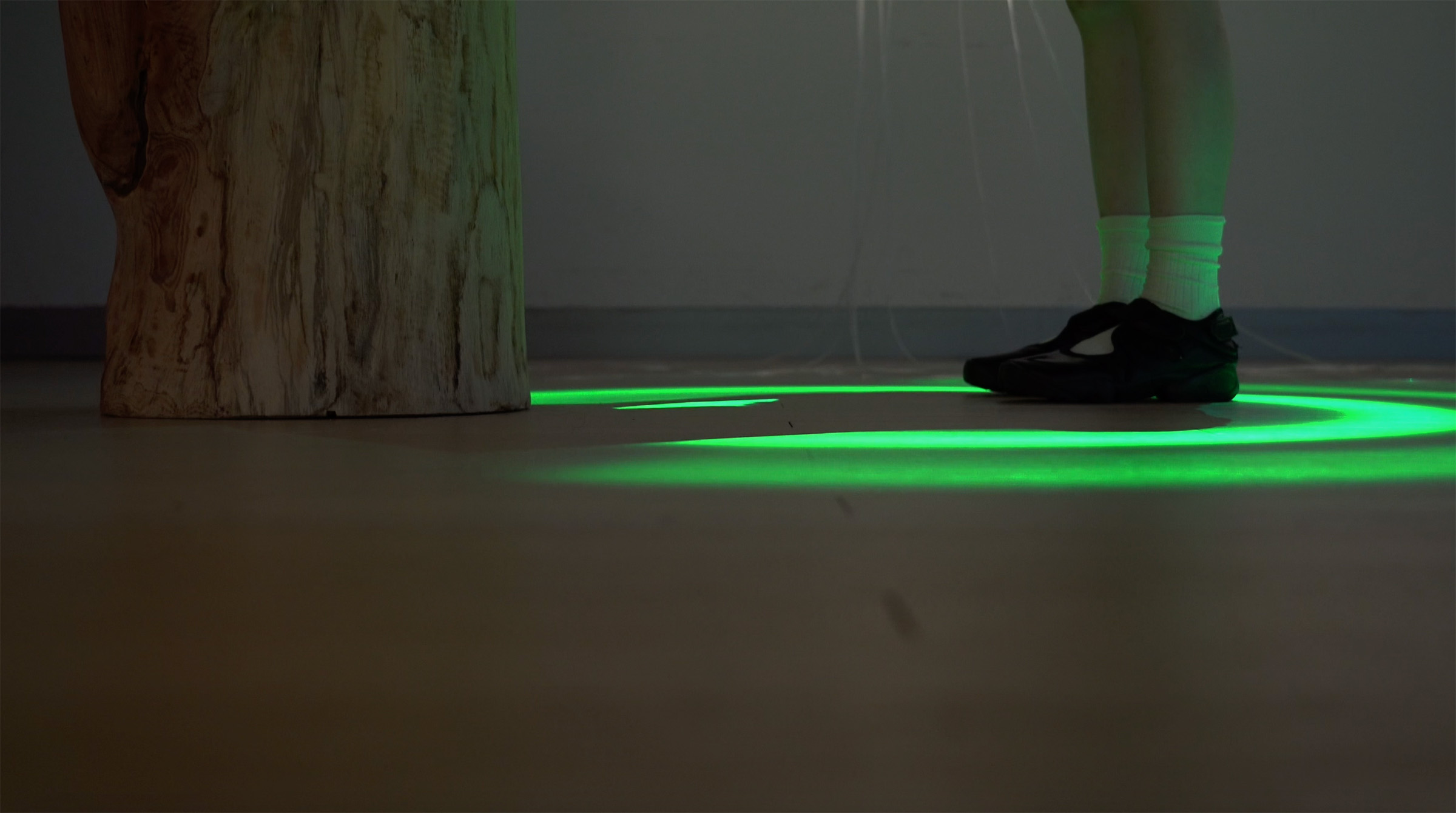
The installation comprises three interconnected components: a speculative codex, a sculptural entity, and a responsive environmental design. The speculative codex, presented as documentation authored by an imagined future researcher, creatively outlines plant species exhibiting extraordinary yet scientifically inspired behaviors drawn from real botanical phenomena, such as adaptive growth patterns, chemical signaling, and spatial memory. This element invites visitors into a speculative narrative context, establishing a conceptual framing that bridges scientific understanding with imaginative exploration. The sculptural entity, constructed meticulously from resin and PVC, serves as the tactile centerpiece of the installation, animated subtly by embedded Arduino-controlled water pumps. This physical form is situated within a responsive environment, where visitors’ movements trigger shifts in ambient lighting and visual patterns facilitated through a webcam and projection system. The installation’s aesthetics deliberately prioritize subtlety and ambiguity over immediacy, mirroring the slow, adaptive temporalities characteristic of plant perception, and encouraging visitors to adopt a more patient, reflective engagement with their surroundings.
Conceptually, Chlorosense promotes a fundamental shift from approaches rooted in environmental control and decoding toward a more empathetic experience of alternative cognitive modes. By foregrounding the philosophical implications of plant sentience, particularly the concept of "plant attention," the project challenges hierarchical and centralized assumptions about intelligence. It highlights decentralized awareness, non-verbal communication, and ecological interconnectedness as valid and sophisticated forms of cognition, resonating with contemporary theories of posthumanism. In creating a speculative yet accessible experience of these alternative perceptual paradigms, Chlorosense seeks to cultivate empathy and curiosity towards radically nonhuman modes of sensing, perceiving, and interacting with the world. Ultimately, the project aspires to foster deeper dialogues between art, philosophy, and ecological thinking, emphasizing a broader, more inclusive understanding of intelligence beyond traditional anthropocentric boundaries.
Photos
Project Logbook
Keywords: Speculative Design, Plant Sentience, Interactive Installation
Copyright Statement: https://github.com/torinmb/mediapipe-touchdesigner