

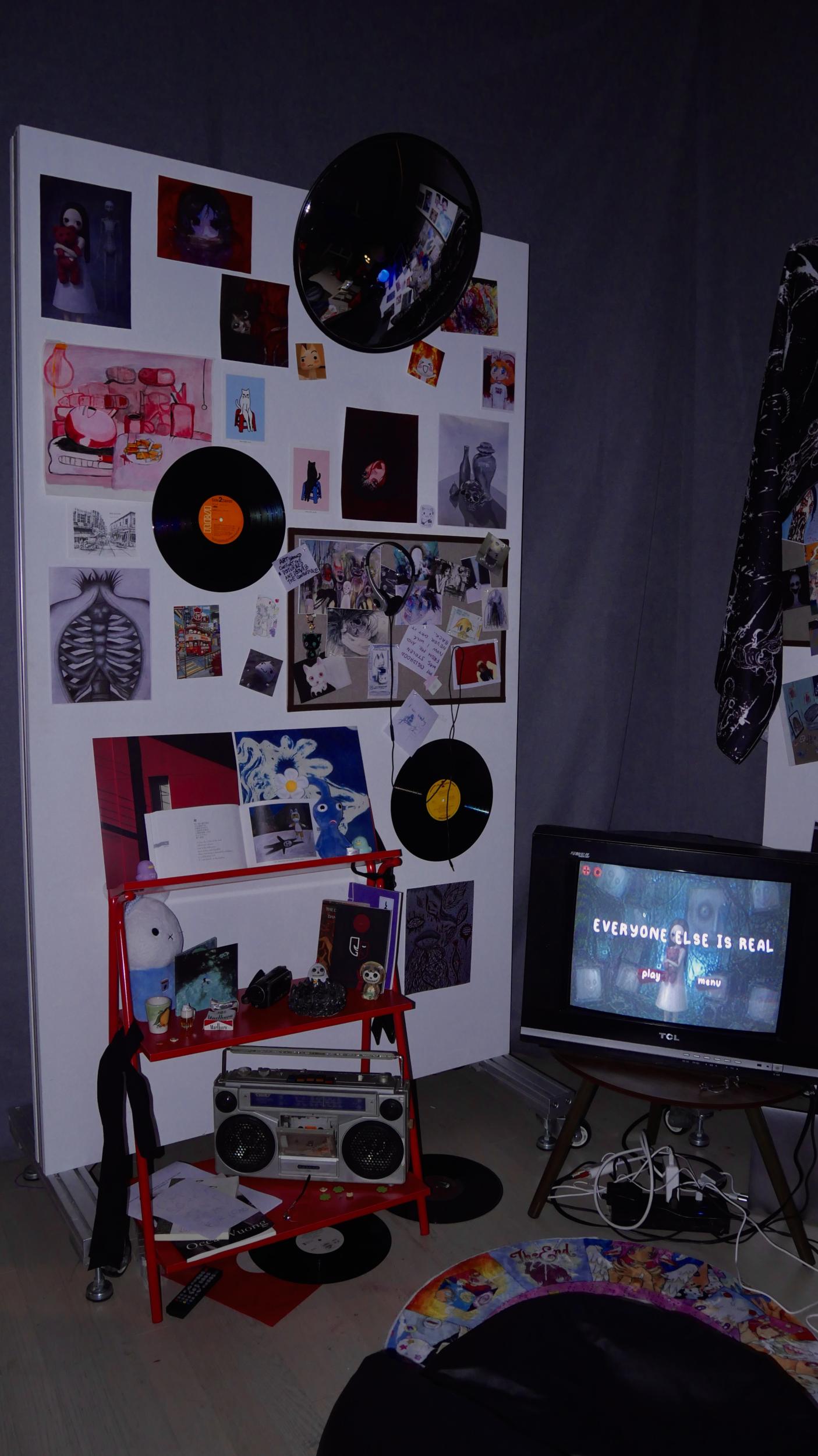
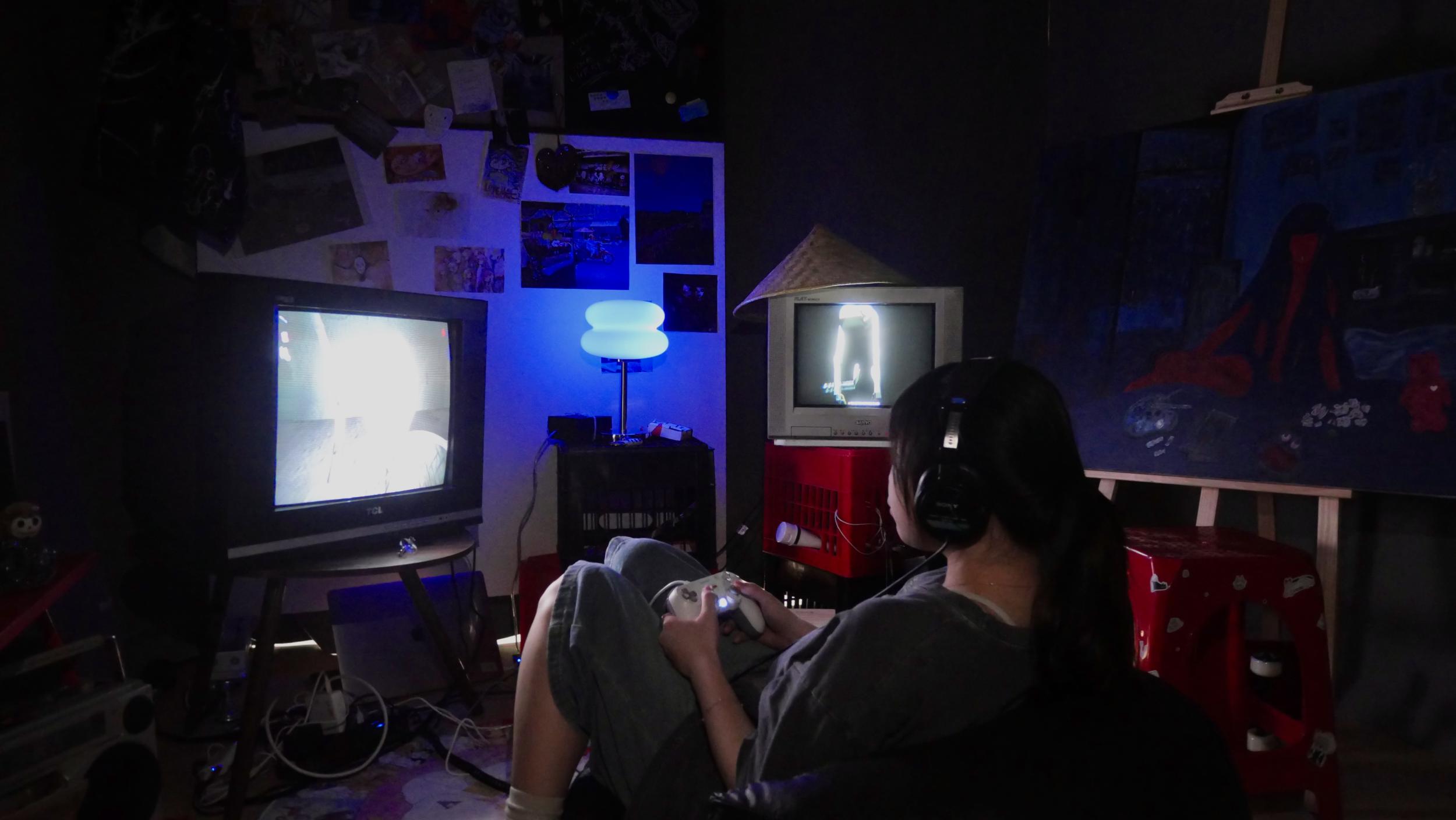
EVERYONE ELSE IS REAL is a first-person psychological horror game developed in Unity that simulates the lived experience of depression, existential dread, and suicidal ideation through fragmented memory, environmental storytelling, and cyclical mechanics. Across five acts, players inhabit Jane Doe’s fractured and distorted reality as they confront trauma, repression, and the unforgiving process of acceptance.
Project Video
Abstract
Disturbing art comforts the disturbed and makes the undisturbed uncomfortable. The hour-long game experience follows protagonist Jane Doe through five acts, each representing a stage in her life. Through fragmented memory, environmental storytelling, cyclical mechanics, and audio-driven unease, players move through a world where meaninglessness shapes perception and memory bleeds into reality. Her name references the unidentified placeholder assigned to women in accident and emergency settings, positioning her less as a person and more as a concept shaped by disconnection and unreality. The title itself reflects this sense of dissociation: if everyone else is real, what does that make Jane? A recurring entity known as The Lurker stalks Jane throughout the game as she spirals into flashbacks from childhood, adolescence, and early adulthood. The game’s final act reveals it to be the embodiment of her younger self, it represents the guilt, shame, and repression she has carried since childhood. The ending shifts toward confrontation and acceptance, where fragments of memories are collected and must be let go in order to progress. The game’s resolution does not promise that Jane will heal, but that she must acknowledge her existence, accept that the past cannot be changed, and move on towards the future. The project emerged from interdisciplinary research in psychology, ethics, and game design mechanics and systems. The most significant principle is implication over explicit depiction. Traumatic events are never directly shown or obviously stated. Instead, each scene relies on environmental design, symbolic objects, slow repetition, internal voices and subtitles to allow players to piece together what occurred. Unity Engine made it possible to develop a game that accurately conveys the distorted reality of those who live with depression so severe that it consumes them and their lives. By leaning into absurdity rather than traditional horror, EVERYONE ELSE IS REAL exhibits how games can act as spaces for confrontation, reflection, and understanding; it highlights their potential as a medium for ethical mental health advocacy through interactive art. The game was deliberately designed to be exploratory as depression has no ways of navigation and the sense of existential dread and suicidal ideation is not something that can be measured due to its complexity. The experience of reality through the lens of Jane Doe offers recognition to people in similar situations and seeks to comfort them, and to evoke more empathy and understanding from outsiders.
Photos



Project Logbook
GitHub: https://tuquynhvuu.github.io/portfolio
Keywords: Psychological Horror, Mental Illness, Trauma & Memory, Absurdity, Unity 3D
Copyright Statement:
https://docs.google.com/document/d/1yjW4WNYbOKc6B5MIQ0GRvUuPnccEjW7MccTg2uOBMss/edit?usp=sharing