

Exploring Mobile Interactions with External Control
A photography game demo on mobile device exploring novel mobile interactions with external control.
Project Video
Abstract
Previously, more experimental interactions are set for mobile gaming around the 2010s. Nowadays, plain controls represented by virtual joysticks and buttons become dominant. With advances in technology and tooling (such as Unity and BLE), reevaluation of novel controls and more exploration on mobile game interactions could be put on the agenda.
This project contains 2 parts. Part 1: Help reveal current mobile interaction problem - virtual as mainstream and lack of proper eval method including experience as one aspect of the metrics; Part 2: Provide a demo explores novel mobile interaction w/ customized external control.
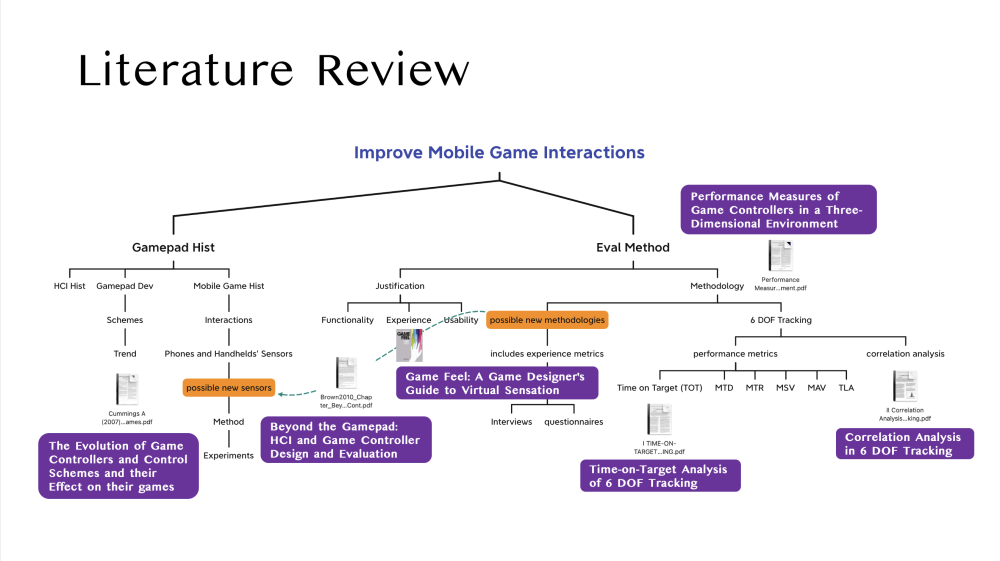
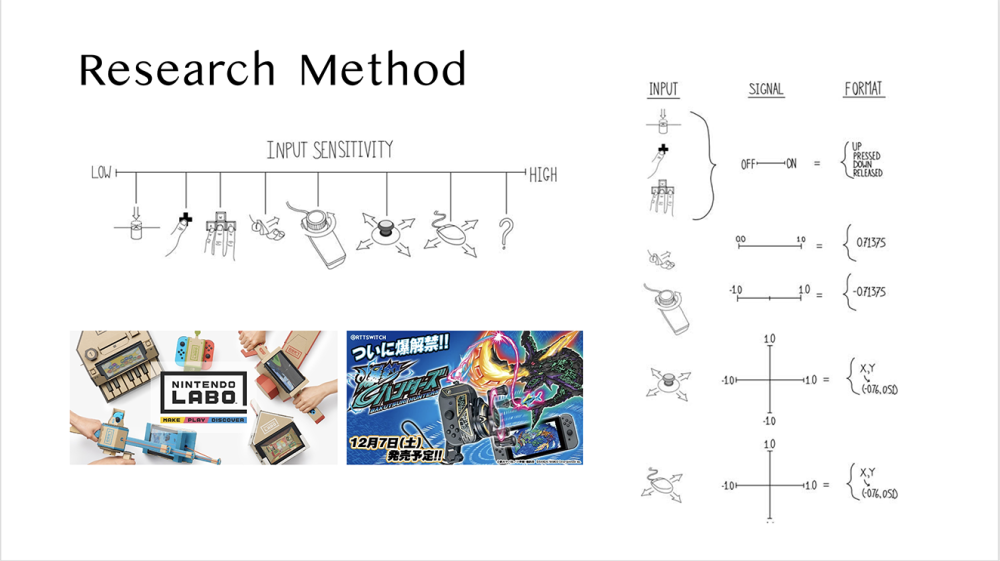
Part 1: Literature review is done in 2 main area: “Gamepad History” including gamepad schemes dev and trend, mobile game interactions sensors and trend; “Eval Method” including mainstream performance metrics (Time-on-target) and overall justification. Conclusion: Mainstream interaction eval method stress much on functionality and usability aspect, omit experience aspect. Proper eval method containing experience aspect and fit mobile control needs to be established to help eval the mobile interactions and provide tools to judge and might help change current plain virtual control prevalence. And the final outcome tried to manage the balance between performance metrics and experience aspect by combining improved performance metrics w/ quantitative analysis of questionnaire scoring. Caution: The final eval method established somehow trade novel interaction w/ efficiency.
Part 2: Photography game demo utilizing CNC hand wheel as external control and Bluetooth Low Energy connection between ESP32 and Unity app on iOS device as wireless serial communication done to demonstrate the possible experience improvement of mobile game customized external control. Function-wise, the demo contain 1. gyroscope camera and calibration for y-axis rotation 2. focus of length change 3. field of view change 4. mode switch to switch between 2 change modes 5. demo forest scene w/ post-processing effects.
Photos
Keywords: Mobile Interactions, Eval Method, External Control
Copyright Statement
list of resources used
https://assetstore.unity.com/packages/tools/network/bluetooth-le-for-io…
https://assetstore.unity.com/packages/3d/environments/fantasy/fantasy-f…
https://assetstore.unity.com/packages/3d/props/old-lamp-95730
https://assetstore.unity.com/packages/3d/characters/animals/insects/but…