This course offers an experience with the intersection of technology and culture through collaborative teaching offered by faculty from Interactive Media Arts (IMA) and Global China Studies(GCS).
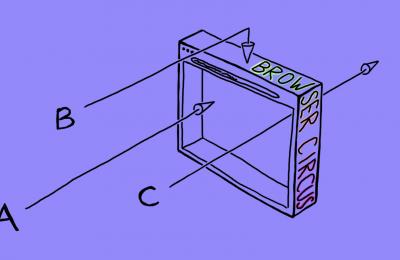
Learn about the web, net-art, and build experiences in the browser using JavaScript.
This course offers students the opportunity to develop a self-initiated project with close mentorship from a faculty member. Projects undertaken can span the areas of conceptual research, business development, creative practice, and media production.
Nature of Code is an intermediate course designed based on Daniel Shiffman’s The Nature of Code course at NYU ITP and adjusted for undergraduate studies.
Visualize and simulate realistic / systematic shapes, movement and/or behaviors in natural phenomena by:
This course explores embodied interfaces, in which students learn to use TouchDesigner and MediaPipe to create real-time control systems where gestures and movements are the primary modes of interaction.
This course adopts both theoretical and historical perspectives through which we collectively look at how the art and technology of animation change the way we experience space-time, motion, and life.
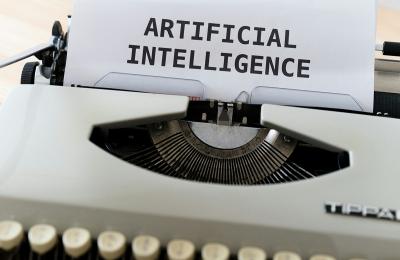
In this class, we will use AI as a writing and editing tool and study the history and philosophy of augmented and automated writing.
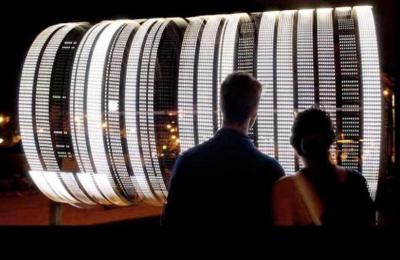
The practice of using light and motion as artistic media traces its roots back to the architectural design of spiritual structures in ancient cultures and the use of fire and shadow in religious ceremonies.
Industrial Design in Action is a course that will help you bridge the gap between your ideas and their physical form. From initial research to conception, you will apply different design methodologies that lead to innovative ideas.
This course provides students with conceptual tools and critical methods for an advanced study in media theory. Each semester, we will focus on a single book or thinker, engaging in slow, thoughtful reading.
This course focusses on designing, creating, and performing with self-built electro-acoustic music systems to explore the limits of human musical expression.
This course introduces students to the practice of live coding, learning techniques for real-time algorithmic approaches to making music and visuals, while exploring its cultural, theoretical, and performative potentials.
This advanced course investigates emerging trends in machine learning and artificial intelligence for generating synthetic media content (images, video, sound, etc).
In the last decade, artists have been experimenting with the fakeness of the truth and the truthfulness of the fake creating fake documents, staged marriage, an arguably authentic artifact, imaginary advertisements of both historical and contemporary.
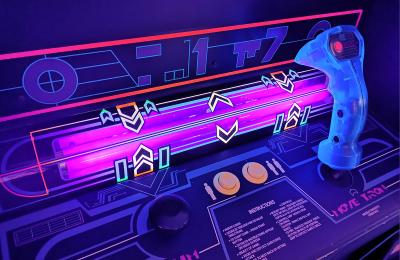
Is life itself the ultimate game? Where are the boundaries between childhood and adulthood across the many identities we inhabit online and in real life?
Historically used by scientists and engineers to test models, evaluate performance, and assess risks, simulation has been adopted by contemporary artists and designers as a technique for enacting concepts, creating dialogues, and speculating on imaginary futures.
This course aims to provide students with the means to understand immersive media experiences, and conduct experiments from both a practical and a theoretical perspective. The course consists of lectures, research, discussion and studio-based practice.
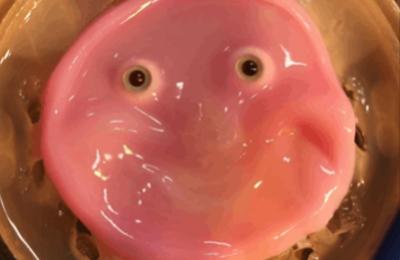
Emerging technologies are creating new synthetic bodies that differ radically from the machines of the past.
In this course we take “Contemporary” as beginning around the turn of the 21st century and “China” as a transnational formation linking multiple territories and migrant communities.
What is the place of human creativity, agency and intelligence in complex technical networks?
Introduction to 3D is a course designed to provide students with a framework to effectively communicate through 3D graphics.
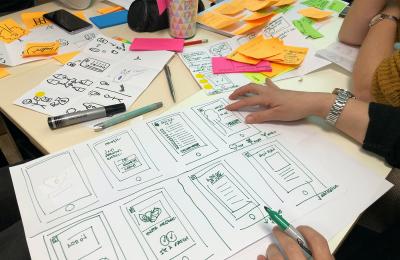
User experience design (UXD, UED, or XD) is the process of enhancing user satisfaction with a product by improving its usability, accessibility, and desirability provided throughout the user’s interaction with a product.
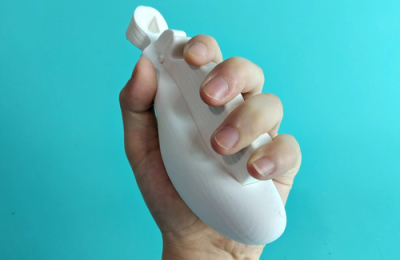
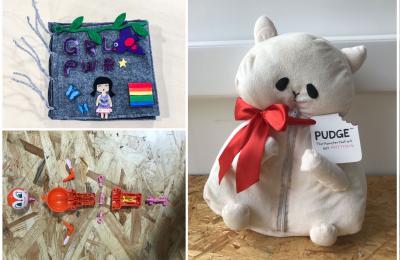
Toys are part of our culture, and an important medium to develop essential skills like creativity, problem-solving and socialization. They can also be a great contribution in education, medicine, and business and can improve the quality of life for children and adults alike.
Web Page to Web Space is a course that explores virtual interactive experience in the context of Virtual Embodiment, Virtual Space, Telepresence, and Metaverse.
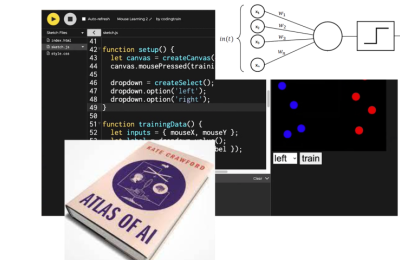
An introductory course to machine learning and AI, aimed at students without a mathematics background who are interested in developing an intuitive, and critical understanding of related techniques and their effects.
Biohybrid robots, smart materials, and self-assembling nanotechnologies are beginning to shape new synthetic bodies that radically differ from the machines of the past.
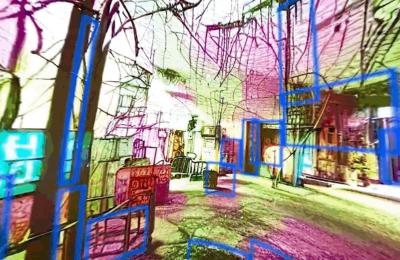
In this course we will learn to use the tools of the Unity game engine to reconstruct sampled elements of our envi
Digital Fabrication is the process of using design modeling softwares to generate digital files which can then be physically produced through a variety of methods, including laser cutting, 3D printing and CNC milling.
During the course, we will be unpacking the process of filmmaking as a critical practice for researching nascen
This course will focus on Eco-Materialism (reuse, recycle, renew & rethink) and emergent practices in conjunction with some of the origins, influences, theories, processes, and manifestations of art installation.
This course investigates digital art and new media from creative, theoretical, and historical perspectives. The course aims to provide students with the means to understand what digital media is, and establish their own vision of what it can become, from both a practical and a theoretical perspective.
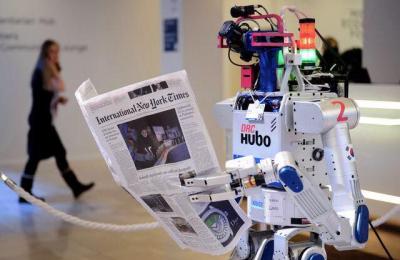
This course aims to train students to think philosophically about our rapidly changing—and ever more intimate — relationship with machines. The interdisciplinary course is typically historically oriented. Each iteration focuses on a particular theme.
From the history of visual music and abstract film to the contemporary notion of live cinema, this course will be an exploration of the synesthetic relationship between sound and visuals in a real-time performance setting.
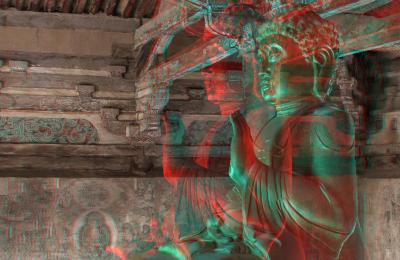
This course investigates and explores the integration between cultural heritage and virtual conservation, specifically towards the objects, deities, sites, and gardens in China.
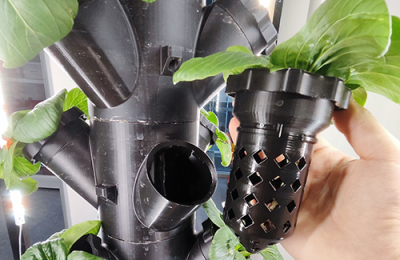
Urban Farming: Technology and Community is a course that aims to explore digital agricultural innovations and alternative uses of urban land as potential solutions to food insecurity, ecological degradation, and social inequalities within hyperdense cities.
The current design methods and technologies in the field of digital entertainment, from design concepts to design tools, are still based on 2D screens, but the product is often 3D. This contradiction results in the designers not being able to see the final consequences of their work directly.